
Dubai opens new restaurants and cafes almost every week. With that much competition, a great menu and good service aren't enough anymore — diners are deciding where to eat based on Instagram, Google Maps reviews, and delivery app rankings before they ever walk through the door.
That's why restaurant owners are increasingly hiring dedicated restaurant marketing agencies instead of handling social media themselves or hiring a generalist. Restaurant marketing has its own rhythm: it's visual, it's local, and it's driven by immediacy — people decide where to eat today, not in three weeks.
Why Restaurants Need a Different Marketing Playbook
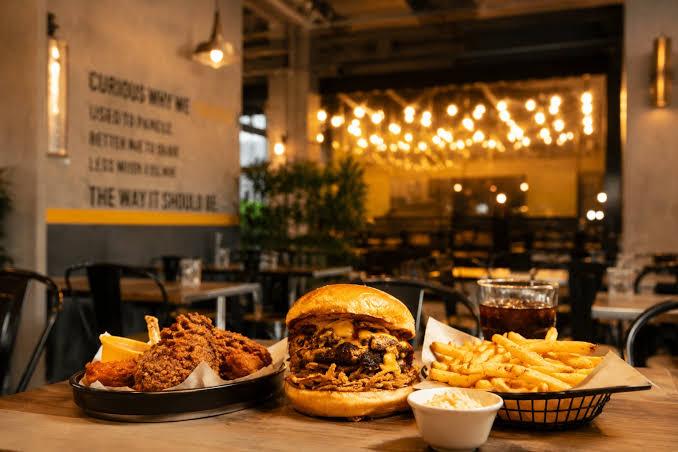
Visual content is the product. Unlike most industries, the food and the atmosphere are the marketing. Photography and short-form video (Reels, TikTok) often outperform paid ads entirely when done well.
Reviews decide the click. A restaurant with 4.6 stars and 900 reviews will consistently beat a 4.2-star competitor with better food, simply because of perceived trust. Review generation and response management deserve as much attention as any ad campaign.
Local and delivery-platform SEO matter as much as Google. Ranking on Google Maps, plus visibility on Talabat, Deliveroo, and Zomato, is often more important for a restaurant than a traditional website ranking.
What Good Restaurant Marketing Actually Includes
1. Content built for discovery, not just branding Short-form video showing the food being made, the ambience, or a signature dish tends to travel far on social platforms — and often drives more walk-ins than paid ads.
2. Google Business Profile and Maps optimization This is frequently the most under-used channel. Photos, accurate categories, updated hours, and active review responses can meaningfully shift how often a restaurant appears in "near me" searches.
3. A steady content calendar, not sporadic posting Consistency matters more than perfection. Restaurants that post 3–4 times a week with a simple rotation (dish spotlight, behind-the-scenes, offers, reviews) tend to outperform ones posting occasional polished campaigns.
4. Genuine, useful content around the brand Blog or social content about the cuisine's origin, ingredient sourcing, or dietary options (vegan, halal, gluten-free) tends to build the kind of authentic, helpful content that both diners and search engines respond to — far more than generic promotional posts.
Questions Worth Asking Before You Hire
- Do you have in-house content creation (photography/video), or is it outsourced?
- How do you handle review generation and negative review responses?
- Can you optimize our presence across delivery apps, not just Google and Instagram?
An agency that only "does social media" without touching reviews, Maps, or delivery platforms is only solving a third of the problem.
Tying It All Together
The restaurants growing fastest right now tend to have marketing that spans content, local SEO, reputation management, and paid promotion — working as one coordinated system rather than separate one-off efforts.
Socialhype works with restaurants and F&B brands across Dubai on exactly this combination — content, Google Business Profile optimization, reputation management, and targeted local ads.
Final Thought
In a market as saturated as Dubai's F&B scene, the restaurants winning aren't necessarily the ones with the biggest ad budget — they're the ones showing up consistently, looking good doing it, and making it easy for diners to trust them before they've even tasted the food.

 English
 Arabic
 French
 Spanish
 Portuguese
 Deutsch
 Turkish
 Dutch
Dutch
 Italiano
 Russian
 Portuguese (Brazil)