
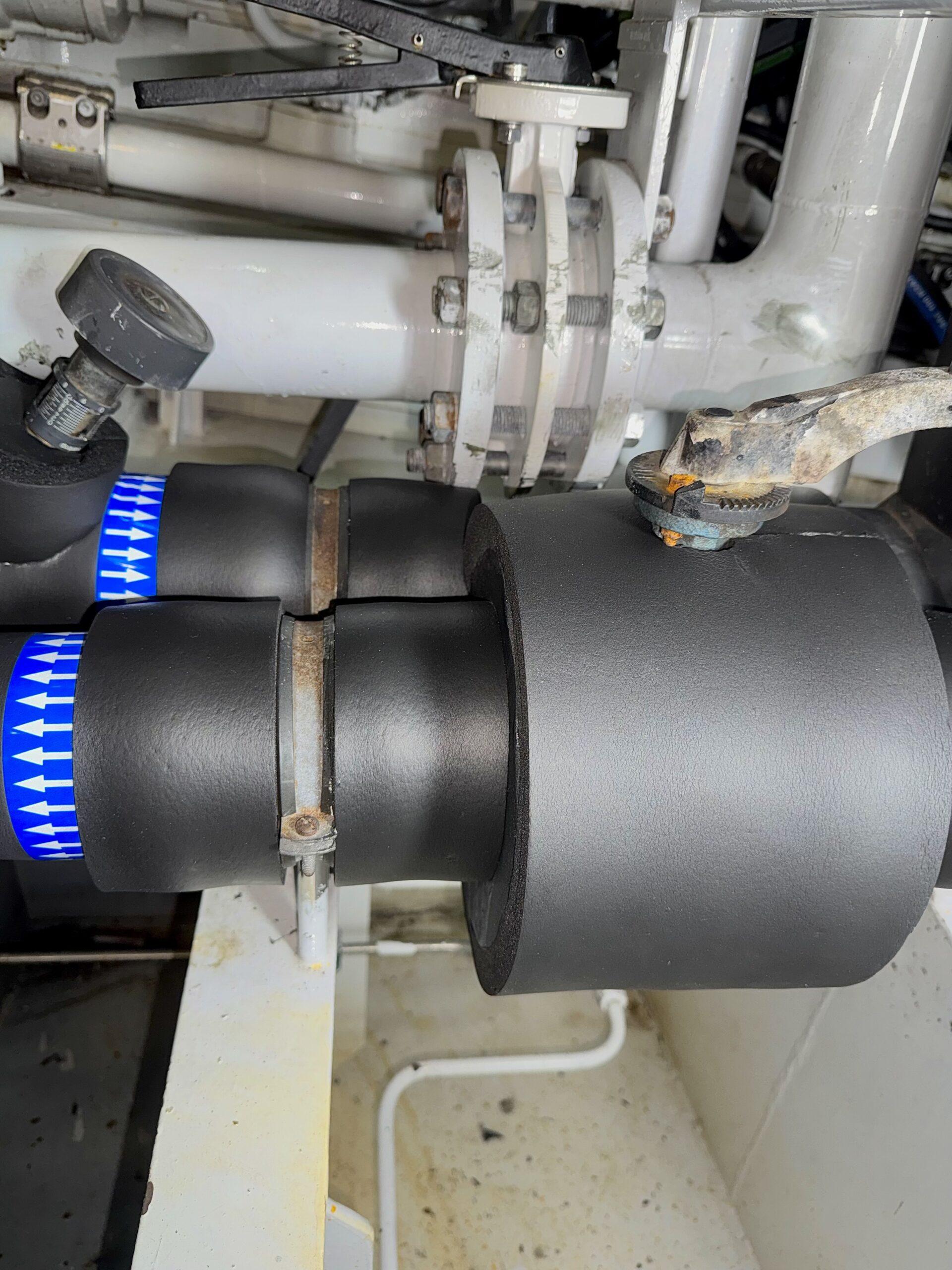
Noise management aboard vessels is a crucial aspect of maritime engineering, influencing onboard comfort, equipment longevity, and operational efficiency. While many people use the terms interchangeably, Marine Noise Insulation and acoustic dampening serve different functions within a vessel's acoustic control strategy. Understanding these distinctions helps shipowners, yacht builders, and marine engineers choose suitable solutions for specific challenges.
Modern Marine soundproofing systems often combine multiple technologies to create a quieter maritime environment. However, selecting the right approach begins with understanding how insulation differs from dampening and where each method delivers the greatest value.
Understanding Marine Noise Insulation
Marine Noise Insulation refers to specialized materials and assemblies designed to block or reduce the transmission of sound from one area of a vessel to another. Rather than addressing vibration at its origin, insulation acts as a barrier that limits the movement of airborne and structure-borne noise.
These systems are commonly installed in:
- Engine compartments
- Generator enclosures
- Machinery spaces
- Bulkheads
- Deck panels
- Accommodation areas
The primary objective of Marine Noise Insulation is to create separation between noisy zones and occupied spaces. High-performance insulation products often incorporate dense composite layers, mineral fiber cores, and marine-grade protective facings capable of withstanding harsh maritime conditions.
By reducing sound transmission, insulation improves onboard tranquility and helps vessels comply with acoustic performance standards.
What Is Acoustic Dampening?
Acoustic dampening focuses on reducing vibration energy before it transforms into audible noise. Instead of blocking sound travel, dampening materials absorb and dissipate vibrational resonance within structural components.
When metal panels, machinery housings, or bulkheads vibrate, they act like large speakers, amplifying unwanted sound throughout the vessel. Dampening treatments minimize this resonance, preventing excessive noise generation.
Common acoustic dampening materials include:
- Viscoelastic compounds
- Constrained-layer dampers
- Polymer vibration sheets
- Resonance-control laminates
These products are frequently applied directly to steel, aluminum, or composite structures where vibration is most pronounced.
How Marine Noise Insulation Works
Marine Noise Insulation functions through mass, absorption, and isolation principles. Dense materials resist sound wave penetration, while fibrous layers absorb acoustic energy and reduce reverberation.
Several mechanisms contribute to performance:
Sound Blocking
Heavy barriers prevent airborne noise from passing through walls, decks, and partitions.
Acoustic Absorption
Porous materials capture sound energy and convert it into negligible thermal energy.
Decoupling
Isolation layers reduce structural pathways that transmit vibration-generated noise.
This combination creates effective acoustic separation across vessel compartments.
How Acoustic Dampening Works
Acoustic dampening operates differently by targeting structural vibration directly. As machinery generates mechanical energy, surrounding surfaces begin oscillating.
Dampening treatments:
- Convert vibrational energy into heat
- Reduce panel resonance
- Minimize sound amplification
- Improve structural acoustic behavior
Because less vibration exists within the structure, fewer noise waves are produced in the first place.
Marine soundproofing projects often utilize dampening materials as the first stage of a broader noise-control system.
Primary Differences Between the Two Approaches
Although both technologies contribute to quieter vessels, their functions differ significantly.
Purpose
Marine Noise Insulation blocks sound transmission between spaces, while acoustic dampening suppresses vibration before it becomes noise.
Installation Location
Insulation is generally installed within walls, ceilings, machinery enclosures, and compartment boundaries.
Dampening materials are typically bonded directly onto vibrating surfaces such as panels, decks, and machinery casings.
Performance Focus
Insulation addresses airborne and transmitted sound.
Dampening addresses resonance and vibration control.
Material Composition
Insulation products often feature fibrous cores, mass-loaded barriers, and multilayer composites.
Dampening products primarily consist of viscoelastic polymers and vibration-absorbing compounds.
Where Marine Noise Insulation Is Most Effective
Certain vessel areas benefit greatly from dedicated insulation systems.
Engine Rooms
Propulsion systems generate substantial acoustic energy that can travel throughout the vessel.
Crew Quarters
Reducing noise intrusion improves rest quality and overall onboard wellbeing.
Passenger Spaces
Cruise vessels, ferries, and luxury yachts prioritize acoustic comfort for occupants.
Generator Compartments
Auxiliary equipment often produces continuous noise requiring effective containment.
In these environments, Marine Noise Insulation creates a protective acoustic shield that limits sound migration.
Where Acoustic Dampening Delivers Superior Results
Acoustic dampening excels when vibration is the primary noise source.
Metal Bulkheads
Large metallic surfaces can resonate significantly under machinery loads.
Deck Structures
Foot traffic and equipment operation may create vibrational disturbances.
Machinery Panels
Mechanical enclosures often amplify noise through structural resonance.
Hull Sections
Certain hull configurations benefit from vibration attenuation treatments.
Applying dampening materials to these areas reduces noise generation at its source.
The Role of Marine Soundproofing Systems
Comprehensive Marine soundproofing strategies rarely rely on a single technology. Instead, successful designs combine insulation, dampening, absorption, and isolation measures.
A typical vessel noise-control package may include:
- Dampening sheets on structural panels
- Acoustic insulation within bulkheads
- Floating floors for vibration isolation
- Sound-absorbing linings in machinery spaces
- Flexible mounting systems for equipment
This integrated methodology delivers superior acoustic performance compared with standalone solutions.
Factors to Consider When Selecting a Solution
Several variables influence the choice between insulation and dampening.
Noise Source Type
Airborne noise generally requires insulation, whereas vibration-related noise benefits from dampening.
Vessel Design
Structural layout influences acoustic pathways and treatment placement.
Regulatory Requirements
Commercial vessels may need to meet specific maritime acoustic standards.
Weight Constraints
Material selection should align with vessel stability and performance objectives.
Environmental Conditions
Marine products must resist humidity, salt exposure, temperature fluctuations, and mechanical wear.
Evaluating these factors ensures long-term effectiveness.
Benefits of Combining Both Technologies
Using both solutions together produces measurable advantages:
- Enhanced acoustic comfort
- Reduced crew fatigue
- Improved passenger satisfaction
- Lower machinery noise exposure
- Better equipment protection
- Increased vessel value
- Compliance with acoustic regulations
A balanced strategy addresses both sound transmission and vibration generation, creating a more controlled onboard environment.
Conclusion
While both technologies contribute to quieter vessels, they perform distinct roles within maritime acoustic management. Marine Noise Insulation serves as a barrier that restricts sound transfer between compartments, whereas acoustic dampening reduces vibration before noise develops. Understanding these differences enables vessel operators, designers, and engineers to implement more effective noise-control strategies. For optimal results, modern Marine soundproofing solutions frequently combine insulation and dampening technologies, creating a comprehensive system that enhances comfort, operational efficiency, and acoustic performance throughout the vessel.

 Arabic
 French
 Spanish
 Portuguese
 Deutsch
 Turkish
 Dutch
Dutch
 Italiano
 Russian
 Romaian
 Portuguese (Brazil)