
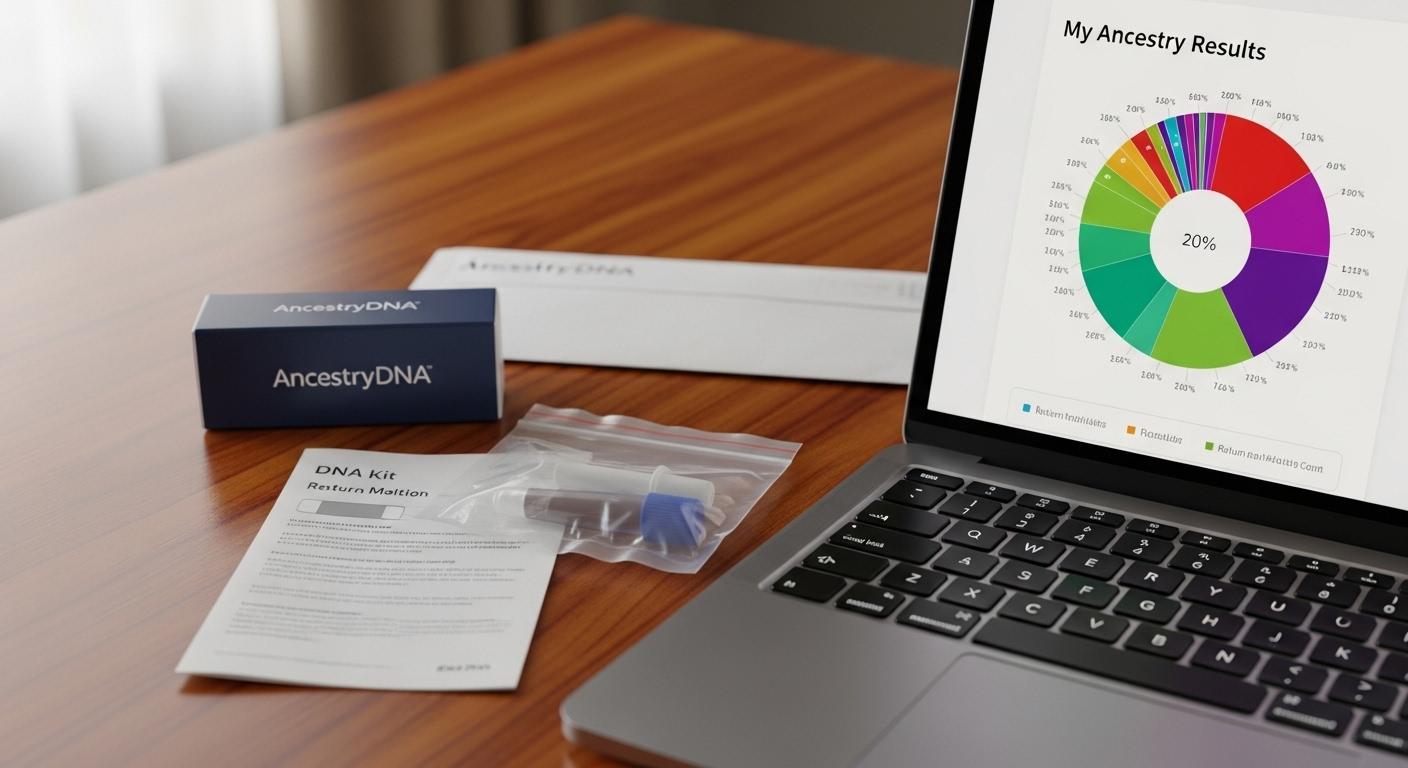
Even though it's easier than ever to figure out where we came from, not all methods offer the same level of truth. Online tools that try to match your face to people of different races might look entertaining, but they can't find out the deep genetic story that's stored in your DNA. This is the really strong part of DNA origins analysis. Scientific tests, on the other hand, can give you authentic genetic information that is not influenced by circumstances, age, or appearance. In this article, we will discuss what current biology can indicate that traditional face-matching cannot.
Why Facial Analysis Is Not a Reliable Way to Study Ancestry?
When face-matching tools compare two pictures, they don't use science to make their decisions. Mostly, these methods look at things like skin tone, eye shape, face symmetry, and other traits that can be seen. However, how people look is affected by many factors, such as how they adapt to their environment, how different people are, their mixed background, and even chance genetic mixtures. Even within the same family, two people can have very different looks. Similarly, two strangers from different countries can have features that look identical.
This is why making decisions based on looks can be wrong. It only tells you how you look, not who your parents were. DNA origins analysis matches your genetic markers to those of reference groups from around the world. This helps scientists figure out your real biological background.
How Does DNA Origins Analysis Go Beyond Appearance?
Your DNA is capable of holding the information about your ancestors, not your facial features. Scientists examine hundreds of thousands of markers all over your genome with DNA origins analysis. These traits are compared to DNA samples from around the world and with people of different races and areas. Through this in-depth study, you can find out about your ancestors' demographics, population fits, and movement trends in the past.
DNA doesn't change with age, makeup, fashion, or surroundings like facial projections do. It is a stable record of your family history that has been passed down from generation to generation. This makes it a useful tool for anyone who wants correct details about their ancestry.
The Depth of Information Only DNA Can Reveal
The amount of information you get is a big difference between face-matching and scientific tests. When you choose ancestry lab DNA testing[1], you don't just get a guess; you get a scientific breakdown of where your DNA comes from. DNA can show if someone has a mixed past, family from a certain area, or even connections to people who lived a long time ago. Some people may look European, but their genes come from the Middle East, East Asia, or Africa, which doesn't show in the way they look.
Face-matching software can't find DNA that you got from relatives who lived a long time ago. However, DNA testing can find even small bits of your family history, like 2% to 5% from a certain area, which could come from a great-great-grandparent you didn't know about. Ancestry lab DNA testing is the only way to get this level of accuracy.
Discovering Hidden Family Connections
One more great thing about DNA origins analysis is that it can help you find biological connections[2]. A lot of people use DNA to find family members they didn't even know they had. In some cases, siblings, cousins, or other extended family members will appear on the test. This can help people fill in gaps in their family trees or understand missing parts of their own past.
Face-matching software can't prove that two people are related. Two biological siblings might not look at all similar, but two people who are not linked to each other might look a lot alike by chance. DNA is the only thing that can prove real family connections. This makes scientific research very helpful for adoptees, people with mixed ancestry, and families who want to know more about their ancestral heritage.
Tracing Migration Patterns and Deep Ancestry
One of the most interesting things about current science is that it can show how people moved across countries in the past. DNA origins analysis can tell you where your relatives lived many hundreds or even thousands of years ago. This covers travel routes, mixing of populations, and how your DNA is linked to DNA from past cultures.
Face-based tools can only look at how people look now; they can't look into the DNA traces of past groups. DNA, on the other hand, holds historical information that you got from your parents over many generations. FaceDNATest.com is one of the best labs that can help you learn about your ancestors. Their testing services are highly appreciated across the US.
Conclusion
Face-matching apps are entertaining, but they can't take the place of scientific assessments to predict your family history. Your true ancestral information is stored in your genes rather than your appearance. With more advanced methods, like DNA origins analysis, you can learn about your past in a way that is comprehensive, precise, and relevant. This technology tells a story that can't be told by looking at a picture alone, but only when combined with professional ancestry lab DNA testing.
References:
[1] https://facednatest.com/services/ancestry-lab-testing/
[2] https://facednatest.com/services/ancestry-lab-testing/dna-origins/

 English
 Arabic
 French
 Spanish
 Portuguese
 Turkish
 Dutch
Dutch
 Italiano
 Russian
 Romaian
 Portuguese (Brazil)