
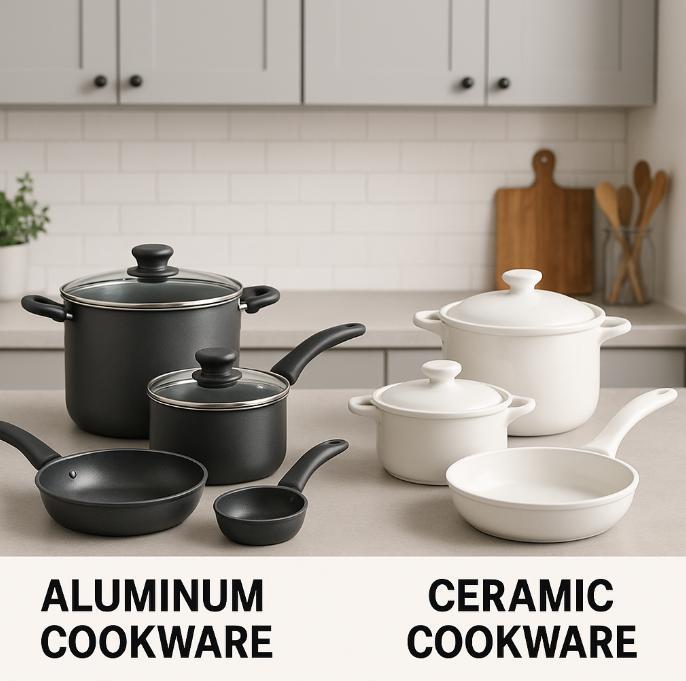
Thermal performance is a key differentiator between aluminum and ceramic cookware. Aluminum boasts exceptional thermal conductivity (~205 W/(m・K)), enabling rapid, even heating and quick temperature adjustments—ideal for stir-frying or searing. This allows for thinner walls, reducing material costs and overall weight. Ceramic cookware (often ceramic-coated metal) has lower conductivity (1.0-2.0 W/(m・K) for the coating), meaning slower heat-up but better heat retention. Manufacturers must design ceramic cookware with conductive bases (like aluminum) to compensate. For users prioritizing speed and energy efficiency, aluminum excels; ceramic suits gentle, low-temperature cooking where heat retention matters. Both meet safety standards, but aluminum’s thermal advantages makes it a top choice for everyday, high-performance cooking. Click here to know more.

 English
 Arabic
 Spanish
 Portuguese
 Deutsch
 Turkish
 Dutch
Dutch
 Italiano
 Russian
 Romaian
 Portuguese (Brazil)