
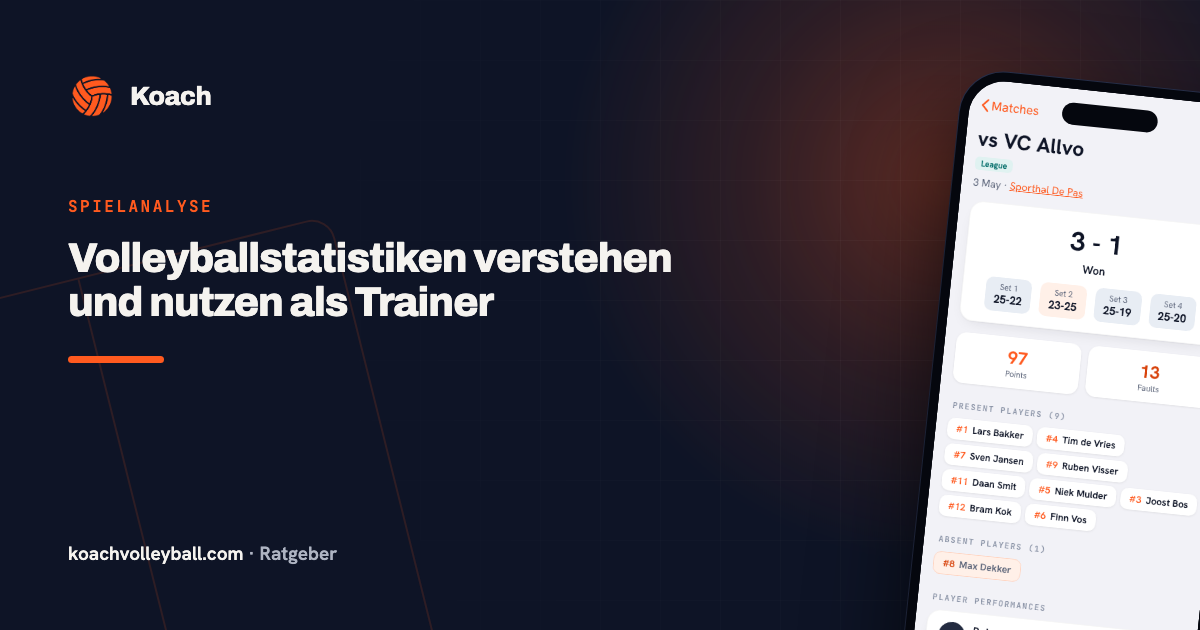
Statistics might seem out of place in youth volleyball, where the focus is on learning, development and enjoyment. But simple stats, used thoughtfully, can support all three. They help coaches understand where young players need support, and they show players concrete evidence of their progress, which can be very motivating. The key is keeping things simple and positive. In this article we look at which stats make sense for youth teams in Germany, how to track them without pressure and how to use them to help young players improve.
Why Stats Can Help Young Players
Young players often judge their performance by their worst moments. They remember the missed serve or the ball that bounced off their arms, not the many good contacts in between. Simple stats provide a more balanced picture. When a player sees that their serve success rate has improved over a few weeks, it builds confidence and motivation. For coaches, stats show which skills the team needs to work on, which is especially helpful when coaching a group with very different experience levels. Used well, numbers become a source of encouragement rather than pressure.
Choosing Simple, Meaningful Stats
For youth teams, focus on a few basic stats that players understand. Serve success, meaning the percentage of serves that land in, is the most useful stat for younger players, because many youth matches are decided by serving consistency. Passing quality, rated on a simple scale, is a good second stat. For older youth teams, you can add attack success. Koach Volleyball lets coaches record these stats quickly, linked to each player, so progress is easy to follow. Avoid complicated metrics that need long explanations, because young players should be able to see what the numbers mean straight away.

Tracking Without Pressure
Stat tracking should never make youth matches stressful. Many youth coaches ask a parent, an injured player or an older club member to record stats while they focus on coaching. Keep the process light and consistent, tracking the same few stats every match. Avoid making a big deal of the numbers during the match itself. The goal is to collect useful information quietly in the background, then use it thoughtfully afterwards. Young players should focus on playing and enjoying the game, while the coach uses the stats to plan better training and support each player's development. Short check-ins every few weeks, where a player looks at their own numbers with the coach, can be surprisingly motivating and help them feel involved in their own progress. Many young players enjoy seeing a line on a chart move in the right direction.
Sharing Stats Positively
How you share stats with young players matters enormously. Focus on personal progress rather than comparisons between players. Show each player how they've improved over time, and celebrate team achievements, such as the team's serve success rate rising over the season. Avoid highlighting poor numbers in front of the group; private, encouraging conversations work much better. Some coaches set simple personal goals with players, such as improving serve success by a few percentage points. These small goals give young players something concrete to work toward and help them take ownership of their development.
Using Stats to Guide Youth Training
Simple stats also help coaches plan better training for young players. If serve success is low across the team, dedicate more time to serving. If passing breaks down against tougher serves, build drills that gradually increase difficulty. Track whether these changes lead to improvement over the following weeks. Keeping stats, training plans and attendance together makes it easy to see how training affects progress. For youth coaches in Germany, this approach combines the best of both worlds: the structure and clarity of simple stats with a strong focus on enjoyment, learning and personal growth.

 English
 French
 Spanish
 Portuguese
 Deutsch
 Turkish
 Dutch
Dutch
 Italiano
 Russian
 Romaian
 Portuguese (Brazil)