
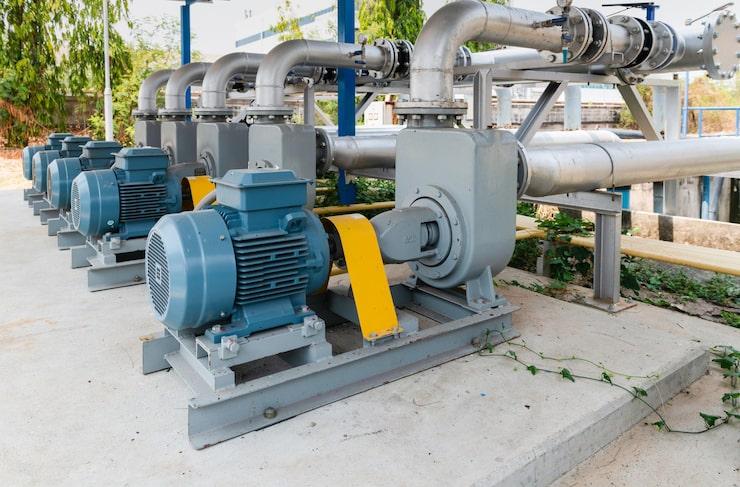
Reliable water management is fundamental to power generation, with pumping systems supporting critical operations such as cooling, boiler feed, heat transfer, and water circulation. As electricity demand rises and countries continue expanding and modernizing generation capacity, power producers increasingly require pumps capable of operating efficiently under high-flow, high-pressure, and demanding thermal conditions. At the same time, the transition toward cleaner energy and stricter environmental requirements is encouraging the adoption of more efficient and digitally enabled pumping technologies.
According to Markntel Advisor Global Water Pumps in Power Industry was valued at USD 4.12 billion in 2024 and is projected to reach USD 4.52 billion by 2030, expanding at a CAGR of around 1.9% during 2025–2030. The Global Water Pumps in Power Industry report identifies rising energy demand, renewable-energy investments, environmental regulations, technological advancements, and growing nuclear-power capacity as key factors influencing industry development.
Rising Electricity Demand Supports Pumping Infrastructure
Population growth, urbanization, and industrial development are increasing electricity requirements in many economies. This is encouraging governments and utilities to invest in new generation capacity while upgrading existing facilities. Every power-generation project requires reliable fluid-management infrastructure, creating a continuing role for industrial water pumps.
Power plants use pumps for multiple processes. Cooling systems require continuous circulation of water to manage heat, while thermal facilities depend on pumps for boiler feed and other fluid-transfer applications. As generation facilities become larger and more sophisticated, reliable pumping equipment becomes increasingly important for maintaining operational efficiency.
The International Energy Agency's Electricity 2025 outlook also points to continued growth in global electricity demand, reinforcing the need for investment in generation and supporting infrastructure.
Centrifugal Pumps Maintain a Leading Position
Centrifugal pumps represent the largest product category, accounting for approximately 60% of the global industry. Their ability to handle high flow rates and a wide range of fluids makes them well suited to power-generation applications.
Within power plants, centrifugal pumps can support boiler-feed operations, condenser cooling, cooling towers, fuel and lubricant transfer, and other fluid-handling processes. Overhung pumps account for a significant portion of the centrifugal-pump segment, reflecting their broad industrial applicability.
Their relatively lower initial and maintenance costs also support adoption, particularly where power producers need dependable equipment capable of operating continuously under demanding conditions.
Thermal Power Plants Remain Major Users
Thermal power plants represent the dominant end-user category. Coal, natural gas, and nuclear facilities require substantial volumes of water for cooling and heat-transfer operations, resulting in extensive demand for pumping equipment.
Cooling towers, condensers, boilers, and heat exchangers all depend on controlled water circulation. Pumps must therefore deliver consistent flow and pressure while withstanding elevated temperatures and demanding operating environments.
Although the energy transition is changing the generation mix, thermal and nuclear facilities remain important components of electricity systems in many countries. This creates continuing requirements for replacement equipment, modernization, and high-performance pumping solutions.
Nuclear Expansion Creates a Specialized Opportunity
The expansion of nuclear power is emerging as an important driver for specialized water pumps. Nuclear facilities require sophisticated circulation and cooling systems because effective heat management is closely linked to plant safety and operational reliability.
Countries including China, India, Russia, and several European economies are investing in nuclear generation. India, for example, has announced plans to expand nuclear capacity through the construction of additional reactors, creating potential demand for specialized pumping infrastructure.
The International Atomic Energy Agency's Nuclear Power and Clean Energy Transition resources highlight the continuing role of nuclear power in meeting electricity demand while supporting lower-carbon energy systems. This creates opportunities for suppliers capable of meeting the demanding performance and reliability requirements of nuclear facilities.
Renewable Energy Also Requires Water Management
Renewable energy expansion is creating another avenue for pumping-system demand. While solar and wind facilities generally require less water than conventional thermal generation, certain renewable-energy installations still use pumping equipment for water circulation, cooling, cleaning, or auxiliary processes.
Hydropower plants can also require pumps for water-management operations and supporting infrastructure. Meanwhile, investments in renewable energy are encouraging the development of new power-generation and energy-management facilities that can incorporate advanced pumping technologies.
China's substantial investment in solar power and growing clean-energy investment across Asia demonstrate the scale of infrastructure development supporting the broader energy transition.
Smart Pumps Transform Plant Operations
Digitalization is becoming one of the most important technology trends within the industry. IoT-connected pumps can collect operational information, monitor pressure and flow, identify abnormalities, and support remote control.
Artificial intelligence and data analytics can further strengthen predictive maintenance. Instead of relying solely on fixed maintenance schedules, operators can use equipment-performance data to identify potential failures earlier and plan maintenance activities more efficiently.
Variable-speed pumping systems are also gaining attention because they can adjust flow according to changing system requirements. This can reduce unnecessary energy consumption and improve overall operating efficiency.
Sustainability Encourages Pump Replacement
Environmental regulations are encouraging power producers to improve water management and reduce the environmental impact of discharged water. Thermal discharge, wastewater, and contaminated fluids can create risks for surrounding ecosystems if they are not properly managed.
This is encouraging investment in pumps that support water recycling, treatment, and more efficient circulation. Advanced pumping solutions can help plants minimize water waste while improving operational performance.
The U.S. Environmental Protection Agency's Cooling Water Intakes and Power Plant regulations demonstrate the regulatory attention given to water use and environmental impacts associated with power-generation facilities.
Asia-Pacific Leads the Industry
Asia-Pacific accounts for approximately 40% of the global industry, making it the leading regional market. Rapid industrialization, expanding electricity demand, infrastructure development, and power-generation investments in China, India, and other Asian economies are supporting this position.
China's extensive power-generation infrastructure and India's expanding electricity system provide substantial opportunities for pump manufacturers. Japan and South Korea also contribute through technological development and demand for advanced industrial equipment.
The region's combination of large-scale energy requirements and continued infrastructure investment is expected to keep Asia-Pacific at the center of global demand.
Challenges and the Road Ahead
Despite favorable long-term fundamentals, pump operators face challenges associated with maintenance costs, equipment downtime, water scarcity, and increasingly complex water-management requirements. Pumps used in power facilities often operate continuously, making reliability and preventive maintenance critical.
Manufacturers are therefore focusing on energy-efficient motors, durable materials, variable-speed technology, IoT connectivity, and predictive maintenance capabilities. These improvements can help power producers reduce operating expenses while improving equipment availability.
The global industry is expected to progress steadily toward 2030 as rising electricity requirements intersect with power-generation expansion, nuclear investments, renewable-energy development, and environmental priorities. With the industry projected to reach USD 4.52 billion by 2030, water pumps will remain an essential component of reliable and efficient power infrastructure.

 English
 Arabic
 French
 Spanish
 Portuguese
 Deutsch
 Turkish
 Dutch
Dutch
 Italiano
 Russian
 Portuguese (Brazil)