
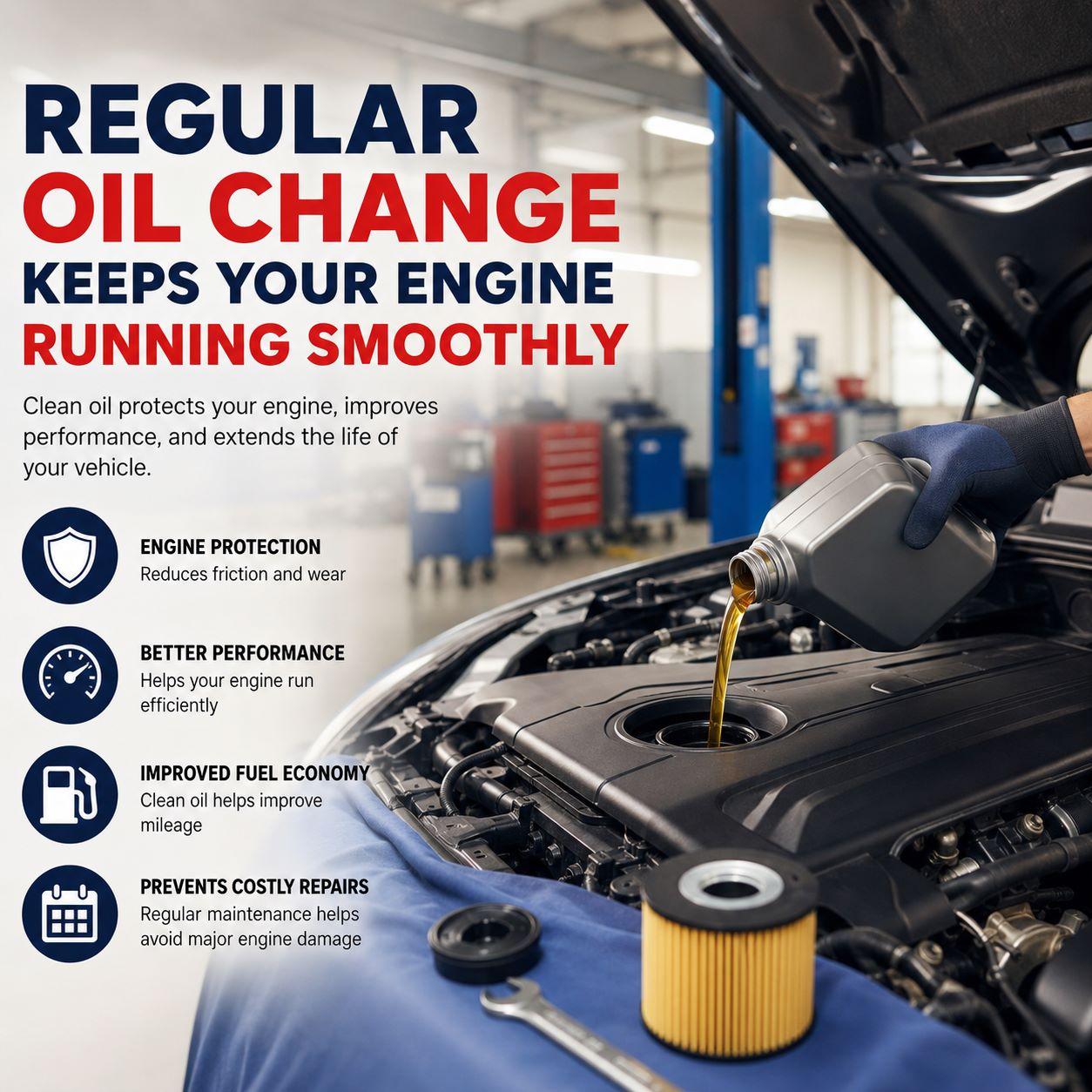
How do I choose the right oil change service for my vehicle?
Choosing a reliable oil service starts with finding a shop that follows your vehicle manufacturer's oil specifications and provides more than a basic oil drain and refill. Quality Oil Change services should include the correct oil, proper filter service, fluid checks, and clear communication about maintenance needs.
An oil change may seem like a simple maintenance task, but the quality of the service still matters. The wrong oil, incorrect oil level, or overlooked maintenance issue can create problems later.
For that reason, choosing an automotive service provider should involve more than comparing the cheapest advertised price.
What should I look for in an oil change shop?
Start by checking whether the shop works with your vehicle's specific requirements. Your owner's manual normally provides information about the recommended oil viscosity and specifications.
A dependable service provider should be willing to explain what your vehicle needs instead of automatically recommending the same oil for every car.
Consider these factors when choosing a shop:
- Correct oil specification: The oil should meet the requirements established for your vehicle.
- Qualified technicians: Technicians should understand different engine designs and maintenance requirements.
- Filter replacement: Ask whether the oil filter is included in the service.
- Fluid inspection: Other important fluids should be checked when appropriate.
- Clear pricing: You should understand what is included before approving additional work.
- Maintenance recommendations: Suggestions should be based on your vehicle's condition and manufacturer schedule.
- Professional communication: A good service experience should make it easy to ask questions.
You can also ask whether the shop provides documentation after the service. Keeping records helps you track maintenance and understand when the next service may be due.
Is the cheapest oil change always the best option?
Price is one factor, but it should not be the only one.
A low advertised price may cover a basic service while additional items cost extra. That does not necessarily make the service poor, but it means you should understand exactly what you are paying for.
Before approving the service, ask:
- What type and grade of oil will be used?
- Is the oil filter included?
- Are fluid levels checked?
- Are there additional charges?
- What mileage is recommended for the next oil change?
- Will I receive a record of the work?
Clear answers can help you compare services based on what is actually included.
It is also important to distinguish between necessary maintenance and optional recommendations. If a technician identifies another issue, ask what was found, why it matters, and whether the work is urgent or can be scheduled for later.
This approach gives you more information before making a maintenance decision.
Why does the right oil matter?
Engine oil comes in different viscosities and formulations. A vehicle manufacturer may specify a particular viscosity, performance standard, or synthetic formulation.
Using an oil that does not meet the required specification can affect engine lubrication and performance. Modern engines can have very specific requirements, so guessing based only on the vehicle's age or mileage is not a good maintenance strategy.
If you recently purchased a used vehicle, check its owner's manual before scheduling the first oil change. If the manual is unavailable, the manufacturer's official documentation or a qualified technician can help identify the correct specification.
Finally, remember that an oil change is only one part of vehicle maintenance. Tire pressure, brakes, filters, coolant, transmission service, battery condition, and other systems also require attention at appropriate intervals.
A reliable shop should help you understand the maintenance your vehicle actually needs without making the process confusing.
FAQ
What should an oil change include?
Typically, an oil change includes draining old engine oil, adding the correct replacement oil, and servicing or replacing the oil filter when required. Additional inspections may also be included.
Should I choose synthetic oil?
Use the oil type and specification recommended for your vehicle. Some engines require synthetic oil, while others may allow different formulations.

 English
 Arabic
 French
 Spanish
 Portuguese
 Turkish
 Dutch
Dutch
 Italiano
 Russian
 Romaian
 Portuguese (Brazil)