
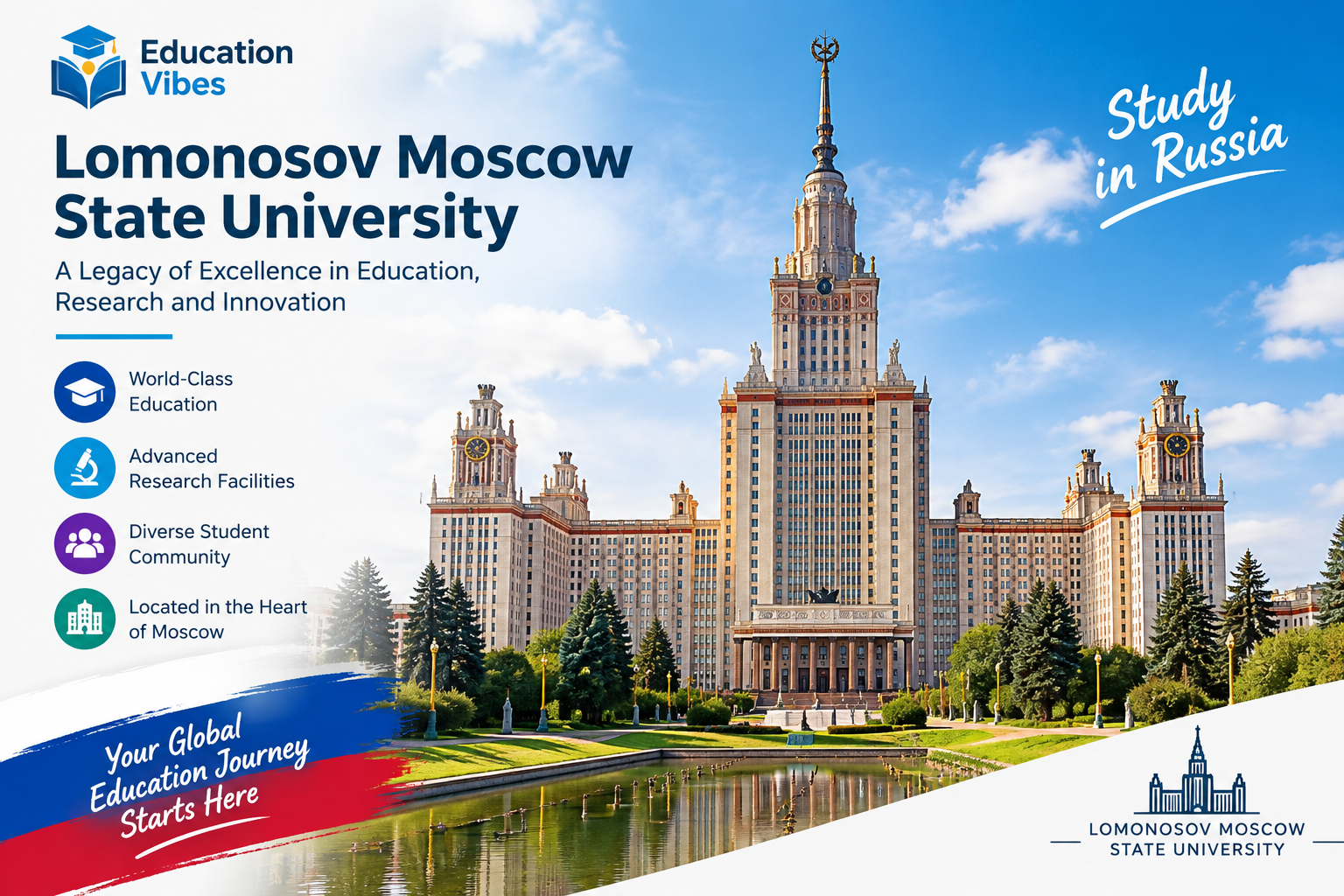
Russia is an established destination for international students exploring higher education in science, medicine, and other academic fields. Among the country's major universities, Lomonosov Moscow State University is known for its broad academic structure and strong focus on education and research. The university includes a Faculty of Fundamental Medicine and a Medical Scientific-Educational Institute, combining medical education, research, and clinical practice.
For Indian students considering MBBS in Russia, understanding the university's medical education structure, admission requirements, student facilities, and international-student procedures is important before beginning the application process.
Lomonosov Moscow State University and Medical Education
Lomonosov Moscow State University, commonly known as MSU, is located in Moscow and offers programmes across natural sciences, humanities, social sciences, and other academic areas. Its Faculty of Fundamental Medicine forms part of the university's medical education structure. The university's Medical Scientific-Educational Institute describes an integrated medical cluster covering education, research, and clinical practice.
Medical education at a multidisciplinary university can provide students with opportunities to study medicine within a wider scientific environment. Students can explore subjects connected with fundamental medical sciences, biomedical research, and clinical practice according to the specific programme they choose.
Students should identify the exact degree and programme before applying because the term “MBBS” is commonly used by Indian students for undergraduate medical education abroad, while Russian universities may use different official degree titles.
Why Explore MBBS in Russia?
Students researching MBBS in Russia often consider factors such as university reputation, curriculum, research opportunities, tuition fees, accommodation, admission procedures, and international student support.
Russia offers medical education through multiple universities, so students should compare programmes rather than relying only on general claims about studying medicine abroad. The language of instruction is also an important factor. Applicants should confirm whether their chosen medical programme is taught in English, Russian, or another language.
For Indian students, recognition and eligibility requirements should receive particular attention. Before applying, students should check the latest rules of the relevant Indian medical authorities and confirm that the specific programme meets the requirements applicable to their future professional plans.
Lomonosov Moscow State University for India Students
Lomonosov Moscow State University for India students can be researched as part of a broader study-abroad planning process. Indian applicants should review the university's current admission rules, required academic documents, language requirements, entrance examinations, tuition arrangements, and other conditions applicable to international applicants.
MSU has procedures for applicants whose educational documents were issued outside Russia. The university's recognition system provides a process for recognition of foreign education and qualifications for admission purposes.
This means Indian students should prepare their educational documents carefully and check whether translations, notarisation, legalisation, or formal recognition are required for their particular application.
Admission Preparation for Indian Students
Proper preparation can make the admission process easier. Students should begin by identifying their preferred programme and checking the official admission requirements for the relevant faculty.
Depending on the programme, applicants may need educational certificates, identification documents, photographs, translations, and other supporting documents. Requirements can vary between faculties, so students should not rely on a general university checklist without checking their specific programme.
International applicants should also allow sufficient time for visa and invitation procedures. MSU's international guidance explains that foreign students may need to complete registration and other immigration-related procedures after arriving in Russia.
International Student Requirements
International students studying at MSU need to follow Russian immigration and university procedures. After arrival, foreign students may need to complete required medical examination, fingerprint registration, and photography procedures according to the applicable regulations. MSU provides information about these procedures through its international student resources.
Students should also maintain the required documents, including their passport, migration card, registration, and student identification documents. The exact requirements and deadlines should be confirmed through the university before and after arrival.
For Indian students planning MBBS in Russia, understanding these practical requirements in advance can help with travel and admission preparation.
Academic and Research Environment
One of the notable aspects of Lomonosov Moscow State University is its multidisciplinary academic environment. Medical students and researchers can be part of an institution that also includes faculties and departments covering biology, chemistry, physics, biotechnology, and other scientific fields.
The connection between medicine and scientific research is increasingly important in areas such as biomedical sciences, genetics, pharmacology, biotechnology, and regenerative medicine. MSU's medical institute specifically describes education, research, and clinical practice as components of its integrated medical cluster.
Students interested in research-oriented medical education can therefore examine the university's academic and research facilities alongside the structure of their chosen medical programme.
Student Life in Moscow
Moscow offers an extensive urban environment for international students. Students can experience a large academic community, cultural attractions, public transportation, libraries, and various student facilities.
However, students should plan their living expenses carefully. Accommodation, food, transportation, insurance, study materials, and other personal expenses should be included in the overall education budget.
International students should also understand the requirements for medical insurance and other documentation. MSU's international guidance provides information about insurance and migration-related requirements for foreign students.
Guidance from Education Vibes
Education Vibes helps students explore international medical education opportunities and understand important areas such as university selection, eligibility, admission procedures, documentation, fees, accommodation, and visa-related preparation.
Students researching Lomonosov Moscow State University for India students can use Education Vibes as an additional information resource while comparing their academic options. Students considering MBBS in Russia should still verify programme-specific information directly with the university and the relevant regulatory authorities before making an application.
Conclusion
Lomonosov Moscow State University offers a multidisciplinary academic environment with dedicated medical education and research structures. Its Faculty of Fundamental Medicine and Medical Scientific-Educational Institute connect medical education with scientific research and clinical practice.
For Indian students exploring MBBS in Russia, careful research is essential. Applicants should examine the exact medical programme, language of instruction, eligibility criteria, tuition fees, recognition requirements, admission process, and international-student procedures.
By reviewing official university information and using reliable guidance from resources such as Education Vibes, students can better understand the steps involved in planning their medical education in Russia.

 English
 Arabic
 French
 Portuguese
 Deutsch
 Turkish
 Dutch
Dutch
 Italiano
 Russian
 Romaian
 Portuguese (Brazil)