
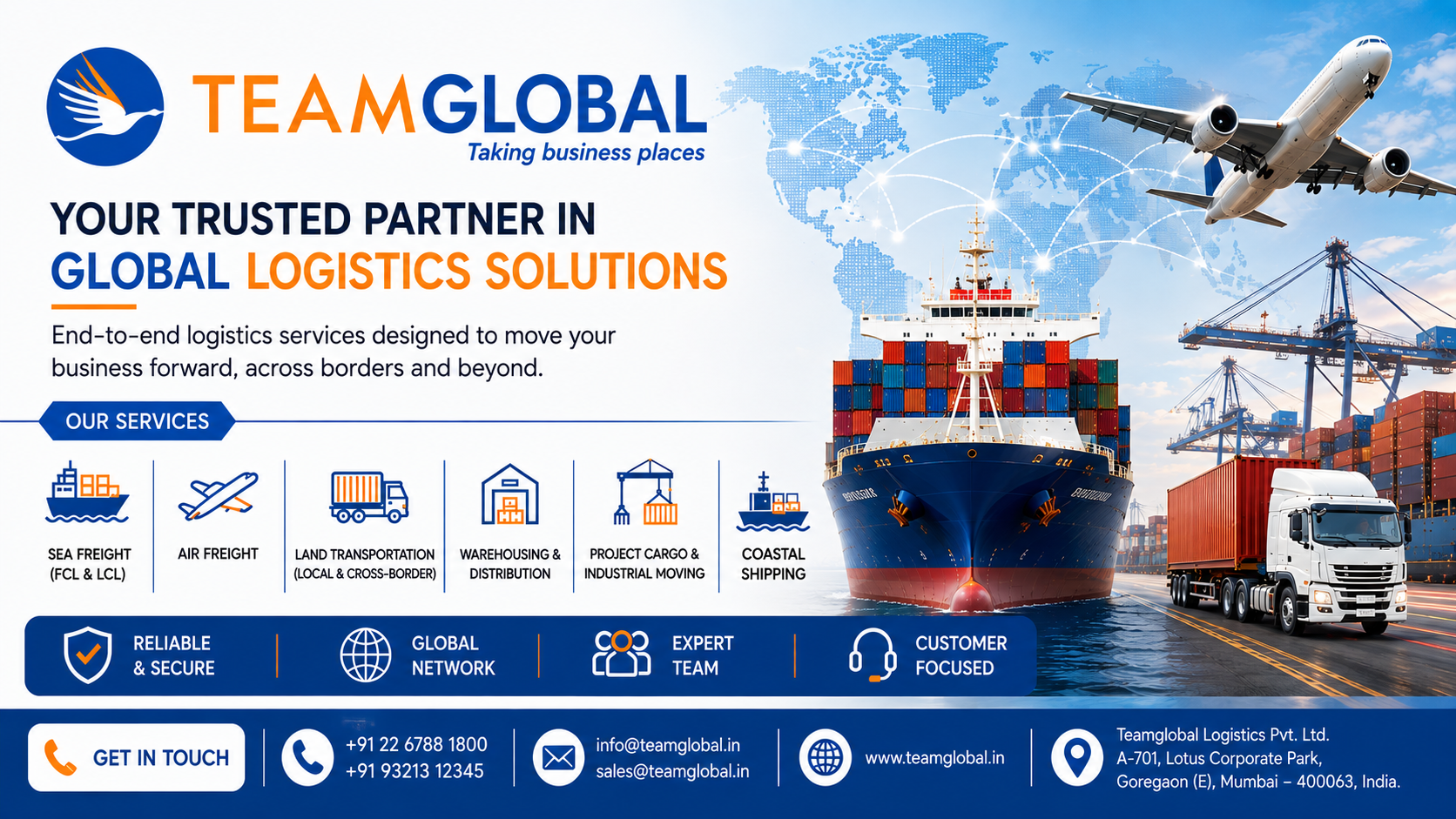
In today’s interconnected supply chain, businesses often need more than one transportation method to move goods efficiently. A logistic company in Mumbai may combine road, rail, sea, or air transportation to move cargo from its origin to the final destination. This approach is known as multimodal transportation. It helps businesses manage long-distance shipments while balancing delivery time, cost, and operational requirements.
What Is Multimodal Transportation?
Multimodal transportation refers to the movement of goods using two or more modes of transport under a single transportation contract or coordinated logistics arrangement. For example, a shipment may travel by truck from a factory to a port, by sea to another country, and then by truck again to the customer’s warehouse.
Unlike traditional transportation arrangements where different carriers may be managed separately, multimodal logistics focuses on coordinating the complete movement of cargo. As a result, businesses can simplify shipment management and improve supply chain visibility.
How Does Multimodal Transportation Work?
The process begins with planning the most suitable transportation route based on factors such as cargo type, destination, urgency, budget, and available infrastructure.
For instance, a shipment leaving Mumbai could use road transportation to reach a port, ocean freight for international movement, and road or rail transportation for final delivery. A logistics provider coordinates these stages to reduce unnecessary delays and handling issues.
A typical multimodal transportation process includes:
-
Route planning: Selecting suitable transportation modes and connecting points.
-
Cargo handling: Coordinating loading, unloading, and transfers between modes.
-
Documentation: Managing shipping documents, customs paperwork, and other requirements.
-
Tracking: Monitoring cargo movement throughout the transportation journey.
-
Final delivery: Ensuring goods reach the consignee according to the planned schedule.
Benefits of Multimodal Transportation in Logistics
Multimodal transportation provides several advantages for businesses managing domestic and international shipments.
Cost efficiency: Combining transportation modes can help businesses select economical options for different stages of a journey. For example, sea freight can handle long-distance movement economically, while road transport can manage first- and last-mile delivery.
Better time management: Businesses can choose faster transportation modes for time-sensitive sections while using cost-effective options for longer routes. This creates a practical balance between speed and transportation costs.
Simplified coordination: Working with a coordinated logistics provider can reduce the need to communicate separately with multiple transport operators. This makes shipment planning and management more straightforward.
Improved supply chain flexibility: If one transportation mode faces operational challenges, logistics providers can explore alternative routes or modes where practical. This flexibility can help businesses respond to changing supply chain conditions.
Multimodal Transportation for International Trade
International businesses frequently rely on multimodal transportation because cross-border shipments often require multiple modes. A single shipment can involve trucking, rail, ocean freight, and local delivery before reaching its destination.
An experienced logistic company in Mumbai can help businesses coordinate these transportation stages while managing documentation, cargo movement, and shipment schedules. For exporters and importers, effective coordination is particularly important because delays at ports, customs, or transfer points can affect the entire supply chain.
For businesses handling international cargo, services such as sea freight forwarding, FCL, LCL, and land transportation can work together as part of an integrated logistics strategy. Proper planning helps maintain cargo flow from the supplier to the final consignee.
Conclusion
Multimodal transportation combines different transportation methods to create a coordinated and efficient cargo movement process. By integrating road, rail, sea, or air transportation, businesses can manage costs, improve flexibility, and simplify complex supply chains.
Whether you are managing domestic distribution or international shipments, partnering with an experienced logistic company in Mumbai can help you plan suitable transportation solutions based on your cargo and destination. TeamGlobal supports businesses with integrated logistics and freight solutions designed to simplify cargo movement across different transportation networks.

 Arabic
 French
 Spanish
 Portuguese
 Deutsch
 Turkish
 Dutch
Dutch
 Italiano
 Russian
 Romaian
 Portuguese (Brazil)