
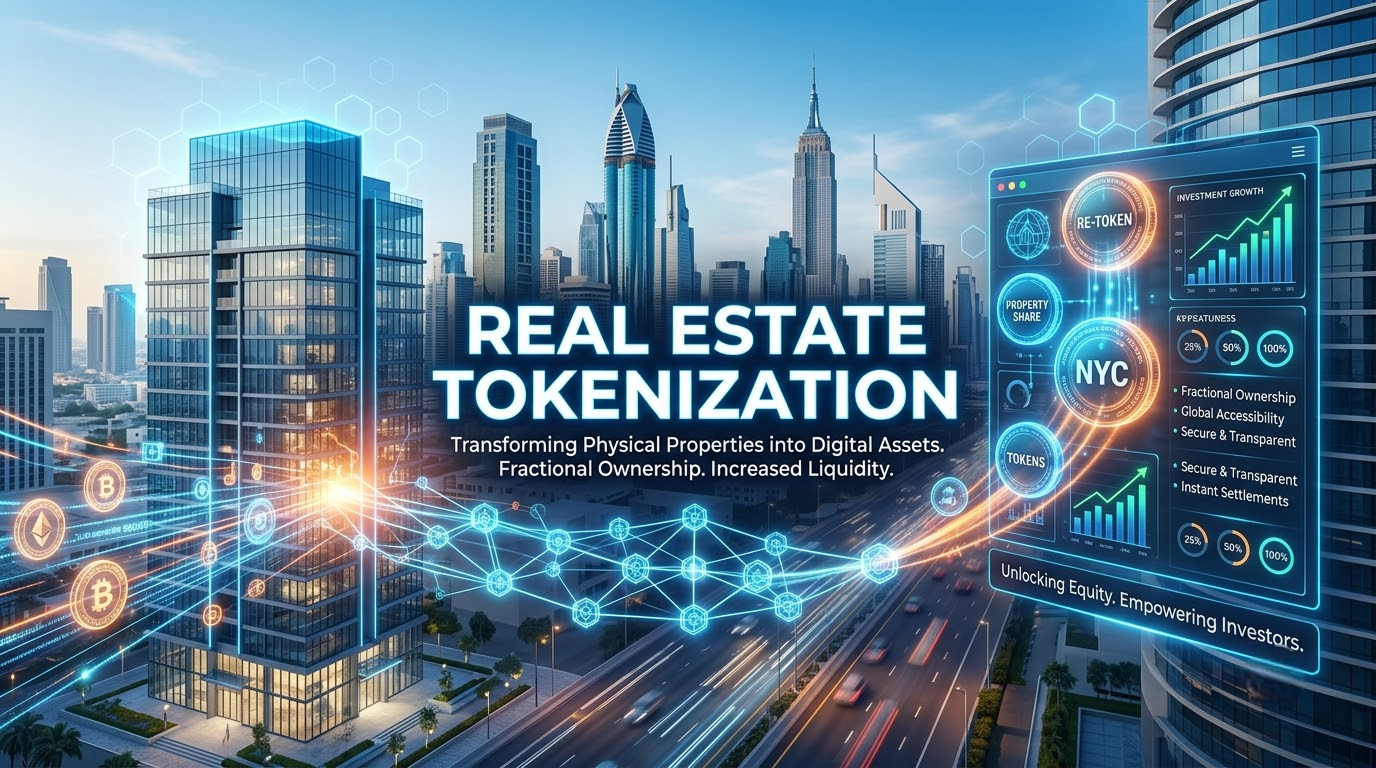
Real-world asset (RWA) tokenization is changing how ownership, investment, and asset management can be represented digitally. Instead of relying entirely on conventional certificates, databases, intermediaries, and manual processes, tokenization can represent rights to assets through blockchain-based tokens. These assets may include real estate, government securities, commodities, private credit, funds, artwork, and other financial or physical assets.
However, creating a digital token is only one part of the process. A functional RWA tokenization platform needs rules governing who can hold the token, how it can be transferred, how distributions are calculated, and what happens when specific conditions are met. This is where smart contracts become important.
A smart contract is a blockchain-based program containing predefined rules and functions. On Ethereum, for example, smart contracts are programs deployed at blockchain addresses that execute functions when users or other contracts interact with them. Their logic can define how assets are issued, transferred, restricted, or redeemed.
For RWA platforms, smart contracts essentially provide the programmable layer connecting token ownership with business and financial rules. They can automate transactions, enforce predefined conditions, maintain transparent records, and connect tokenized assets with other blockchain infrastructure.
How Smart Contracts Support RWA Tokenization Platforms
The role of smart contracts becomes clearer when examining what happens after an asset is selected for tokenization. A platform must establish the relationship between the underlying asset and the digital representation. It must also define ownership rights, issuance rules, investor eligibility, transfers, distributions, and redemption mechanisms.
This makes smart contract design a central part of the technical architecture. The Bank for International Settlements has described tokenization as combining information about a tokenized asset and its ownership with rules and governance that can be embedded into a programmable platform. The BIS also notes that tokenization can automate transactions involving financial and real assets through smart contracts.
For businesses developing such platforms, the technical implementation can involve RWA tokenization development services, alongside RWA tokenization services covering token creation, smart contract integration, investor functionality, compliance mechanisms, and platform infrastructure.
| RWA Tokenization Development Services | RWA Tokenization Services |
|---|---|
| Smart contract development | Asset tokenization strategy |
| Token issuance infrastructure | Token lifecycle management |
| Wallet and blockchain integration | Investor onboarding |
| Transfer and ownership logic | Compliance integration |
| Distribution automation | Secondary-market infrastructure |
The exact architecture varies according to the asset, jurisdiction, investor group, and legal structure. A token representing a share in a real estate investment vehicle may require very different rules from a token representing a government security or commodity claim.
1. Automating Token Issuance
One of the primary responsibilities of smart contracts is controlling token issuance. When an eligible asset is prepared for tokenization, the platform can use a smart contract to define the maximum supply, token denomination, minting permissions, and other issuance conditions.
For example, suppose a property is structured into 100,000 digital units. The smart contract can define how many tokens may be minted and which authorized entity has permission to initiate issuance. Once the required conditions are satisfied, tokens can be created and distributed to approved investors.
This reduces dependence on manual recordkeeping for the blockchain-based portion of the process. Every issuance event can also be recorded on-chain, providing an auditable transaction history.
However, the smart contract does not independently establish legal ownership of the underlying property. The legal structure connecting the physical asset, issuer, investor rights, and blockchain token remains essential. Tokenization therefore requires coordination between technology, legal documentation, asset custody, and regulatory requirements.
2. Enforcing Ownership and Transfer Rules
Traditional asset transfers often involve intermediaries checking documents, eligibility, settlement conditions, and ownership records. Smart contracts can automate some of these rules at the token level.
For example, an RWA token contract can specify that transfers are allowed only between approved wallet addresses. It can also impose holding limits, lock-up periods, geographical restrictions, or other eligibility conditions where appropriate.
This is particularly relevant for regulated assets. Unlike a freely transferable cryptocurrency, some tokenized securities or investment interests may need controlled transfer mechanisms.
A smart contract can therefore function as a programmable rule engine. Instead of simply recording that one wallet sent tokens to another, it can determine whether the transfer should be permitted in the first place.
Ethereum documentation describes smart contracts as programs that can define rules and automatically execute functions when triggered. Transactions that modify blockchain state require a signed transaction and network processing, while blockchain reads can be performed without changing state.
3. Automating Investor Distributions
Another important application is the automation of payments and distributions.
Many tokenized assets generate economic returns. A real estate investment may produce rental income, while a tokenized fund or debt instrument may distribute interest. Traditionally, calculating investor entitlements and processing payments can involve multiple databases, administrators, and reconciliation steps.
Smart contracts can encode distribution logic so that eligible token holders receive amounts according to predefined rules.
For example, if a tokenized investment vehicle distributes income proportionally to token holdings, a smart contract can calculate each investor's share based on the recorded token balance. If 1,000 tokens represent a defined percentage of an investment pool, the distribution mechanism can use those balances to determine the investor's allocation.
The payment itself may still require external banking or payment infrastructure, depending on the platform and jurisdiction. Therefore, smart contracts should be viewed as part of the broader settlement architecture rather than a complete replacement for financial infrastructure.
4. Enabling Delivery Versus Payment
Smart contracts can also support conditional settlement, commonly described through the concept of delivery versus payment (DvP).
In a traditional transaction, an asset may need to be transferred separately from the payment. This creates settlement dependencies between different systems and institutions.
With tokenized assets and compatible digital payment instruments, smart contract logic can coordinate the two sides of a transaction. The asset transfer can occur only when the required payment condition is satisfied, while the payment can be released only when the corresponding asset transfer occurs.
The BIS identifies DvP as a canonical tokenization use case because tokenization can combine information with rules governing transfers and enable contingent actions.
This type of programmable settlement can become especially useful when multiple transactions need to occur together. Smart contract composability can allow different contracts to interact, creating more complex transaction workflows.
5. Connecting RWA Platforms With Off-Chain Data
A major challenge in RWA tokenization is that the underlying asset exists outside the blockchain.
A blockchain can record that a token exists, but it cannot independently determine whether a building generated a particular amount of rental income, whether a commodity reached a specific warehouse, or whether a real-world event occurred.
This is why oracle infrastructure can be important.
Ethereum's documentation explains that smart contracts cannot directly retrieve off-chain information. Oracles provide a mechanism for bringing external information into blockchain applications.
For an RWA platform, external data may include:
- Asset valuations
- Interest rates
- Commodity prices
- Property information
- Payment events
- Compliance status
- Corporate actions
- Fund-related data
The smart contract can then use verified external inputs to trigger predefined actions. For example, an automated distribution contract could use approved data to determine an amount payable to token holders.
This creates an important distinction: smart contracts automate rules, while trusted data infrastructure supplies information about the real world.
6. Supporting Compliance and Permissioned Transfers
Compliance is one of the most important differences between ordinary cryptocurrency applications and many RWA platforms.
A tokenized financial asset may require Know Your Customer (KYC), Anti-Money Laundering (AML) screening, investor accreditation checks, transfer restrictions, or jurisdiction-specific requirements.
Smart contracts can incorporate permissioning mechanisms into the token architecture. An approved address registry, for example, can be referenced before a transfer is executed.
The result is a system in which compliance rules can become part of the transaction flow rather than remaining entirely outside the blockchain.
This does not mean that smart contracts replace regulators, lawyers, compliance officers, or financial institutions. Instead, they can enforce specific machine-readable rules that have already been established through the platform's legal and compliance framework.
7. Improving Transparency and Auditability
Transparency is another major benefit.
Blockchain transactions create a persistent record of token movements. Authorized participants can inspect transaction histories and verify certain aspects of token circulation without relying exclusively on a private database.
For institutional platforms, transparency can simplify reconciliation and auditing. Token balances, transfers, issuance events, and other contract interactions can be independently examined depending on the blockchain and privacy architecture being used.
Ethereum also distinguishes source-code verification from formal verification. Source-code verification confirms that published source code corresponds to deployed bytecode, while formal verification is concerned with whether the contract behaves correctly according to specified properties.
This distinction matters because visible blockchain activity does not automatically mean that the underlying code is secure.
8. Smart Contract Security Is Critical
Smart contracts can control valuable assets, which makes security one of the most important considerations in RWA tokenization.
A coding vulnerability could potentially affect token issuance, ownership records, transfer restrictions, or asset-related funds. Ethereum's security documentation notes that smart contract code can control significant amounts of value and that vulnerabilities can create serious risks, particularly because deployed contracts are often difficult to modify.
For this reason, RWA platforms commonly require several layers of security, including:
- Extensive unit and integration testing
- Independent smart contract audits
- Access-control mechanisms
- Multisignature administration
- Emergency pause functionality where appropriate
- Secure upgrade mechanisms
- Source-code verification
- Monitoring and incident-response procedures
There is also a design trade-off between immutability and upgradeability. Immutable contracts provide predictable execution, but vulnerabilities cannot simply be patched in the original code. Upgrade patterns can provide flexibility, but they introduce additional governance and security considerations.
9. Real-World Example: Tokenized Financial Assets
The growing use of tokenization in financial markets illustrates why smart contracts are becoming relevant beyond experimental blockchain projects.
Tokenized funds and government-security products demonstrate how blockchain-based representations can support issuance, transfer, recordkeeping, and settlement processes. The BIS has also explored smart contract applications in financial infrastructure. Its Project Pine prototype, for example, demonstrated smart-contract-based mechanisms for transactions involving reserves, collateral, asset purchases, and sales in simulated central-bank scenarios.
Real estate provides another practical example. A property can be placed within an appropriate legal structure, while blockchain tokens represent defined economic or ownership interests associated with that structure. Smart contracts can then govern token issuance, transfers, investor eligibility, and distribution processes.
Research from the BIS on tokenized real estate has examined platforms in the United States and the interaction between tokenization and traditional real estate markets, highlighting the intersection of blockchain technology, finance, and property markets.
These examples show that smart contracts are not valuable simply because they remove intermediaries. Their deeper role is to make financial and asset-management rules programmable.
The Future Role of Smart Contracts in RWA Tokenization
As tokenization develops, smart contracts are likely to become more sophisticated. Future platforms may combine permissioned transfer systems, identity infrastructure, real-time asset data, automated compliance checks, tokenized payment instruments, and cross-chain settlement.
Interoperability will also matter. Institutional assets may exist across multiple networks and technology environments. Smart contract systems will therefore need carefully designed interfaces that allow platforms to exchange verified information and assets without compromising security or compliance.
At the same time, legal enforceability will remain fundamental. A blockchain token does not automatically equal legal ownership of a physical asset. The legal relationship between the token, issuer, custodian, underlying asset, and investor must be clearly established.
Therefore, the strongest RWA architectures will not treat smart contracts as an isolated technology. They will combine blockchain infrastructure with legal frameworks, identity systems, custody, compliance, asset servicing, and reliable data sources.
Conclusion
Smart contracts provide the programmable foundation that allows RWA tokenization platforms to move beyond simple digital representations of physical or financial assets. They can automate issuance, enforce transfer conditions, manage investor distributions, support conditional settlement, integrate external data, and create transparent transaction records. Their value comes from turning predefined financial and ownership rules into executable blockchain logic.
At the same time, smart contracts do not solve every challenge associated with RWA tokenization. Legal ownership, regulatory compliance, asset custody, reliable off-chain data, and cybersecurity remain equally important. A successful platform must connect these components into one coherent architecture.
For businesses entering this market, choosing the right blockchain architecture and smart contract design is critical for long-term scalability and security. Blockchain App Factory provides best services for building RWA tokenization solutions with smart contract development, blockchain integration, investor functionality, and supporting platform infrastructure.
FAQs
1. What is a smart contract in RWA tokenization?
A smart contract is blockchain-based code that defines and executes rules for tokenized assets. It can manage issuance, transfers, eligibility, distributions, and other predefined functions.
2. Can smart contracts prove ownership of a real-world asset?
Not by themselves. The token's legal connection to the underlying asset depends on the applicable legal structure, contracts, custody arrangements, and jurisdiction.
3. How do smart contracts support RWA compliance?
They can enforce programmed requirements such as approved-wallet transfers, holding restrictions, and eligibility checks when these rules are integrated into the platform architecture.
4. Why are oracles important for RWA tokenization?
Smart contracts cannot directly access real-world information. Oracles can provide external data such as prices, valuations, or asset-related events for blockchain applications to use.
5. Are smart contracts secure for tokenized assets?
They can be designed securely, but vulnerabilities remain possible. Testing, audits, access controls, verification, monitoring, and carefully designed upgrade or governance mechanisms are important for reducing risk.

 Arabic
 French
 Spanish
 Portuguese
 Deutsch
 Turkish
 Dutch
Dutch
 Italiano
 Russian
 Romaian
 Portuguese (Brazil)