
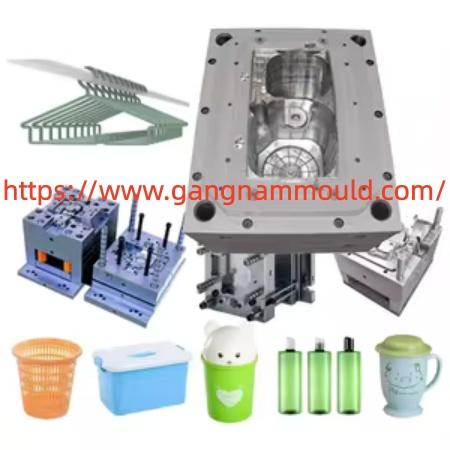
Plastic Kitchenware Mould construction depends on carefully chosen alloys that deliver hardness corrosion resistance and thermal stability under continuous operation. Tool builders evaluate several steel grades based on expected shot volume surface requirements and the need for easy cleaning after each cycle. Prehardened options such as P20 and 718 series provide ready machinability and moderate wear resistance suitable for medium production runs. These grades accept fine polishing that creates smooth cavity walls which help finished items release cleanly and reduce residue buildup.
For higher volume or more demanding environments stainless grades like S136 or equivalent AISI 420 variants become preferred. Their chromium content limits rust formation even when cooling water or cleaning agents contact the surface. This property supports hygiene standards required when producing items that will later hold food. The same steels can reach hardness levels around 48 to 52 HRC after heat treatment giving the cavity walls enough strength to resist abrasion from filled resins over many thousands of cycles.
Thermal conductivity also guides material decisions. Uniform heat removal shortens cooling phases and helps control warpage in the formed items. Steels with balanced conductivity allow water channels to extract heat evenly so wall thickness stays consistent from one shot to the next. When channels sit close to the cavity surface the chosen alloy must still retain strength so the tool does not distort under injection pressure.
Surface finish capability ranks equally important. Mirror level polish on the cavity reduces friction during ejection and leaves fewer microscopic pits where residues could collect. Grades that polish readily without pitting or orange peel effects save finishing time and keep the tool ready for long production stretches. Some facilities apply additional coatings or nitriding treatments on selected steels to further raise surface hardness while preserving the underlying toughness.
Hardness versus toughness forms another practical balance. Excessively hard steel may resist wear yet become brittle under sudden impact or thermal shock. Softer grades machine faster and cost less yet wear sooner when abrasive fillers appear in the resin mix. Experienced builders therefore match hardness targets to the specific resin family and additive package planned for the project.
Corrosion resistance extends beyond stainless options. Even non stainless grades can receive protective measures such as chrome plating or careful water treatment in the cooling circuit. These steps limit oxide formation that would otherwise roughen the cavity and transfer marks onto the finished surface. Regular inspection of water quality and prompt removal of any scale keep the tool performing as designed.
Cost considerations remain realistic throughout selection. Higher alloy content and specialty heat treatments raise the initial investment yet often lower long term expense through reduced downtime and fewer cavity repairs. Facilities that run continuous shifts usually recover the difference within a predictable number of production months. Smaller batch operations may stay with more economical prehardened grades that still meet dimensional and hygiene needs.
Gangnammould applies these material principles when preparing tools for clients who need dependable performance in daily manufacturing. The same approach appears in the second reference to Gangnammould when reviewing completed projects that combine stainless cavities with efficient cooling layouts.
Proper material pairing also affects secondary operations. Tools built from polish friendly steels accept texturing or engraving with less risk of surface defects. When multi cavity layouts are required the chosen alloy must machine uniformly so each cavity behaves the same under identical process settings. Consistency across cavities reduces scrap rates and simplifies process validation.
Maintenance routines adapt to the selected steel. Stainless grades tolerate more aggressive cleaning agents while standard tool steels benefit from milder solutions and thorough drying after each shutdown. Scheduled checks of hardness and surface condition allow early detection of wear so corrective polishing or local inserts can restore function before larger problems develop.
In practice the combination of hardness corrosion resistance polishability and thermal behavior determines how long a tool continues to produce items that meet dimensional and surface standards. Matching these properties to the expected resin type shot volume and cleaning regime produces reliable results without unnecessary expense.
Manufacturers who align alloy choice with these factors gain steadier output and fewer interruptions. For practical solutions that follow the same material guidelines visit https://www.gangnammould.com/product/ where current tool options and construction details are available for review.

 English
 French
 Spanish
 Portuguese
 Deutsch
 Turkish
 Dutch
Dutch
 Italiano
 Russian
 Romaian
 Portuguese (Brazil)