
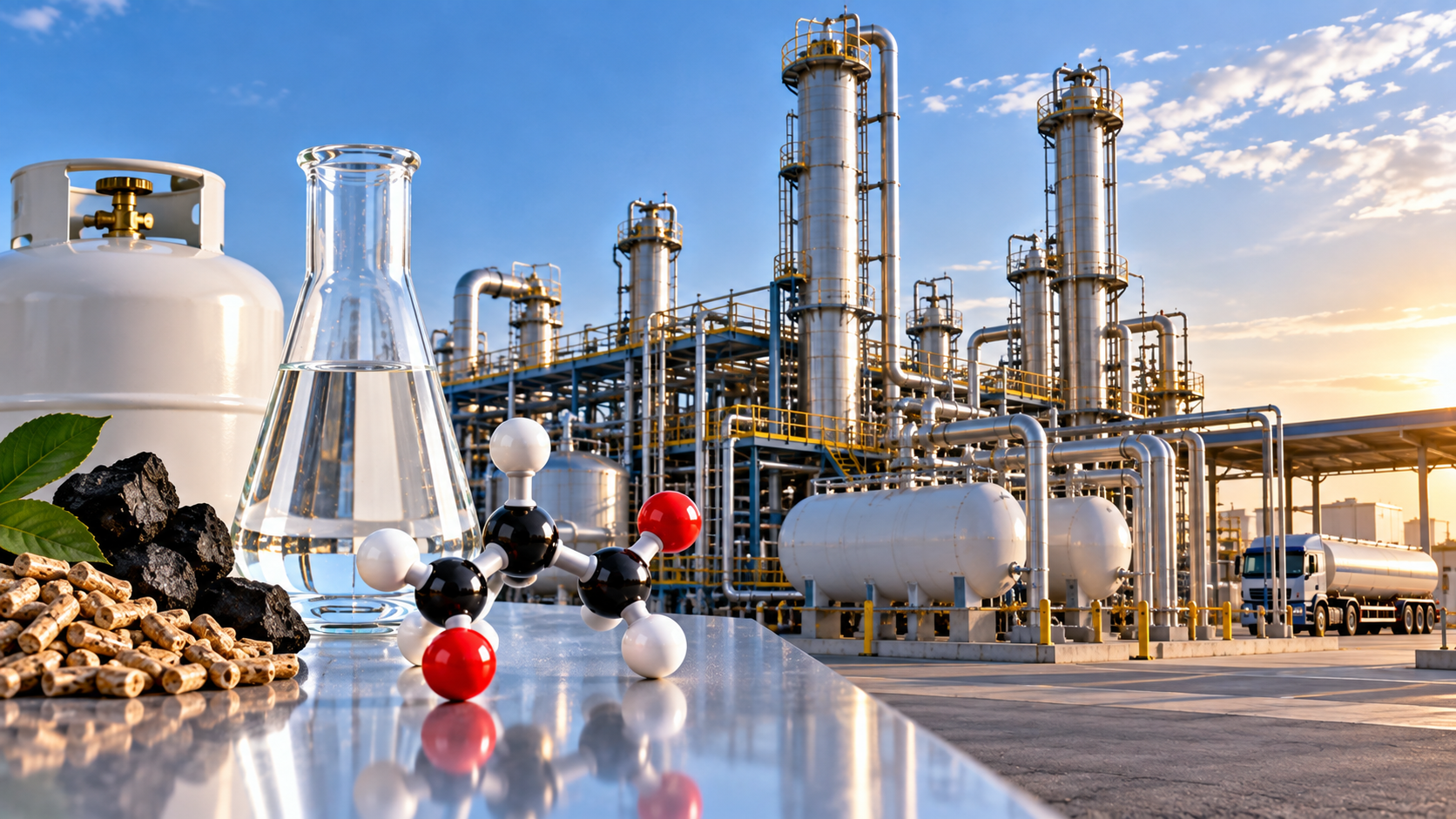
Dimethyl ether has built a genuinely diverse commercial footprint for what is, chemically speaking, a fairly simple molecule. It works as an aerosol propellant across cosmetics and pharmaceutical applications, functions as a solvent and refrigerant, gets used in cryogenic wart removal in medical settings, and increasingly draws attention as a cleaner-burning alternative fuel to diesel and LPG. For an investor or corporate adviser evaluating a manufacturing plant, that spread across industrial, consumer, and energy applications gives DME a demand base that isn't tied to any single market's fortunes. What makes the production side genuinely interesting is that DME can be made through more than one distinct industrial route, and the choice between them carries real implications for both capital requirements and ongoing feedstock exposure.
Understanding which process route a given plant runs isn't a minor technical footnote here, it fundamentally shapes the investment thesis. A plant built around direct syngas conversion looks meaningfully different, in both capex and feedstock risk, than one built around dehydrating externally sourced methanol. Getting this distinction right from the outset is central to any serious cost evaluation.
What a Production Cost Report Covers
A proper DME production cost report breaks a plant's economics into distinct, individually priced components rather than a single blended figure. It covers the manufacturing process, raw material requirements, utility needs, infrastructure, machinery and technology, manpower, packaging, and transportation, since each responds differently depending on which process route a plant actually runs.
Raw materials sit at the center of this breakdown, given how significantly a plant's feedstock exposure shifts depending on whether it starts from methanol directly or from syngas built up from natural gas, coal, or biomass gasification. Utilities matter substantially too, since syngas-based routes in particular involve energy-intensive gasification and reforming steps well upstream of the actual DME synthesis reaction. Infrastructure and machinery costs cover the reactor systems needed for whichever route a plant uses, along with the purification and distillation equipment needed to separate finished DME from water, unreacted methanol, and other reaction byproducts. Manpower, packaging, and transportation round out the picture, and given how DME serves genuinely different end markets, from cosmetics propellant customers to fuel-grade energy buyers, product specifications and shipping requirements can vary considerably depending on which segment a given plant primarily serves.
Raw Materials Required for DME Production
The major raw materials for DME production are methanol and syngas, a mixture of carbon monoxide and hydrogen. Which of these serves as the actual starting feedstock depends entirely on which process route a plant runs, and that choice cascades through the entire cost structure.
Methanol pricing itself traces back to natural gas, since methanol is most commonly produced through steam reforming of natural gas into syngas, followed by catalytic conversion to methanol. That means a DME plant sourcing methanol directly is really carrying indirect natural gas price exposure, one step removed. A plant producing DME directly from syngas, bypassing the separate methanol production step entirely, has a more direct relationship with its underlying feedstock, whether that's natural gas, coal, or, in a genuinely emerging alternative, biomass and renewable energy sources used to generate the syngas stream through gasification and electrolysis-derived hydrogen. This renewable pathway, where biomass gasification supplies the carbon stream and electrolysis powered by solar or wind supplies the hydrogen, represents a meaningfully different feedstock cost and sustainability profile compared to conventional natural gas or coal-based syngas production, though it remains less commercially mature at present.
The Industrial Production Process
DME production follows two fundamentally different industrial approaches: a direct process and an indirect process, and the distinction matters enormously for plant economics. The direct process uses a bifunctional catalyst capable of driving both methanol synthesis and methanol dehydration within a single reactor, converting syngas straight into DME in one integrated step. This approach requires a DME synthesis reactor along with a purification unit, typically using double distillation, to separate finished DME from water and unreacted methane in the process stream. The syngas feedstock itself gets produced either through a coal or petroleum residue gasifier or through a natural gas steam reformer, depending on what feedstock the plant has access to.
The indirect process instead separates the two chemical steps, first producing methanol from syngas as a standalone intermediate, then dehydrating that methanol in a separate reaction step to yield DME. This two-step approach can offer more operational flexibility, since a plant can source methanol externally rather than needing to run its own syngas-to-methanol conversion, but it also means carrying the cost and logistics of methanol as a distinct purchased or internally produced intermediate rather than converting straight from syngas in one pass.
An emerging alternative worth flagging separately involves producing DME from renewable energy sources entirely. Biomass, energy crops, agricultural residue, or forest residue, gets gasified to generate the syngas stream, while the hydrogen component can be produced through electrolysis powered by renewable electricity from sources like photovoltaic or wind installations, then blended with the carbon monoxide and carbon dioxide from the biomass gasification stream before feeding into either the direct or indirect DME synthesis process. This route reflects genuine industry interest in lower-carbon DME production, though it currently represents a more capital-intensive and less established pathway compared to conventional natural gas or coal-based routes.
Capital Investment and Plant Setup Cost Factors
Capital costs for a DME plant depend heavily on which process route gets chosen. A direct process plant needs an integrated syngas-to-DME reactor system along with distillation-based purification equipment, while also requiring upstream gasification or reforming infrastructure to produce the syngas feedstock in the first place, whether from natural gas, coal, or petroleum residue. An indirect process plant needs separate methanol synthesis and methanol dehydration reactor systems, or alternatively, the capital simplicity of sourcing methanol externally and running only the dehydration step, which meaningfully reduces upstream capital needs at the cost of ongoing methanol procurement dependency.
Land and site costs follow regional patterns, though proximity to reliable natural gas, coal, or biomass feedstock, depending on which route a plant runs, matters considerably more than raw land pricing alone. Engineering and construction costs scale with process complexity, and a fully integrated plant running its own gasification through final DME synthesis carries meaningfully higher engineering costs than a simpler methanol-dehydration-only operation. Working capital planning needs to account for the specific feedstock a plant depends on, natural gas-linked costs for conventional syngas routes, methanol market pricing for indirect-process plants sourcing externally, or the different cost and financing profile that renewable, biomass-based production currently carries.
Operating Cost Factors
Variable costs are dominated by feedstock consumption, and the specific driver depends entirely on process route. A direct syngas-based plant's costs track natural gas, coal, or biomass pricing depending on its gasification feedstock, while a methanol-dehydration plant's costs track methanol market pricing, itself indirectly linked to natural gas. Utilities add a substantial layer, particularly for direct-process plants running their own gasification and reforming infrastructure, which demands considerably more energy than a simpler methanol dehydration step alone would require.
Fixed costs include labor, maintenance, and overhead, with maintenance requirements scaling with process complexity, an integrated gasification-to-DME plant generally carries higher maintenance demands than a simpler dehydration-only operation given the greater number of process stages and equipment types involved. Quality specifications also affect operating cost meaningfully, since DME serving fuel-grade energy markets may have different purity requirements than DME destined for cosmetics or pharmaceutical propellant applications, and a plant serving multiple end markets needs flexible quality control capable of certifying against varying specifications.
Financing costs and depreciation depend on the plant's overall process complexity and capital intensity, and a fully integrated direct-process plant will generally carry a heavier depreciation load than a simpler indirect-process operation sourcing methanol externally.
What Pushes DME Production Costs Up or Down
Feedstock pricing sits at the top of the list, and because process route determines which specific feedstock a plant actually depends on, this risk looks genuinely different across plants making the same finished product. Natural gas pricing drives costs for conventional syngas-based direct process plants, methanol market pricing drives costs for indirect-process operations sourcing externally, and coal or biomass costs matter for plants running those particular gasification feedstocks instead.
Technology and process route choice matter enormously too, and this is where the renewable, biomass-and-electrolysis pathway becomes genuinely relevant to weigh. While currently more capital-intensive and less commercially mature than conventional routes, it offers a meaningfully different long-term cost trajectory as renewable electricity costs continue falling and as demand grows for lower-carbon DME, particularly for fuel applications. Scale plays its usual role, with larger, well-integrated plants generally achieving better per-unit economics, particularly for conventional natural gas-based direct process operations where gasification infrastructure benefits from running at higher, more consistent throughput.
Regional factors round out the picture, with feedstock access being the dominant regional variable given how differently natural gas, coal, and biomass availability vary by geography. A plant located where cheap, reliable natural gas is available carries a real structural advantage for conventional direct-process production, while a plant in a region with strong agricultural or forestry biomass availability might find the renewable pathway more genuinely competitive. Is one process route simply superior across all regions? Not at all, the right choice depends heavily on what feedstock a given location can actually access reliably and affordably.
Frequently Asked Questions
Q: What's the real difference between the direct and indirect DME production processes?
A: The direct process converts syngas straight to DME in a single reactor using a bifunctional catalyst, while the indirect process first produces methanol as a separate intermediate, then dehydrates it to DME in a second step. The direct route needs more integrated upstream infrastructure; the indirect route offers more flexibility to source methanol externally.
Q: Does DME production carry the same feedstock risk regardless of which process a plant uses?
A: No, and this is a genuinely important distinction. A syngas-based direct process plant's costs track natural gas, coal, or biomass pricing depending on its gasification feedstock, while a methanol-dehydration plant's costs track methanol market pricing instead, which is its own, somewhat different exposure.
Q: Is renewable, biomass-based DME production commercially competitive with conventional natural gas-based routes yet?
A: Not fully, at present. It remains more capital-intensive and less established, though falling renewable electricity costs and growing demand for lower-carbon fuel alternatives are making this pathway increasingly relevant to watch for future investment consideration.
Q: How much does DME's use across fuel, propellant, and solvent markets affect plant economics?
A: It can add complexity, mainly through varying purity and quality specifications across different end markets. A plant serving both fuel-grade and cosmetics-grade customers needs more flexible quality control than one focused on a single application.
Q: What's the biggest oversight investors make when evaluating a DME plant?
A: Not identifying which specific process route, and therefore which specific feedstock exposure, a given plant actually runs. Treating all DME production as carrying the same cost structure misses real differences between natural gas-based, methanol-dehydration, and emerging renewable pathways.
Why This Analysis Matters for Decision-Making
Dimethyl ether's genuinely diverse demand across fuel, propellant, solvent, and refrigerant applications makes it an appealing category for investment consideration, but its production economics vary meaningfully depending on which of several distinct process routes a given plant actually runs. Direct syngas conversion, indirect methanol dehydration, and emerging renewable biomass-based production each carry different capital requirements and feedstock exposures that a generic DME cost estimate would blur together.
A detailed Dimethyl Ether (DME) Production Cost report gives investors, business brokers, corporate advisers, and finance companies the process-specific clarity needed to properly evaluate a plant, rather than assuming a single generic cost structure applies regardless of which production route is actually in use. Before capital moves into a deal here, understanding exactly which process a plant runs, and what that choice means for feedstock exposure and long-term cost trajectory, isn't optional. It's what separates a well-underwritten investment from one priced on an incomplete read of a genuinely multi-pathway chemical.

 English
 Arabic
 French
 Spanish
 Portuguese
 Deutsch
 Turkish
 Dutch
Dutch
 Italiano
 Romaian
 Portuguese (Brazil)