
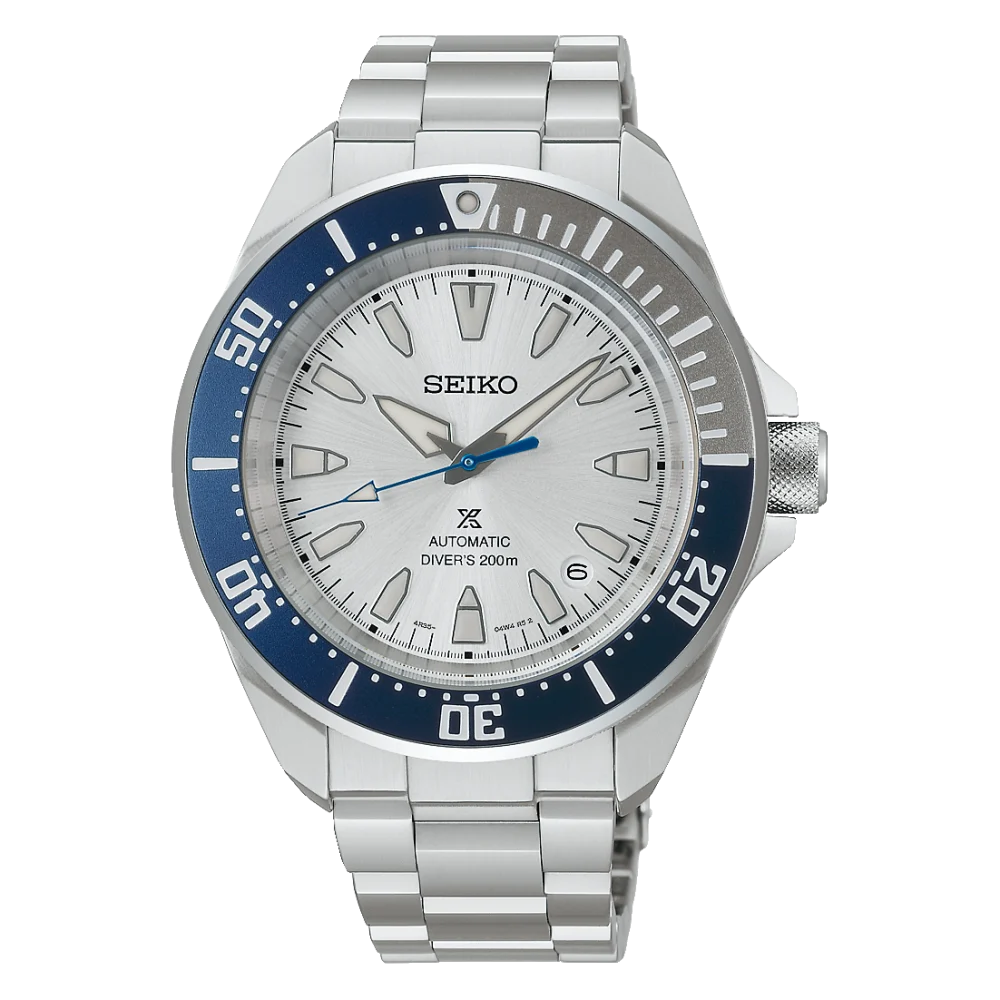
Few names in horology evoke the same blend of deep-rooted tradition, technical disruption, and mainstream accessibility as Seiko. For over a century, the Japanese manufacturer has operated not just as a watchmaker, but as an engine of industry evolution. From humble beginnings in a Tokyo repair shop to a global empire that redefined global precision, the story of Seiko is an ongoing masterclass in engineering resilience.
The House of Exquisite Workmanship
The foundation of Seiko was laid in 1881 by a 21-year-old entrepreneur named Kintarō Hattori. Initially opening a modest watch shop and repair business in Tokyo's Kyobashi district, Hattori quickly realized that retailing imported timepieces would only take his vision so far. By 1892, he established the Seikosha factory. The name was chosen deliberately: in Japanese, "Seiko" translates to "exquisite," "minute," or "success," while "sha" means house.
[1881] K. Hattori Shop Opens ──> [1892] Seikosha Factory Founded ──> [1913] The Laurel Wristwatch ──> [1924] First "Seiko" Branded Watch
Seikosha initially specialized in wall clocks and pocket watches, such as the 1895 "Timekeeper". However, Hattori anticipated the global shift from pockets to wrists ahead of his domestic competitors. In 1913, Seikosha created the Laurel, the very first wristwatch made in Japan.
Disaster struck in 1923 when the Great Kanto Earthquake devastated Tokyo, burning the Seikosha factory and its inventory to ash. Rather than yield, Hattori immediately began rebuilding. In December 1924, the company released its first timepiece bearing the single, simplified name on the dial: Seiko. It signaled a rebirth and established a name that would soon shake the foundations of Western watchmaking.
Shaking Up the Swiss Status Quo
By the mid-20th century, Seiko was no longer content with being a domestic leader; it aimed to compete with the finest mechanical watchmakers in Switzerland. This era saw the introduction of the Seiko Marvel (1956), the first movement designed entirely in-house from scratch. The Marvel incorporated Diashock, Seiko's proprietary shock-absorption system designed to safeguard vulnerable internal pivots against impacts.
To prove its engineering mettle, Seiko Watch entered its mechanical movements into the highly prestigious Swiss Observatory Chronometer Competitions in Neuchâtel and Geneva during the 1960s. Initially placing far down the ranks, Seiko rapidly advanced. By 1968, Seiko movements dominated the Geneva Observatory competition, sweeping the fourth through tenth places and setting an all-time record for mechanical efficiency and precision.
The Quartz Revolution
While achieving mechanical parity with Europe was an impressive feat, Seiko's most historic contribution arrived on Christmas Day, 1969. The company unveiled the Seiko Quartz Astron, the world's first commercial quartz wristwatch.
The Astron replaced traditional mechanical hairsprings and balance wheels with a minute quartz crystal oscillator. When a voltage was applied from a compact battery, the crystal vibrated at an incredibly stable frequency. The result was a watch accurate to within ±5 seconds per month—roughly 100 times more precise than any mechanical watch available.
Rather than monopolizing the patents, Seiko chose to make its quartz technology open-source. This strategic decision triggered the global "Quartz Crisis" (or "Quartz Revolution" from the Japanese perspective), an era that democratized accurate timekeeping for everyday consumers while forcing the global horological landscape to radically adapt.
Defining Modern Practicality
Seiko's legacy is defined by its ability to translate bleeding-edge technology into rugged, real-world utility. This approach is anchored by several distinct sub-brands:
Seiko 5 Sports
Launched in 1963 as the Sportsmatic 5, this series set the standard for affordable mechanical watches. The "5" represents five core pillars required for everyday durability:
-
An automatic winding movement
-
A day-date display combined in a single window
-
Significant water resistance
-
A recessed crown at the 4 o’clock position for comfort
-
A highly durable case and bracelet build
Prospex (Professional Specifications)
Seiko released Japan's first dedicated diver's watch in 1965, a 150-meter water-resistant piece famously utilized by Japanese Antarctic Research Expeditions. Today, the Prospex line houses highly reliable dive watches, pilot pieces, and field gear that are trusted by outdoor enthusiasts and professional divers alike.
Presage
For enthusiasts seeking classic style over rugged durability, the Presage collection combines Japanese aesthetic traditions with mechanical movements. Famous for its multi-layered enamel dials and the visually rich Cocktail Time series, Presage highlights the expressive, artistic side of Japanese design.
Pushing the Boundaries of Innovation
Seiko’s drive to build a self-sustaining timepiece—eliminating the need for routine battery replacements—led to the development of two signature, high-tech movements:
-
Kinetic: Introduced in 1988, Kinetic technology blends automatic and electronic systems. It utilizes an internal oscillating rotor—much like a traditional mechanical watch—to generate electrical energy from the wearer’s wrist movements, storing it in a self-charging capacitor to power a highly accurate quartz circuit.
-
Spring Drive: Released in 1999 after decades of development, Spring Drive represents a highly unique horological approach. It pairs a traditional mainspring barrel and gear train with an electronic regulator. By removing the mechanical escapement, the hands sweep across the dial in a completely fluid motion without any ticking or stuttering, while delivering quartz-level accuracy.
A Lasting Horological Legacy
From entry-level mechanical references to ultra-precise satellite-synchronized sports models, Seiko continues to champion a vertically integrated manufacturing philosophy. Unlike brands that source external components, Seiko produces its own hairsprings, synthetic jewels, micro-electronics, and lubricating oils completely in-house.
By treating high precision not as an exclusive luxury but as a fundamental standard, Seiko has earned an enduring spot on the wrists of casual wearers, military personnel, and seasoned collectors alike. It remains a true cornerstone of global watchmaking.

 English
 Arabic
 French
 Spanish
 Portuguese
 Deutsch
 Turkish
 Dutch
Dutch
 Italiano
 Russian
 Romaian