
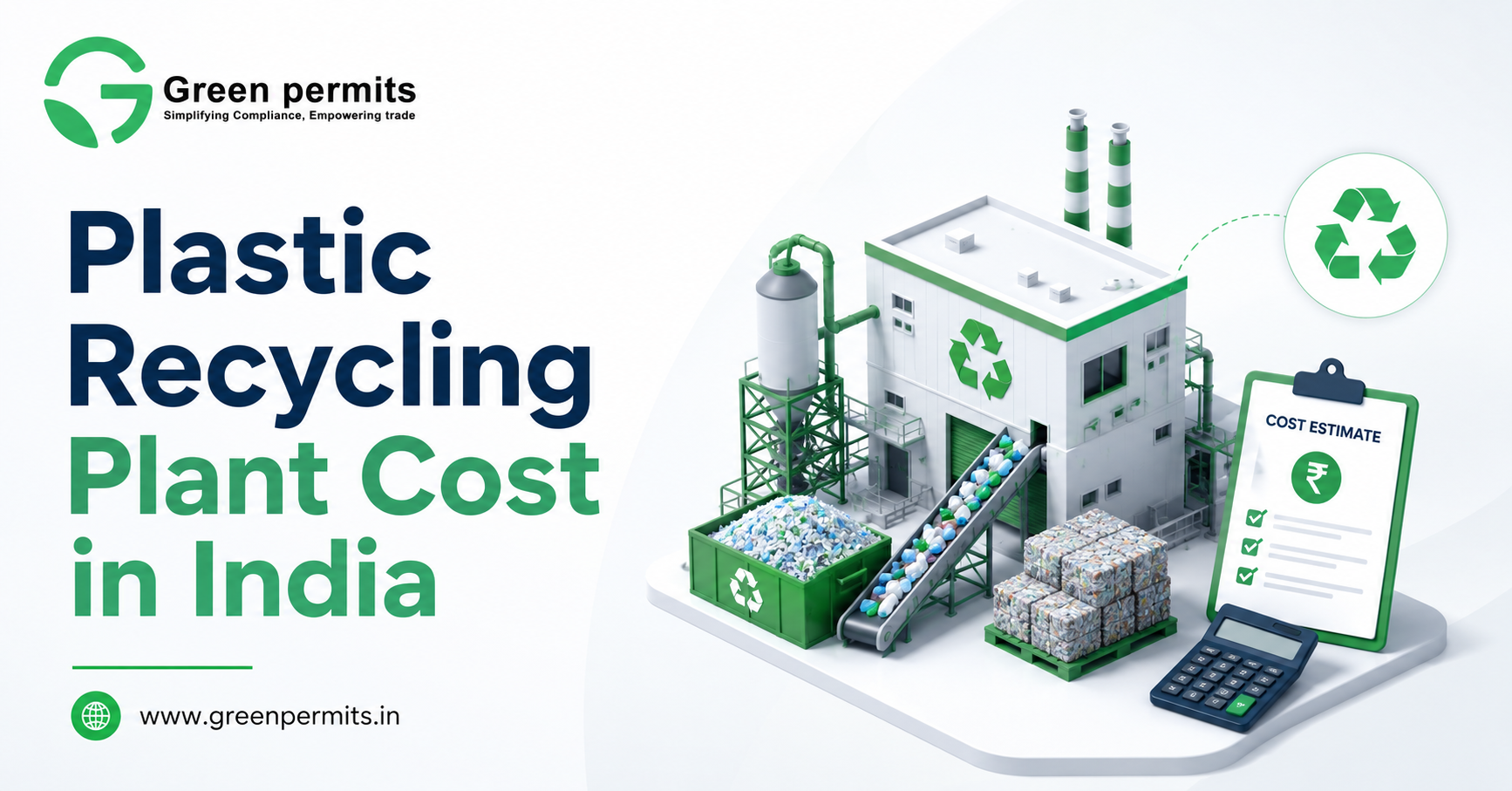
Plastic recycling has emerged as one of the fastest-growing industries in India due to increasing environmental awareness, stricter waste management regulations, growing demand for recycled plastic products, and Extended Producer Responsibility (EPR) requirements. With millions of tonnes of plastic waste generated annually, the demand for authorized recycling facilities continues to rise.
A plastic recycling plant helps convert waste plastic into reusable raw materials that can be used for manufacturing new products. Recycled plastic is widely used in packaging, construction materials, automotive components, household products, textiles, industrial applications, and consumer goods.
Many entrepreneurs and investors are exploring opportunities in the plastic recycling sector. However, before investing, it is important to understand the total project cost, machinery requirements, land requirement, licenses, operating expenses, and profitability of the business.
A well-planned plastic recycling project can become a profitable and sustainable long-term business while contributing to environmental protection and circular economy goals.
What is a Plastic Recycling Plant
A plastic recycling plant is a facility that collects, sorts, cleans, processes, and converts waste plastic into reusable raw materials.
The plant may process different types of plastic waste such as:
- PET bottles
- HDPE containers
- LDPE film
- Plastic packaging waste
- Industrial plastic scrap
- Household plastic waste
- Polypropylene products
- Multilayer plastic waste
The recycled material is usually converted into plastic flakes, granules, pellets, or raw material for further manufacturing.
The type of plastic processed influences machinery selection and overall project cost.
Why Plastic Recycling is a Growing Business
India generates large quantities of plastic waste every day from households, industries, commercial establishments, retail packaging, and e-commerce activities.
Several factors are driving demand for plastic recycling facilities:
- Increasing plastic waste generation
- Mandatory EPR compliance
- Growing demand for recycled plastic
- Government focus on circular economy
- Sustainability commitments by brands
- Rising environmental awareness
Many producers and brand owners now actively seek authorized recyclers to fulfill their EPR obligations, creating additional business opportunities for recycling plants.
Factors Affecting Plastic Recycling Plant Cost
The cost of setting up a plastic recycling plant depends on multiple factors.
The most important factors include:
- Plant capacity
- Type of plastic processed
- Automation level
- Land cost
- Machinery selection
- Utility requirements
- Pollution control systems
- Labor requirement
- Compliance approvals
A small recycling unit requires significantly lower investment than a fully automated industrial recycling facility.
Proper project planning helps determine the actual investment required.
Land Requirement for Plastic Recycling Plant
Land is one of the major cost components of the project.
The land requirement depends on:
- Plant capacity
- Storage area requirement
- Machinery layout
- Waste handling area
- Finished goods storage
- Future expansion plans
A small plastic recycling unit may require approximately 5,000 to 10,000 square feet.
A medium-sized plant may require 15,000 to 30,000 square feet.
Larger industrial recycling facilities may require several acres depending on production capacity.
The facility should ideally be located in an industrial area approved for recycling activities.
Machinery Required for Plastic Recycling Plant
Machinery cost usually represents a significant portion of the total project investment.
A typical plastic recycling plant may require:
- Plastic shredder
- Sorting system
- Washing line
- Friction washer
- Drying system
- Agglomerator
- Extruder machine
- Pelletizer
- Granule cutting machine
- Conveyor system
- Storage bins
- Weighing machines
The machinery configuration depends on the plastic category and desired output quality.
More advanced facilities may include automated sorting systems and specialized separation equipment.
Plastic Recycling Plant Cost in India
The overall project cost varies depending on plant size and technology.
As a general estimate:
Small Scale Plant
A basic recycling unit with limited processing capacity may require an investment starting from approximately Rs. 15 lakh to Rs. 50 lakh.
Medium Scale Plant
A semi-automated recycling plant may require investment ranging from Rs. 50 lakh to Rs. 2 crore.
Large Scale Plant
A fully automated plastic recycling facility with advanced machinery and higher production capacity may require investment exceeding Rs. 2 crore to Rs. 10 crore or more.
The exact investment depends on project scope, location, and technology selected.
A detailed feasibility study is recommended before finalizing the investment.
Major Cost Components
The total project cost generally includes:
Land and Building
This includes industrial land, factory shed, storage area, office space, and utility infrastructure.
Machinery and Equipment
Shredders, washing lines, extruders, pelletizers, conveyors, and auxiliary systems form the largest portion of the investment.
Pollution Control Systems
Plastic recycling plants often require wastewater treatment systems, dust control systems, and environmental protection measures.
Utility Infrastructure
Power connection, electrical systems, water supply, and utility installations contribute to project cost.
Licensing and Compliance
Registration fees, approvals, environmental permissions, and consultancy charges should also be considered.
Pollution Control and Compliance Cost
Plastic recycling plants require various environmental approvals before operation.
Common approvals may include:
- Consent to Establish (CTE)
- Consent to Operate (CTO)
- Plastic Waste Recycler Registration
- Hazardous Waste Authorization, if applicable
- Factory License
- Fire Safety Approval
Compliance costs vary depending on project size and state-specific requirements.
Environmental planning should be incorporated at the beginning of the project.
Working Capital Requirement
Many investors focus only on fixed investment and overlook working capital requirements.
Working capital is needed for:
- Plastic waste procurement
- Labor expenses
- Electricity bills
- Water consumption
- Transportation costs
- Maintenance expenses
- Packaging costs
A plant should ideally maintain sufficient working capital to support operations for several months.
This improves business stability and reduces financial stress.
Profitability of Plastic Recycling Plant
Plastic recycling can be a profitable business when managed efficiently.
Revenue is generally generated from:
- Sale of recycled plastic granules
- Sale of plastic flakes
- Industrial supply contracts
- EPR-related business opportunities
- Long-term waste procurement agreements
Profitability depends on:
- Raw material cost
- Recovery efficiency
- Product quality
- Market demand
- Plant utilization rate
Higher-quality recycled material generally commands better market prices.
Timeline for Plastic Recycling Plant Setup
The project timeline depends on land readiness, approvals, machinery procurement, and installation.
The setup process generally includes:
- Feasibility study
- DPR preparation
- Land finalization
- Regulatory approvals
- Machinery procurement
- Installation and testing
- Trial production
- Commercial operations
Projects with proper planning are generally completed faster and face fewer operational challenges.
Importance of DPR Before Investment
A Detailed Project Report is one of the most important documents before starting a recycling plant.
The DPR generally covers:
- Project feasibility
- Machinery list
- Cost estimation
- Revenue projections
- Financial analysis
- Compliance requirements
- Risk assessment
A professionally prepared DPR helps investors understand the complete project before committing capital.
Banks and financial institutions may also require a DPR for project financing.
Common Mistakes During Plant Setup
Many entrepreneurs face difficulties because they begin the project without proper planning.
Common mistakes include:
- Purchasing machinery without feasibility analysis
- Choosing unsuitable land
- Ignoring environmental approvals
- Underestimating working capital
- Poor plant layout planning
- Weak raw material sourcing strategy
These mistakes can significantly increase project cost and delay profitability.
Professional guidance helps minimize these risks.
Benefits of Professional Recycling Plant Consulting
Setting up a recycling facility requires technical, financial, and regulatory expertise.
A professional consultant can assist with:
- Feasibility study
- DPR preparation
- Machinery planning
- Cost estimation
- Compliance approvals
- Plant layout design
- Project execution support
Professional assistance helps improve project success and reduce investment risk.
Learn the Complete Plastic Recycling Plant Setup Process
Planning to establish a plastic recycling plant in India? Understanding project cost, machinery requirements, land selection, approvals, profitability, and compliance obligations is essential before investing.
Read the complete guide here:
👉 https://www.greenpermits.in/10/start-a-plastic-waste-recycling-plant-in-india-licenses-cost-epr/
📞 Get Expert Assistance for Plastic Recycling Plant Setup
Need assistance with Plastic Waste Recycler Registration, DPR preparation, machinery planning, Pollution Control Board approvals, feasibility studies, project cost estimation, or complete recycling plant setup support? The experts at Green Permits Consulting can guide you throughout the complete process.
🌐 Website: https://www.greenpermits.in/
📞 Phone: +91 78350 06182
📧 Email: wecare@greenpermits.in

 English
 Arabic
 French
 Spanish
 Portuguese
 Turkish
 Dutch
Dutch
 Italiano
 Russian
 Romaian
 Portuguese (Brazil)