
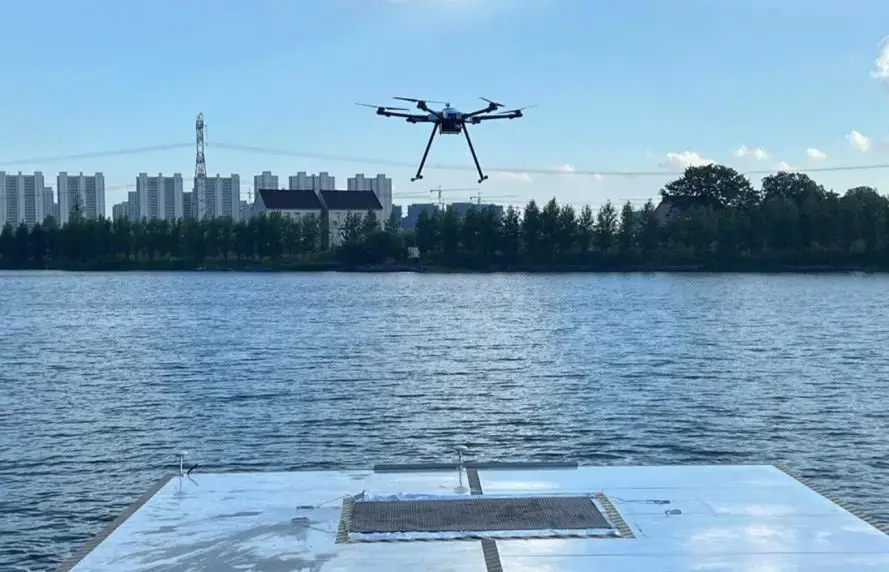
In industrial drone applications, one of the most critical yet often misunderstood specifications is payload capacity. While flight time, range, and camera quality are commonly discussed, payload capacity directly determines what a drone can actually do in real-world industrial operations.
Whether it is power line inspection, firefighting support, wind turbine inspection, or mapping missions, payload capacity defines the boundary between a consumer UAV and a true industrial-grade system.
What Does Payload Capacity Mean in Industrial Drones?
Payload capacity refers to the maximum additional weight a drone can safely carry beyond its own structural components, including:
- Cameras and imaging systems
- Thermal sensors
- LiDAR scanners
- Communication modules
- Delivery or release systems (e.g., firefighting agents)
- Specialized industrial tools
In simple terms:
Payload capacity = usable weight the drone can carry for mission equipment
It does NOT include the drone’s own weight (also called “empty weight” or “takeoff weight base”).
Why Payload Capacity Is Critical in Industrial UAV Operations
Unlike consumer drones that mainly carry a built-in camera, industrial UAVs are mission-driven platforms. Payload determines operational capability.
1. Inspection quality depends on payload
Higher payload capacity allows integration of:
- High-resolution zoom cameras
- Thermal imaging systems
- Multi-sensor fusion units
This directly improves defect detection accuracy in assets like wind turbines or power lines.
2. Multi-sensor operations require higher payload
Modern industrial inspections often combine:
- RGB + thermal imaging
- LiDAR + photogrammetry
- Gas or environmental sensors
Each additional sensor increases payload demand.
3. Specialized missions require heavy payloads
Some industrial use cases include:
- Firefighting drones carrying suppression modules
- Logistics drones transporting emergency supplies
- Search-and-rescue drones carrying loudspeakers or lighting systems
Without sufficient payload capacity, these missions are not feasible.
Typical Payload Capacity Ranges
Industrial drones vary widely depending on design and application:
- Light industrial UAVs: 0.5 – 2 kg
(inspection, mapping, lightweight cameras) - Mid-range industrial UAVs: 2 – 5 kg
(thermal + zoom payloads, multi-sensor setups) - Heavy-lift UAVs: 5 – 25+ kg
(firefighting, delivery systems, LiDAR rigs, industrial tooling)
The general rule:
Higher payload = lower flight time, but greater mission capability
The Trade-Off: Payload vs Flight Time
Payload capacity is tightly linked to battery efficiency and aerodynamics.
When payload increases:
- Power consumption rises
- Flight time decreases
- Stability may require stronger motors
- Wind resistance handling improves or degrades depending on design
This relationship is a fundamental engineering constraint in UAV design.
Key Factors That Determine Payload Capacity
1. Motor and propulsion system
Stronger motors allow higher thrust, enabling heavier payloads.
2. Frame structure
Carbon fiber or reinforced composite frames increase load tolerance.
3. Battery power density
Higher energy batteries support both payload and endurance.
4. Flight controller stability
Advanced controllers ensure stability under varying payload conditions.
5. Aerodynamic design
Efficient airflow reduces energy consumption, improving payload efficiency.
Why Payload Capacity Matters in Industrial Applications
Wind turbine inspection
Requires:
- Zoom cameras
- Stabilized gimbals
- AI imaging modules
Power line inspection
Requires:
- Long-range zoom sensors
- Thermal cameras for hotspot detection
Emergency response
Requires:
- Searchlights
- Loudspeakers
- Delivery payloads
Industrial surveying
Requires:
- LiDAR systems
- High-precision GNSS modules
Each scenario depends on different payload configurations.
Common Misunderstandings About Payload Capacity
❌ “Higher payload always means better drone”
Not necessarily. It often reduces flight time and increases cost.
❌ “Payload capacity equals total drone weight”
Incorrect. Payload is only additional load, not the drone’s own weight.
❌ “All drones can swap payload freely”
Only modular industrial UAVs support true multi-payload systems.
How to Choose the Right Payload Capacity
When selecting an industrial drone, consider:
- Mission type (inspection, mapping, delivery, rescue)
- Sensor weight requirements
- Required flight duration
- Environmental conditions (wind, offshore, altitude)
- Future scalability needs
A practical approach is:
Define the heaviest payload you will ever need, then add a safety margin of 20–30%.
Conclusion
Payload capacity is the foundation of industrial drone capability. It determines not only what sensors a UAV can carry, but also how effectively it can execute complex missions in real environments.
In industrial applications, choosing the right payload capacity is a balance between performance, endurance, and mission flexibility.
Understanding this parameter is essential for any organization investing in UAV technology for inspection, monitoring, or emergency response operations.

 English
 Arabic
 French
 Spanish
 Portuguese
 Turkish
 Dutch
Dutch
 Italiano
 Russian
 Romaian
 Portuguese (Brazil)