
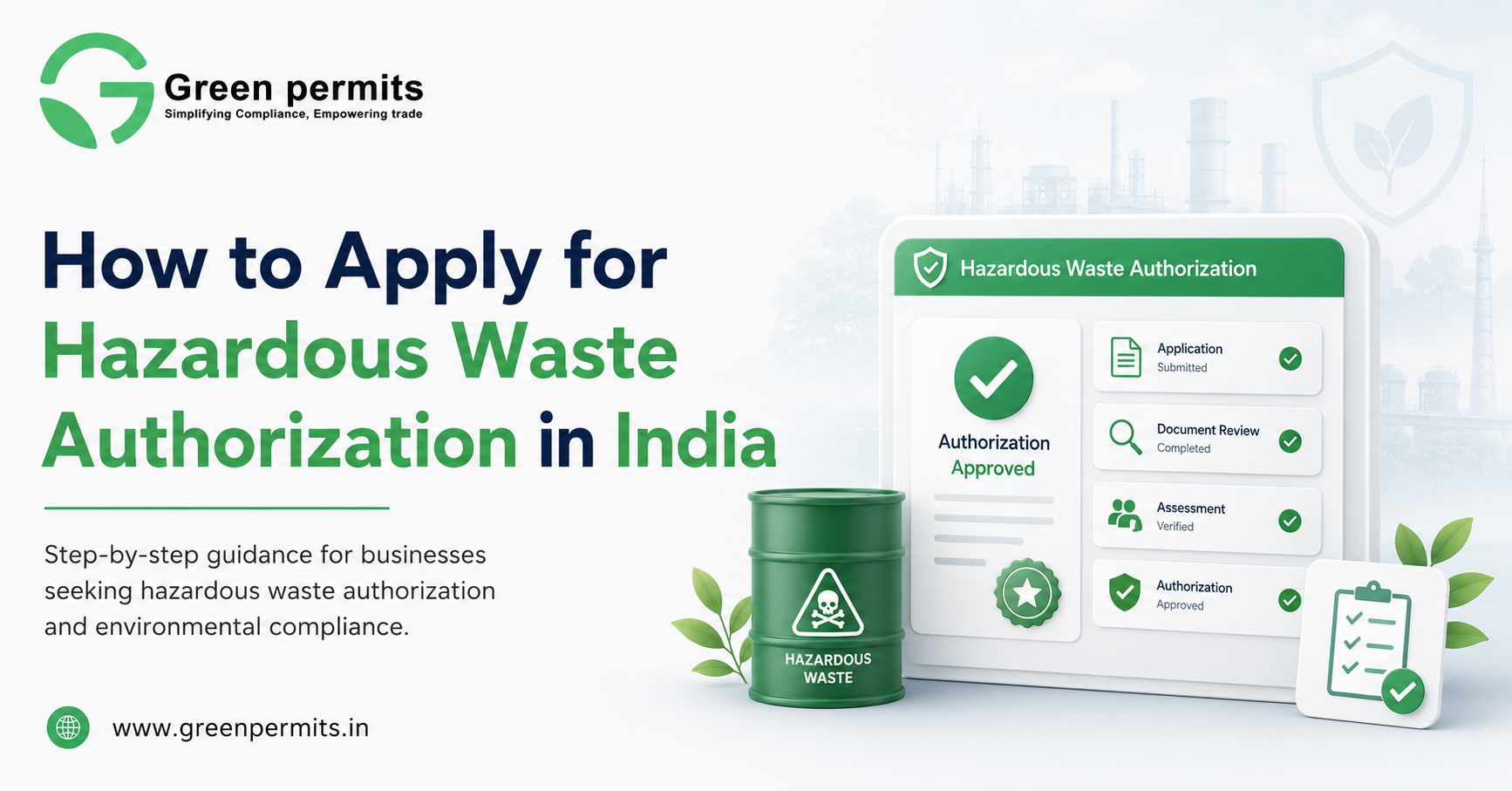
Industries across India generate various types of hazardous waste during manufacturing, processing, storage, treatment, and industrial operations. If hazardous waste is not handled, stored, transported, recycled, or disposed of properly, it can create serious environmental and health risks.
To ensure safe management of hazardous waste, the Government of India has introduced the Hazardous and Other Wastes (Management and Transboundary Movement) Rules. Under these rules, industries that generate, store, transport, recycle, treat, or dispose of hazardous waste are required to obtain Hazardous Waste Authorization from the State Pollution Control Board (SPCB) or Pollution Control Committee (PCC).
Hazardous Waste Authorization is one of the most important environmental approvals for industries dealing with hazardous materials. Understanding the application process helps businesses maintain compliance and avoid penalties, notices, and operational disruptions.
What is Hazardous Waste Authorization
Hazardous Waste Authorization is an approval issued by the State Pollution Control Board that permits a business to generate, store, handle, transport, recycle, treat, or dispose of hazardous waste according to applicable environmental regulations.
The authorization ensures that hazardous waste is managed safely and does not harm human health or the environment.
The approval specifies the type of hazardous waste generated, quantity of waste, storage arrangements, treatment methods, and disposal mechanisms approved for the facility.
Businesses covered under the Hazardous Waste Rules must obtain authorization before carrying out regulated activities.
Why Hazardous Waste Authorization is Important
Many industrial processes generate waste containing toxic, corrosive, flammable, reactive, or environmentally harmful substances.
Improper handling of such waste can lead to:
- Soil contamination
- Groundwater pollution
- Air pollution
- Fire hazards
- Health risks
- Environmental damage
Hazardous Waste Authorization helps ensure that waste is managed through approved procedures and authorized facilities.
It also demonstrates compliance with environmental regulations and reduces legal risks for businesses.
Who Needs Hazardous Waste Authorization
Hazardous Waste Authorization is generally required for industries that generate hazardous waste during operations.
Common sectors include:
- Chemical industries
- Pharmaceutical units
- Paint manufacturers
- Metal processing units
- Engineering industries
- Automobile manufacturing units
- Battery manufacturers
- Recycling plants
- Petrochemical industries
- Oil processing facilities
- Electronics manufacturing units
The requirement depends on the type and quantity of hazardous waste generated by the facility.
Businesses should evaluate their waste streams carefully to determine applicability.
Types of Activities Covered Under Authorization
Authorization may be required for various hazardous waste-related activities.
These activities generally include:
- Generation of hazardous waste
- Collection of hazardous waste
- Storage of hazardous waste
- Transportation of hazardous waste
- Recycling of hazardous waste
- Treatment of hazardous waste
- Disposal of hazardous waste
- Utilization of hazardous waste
The approval conditions depend on the nature of operations and waste category involved.
Documents Required for Hazardous Waste Authorization
Proper documentation is essential for successful approval.
The documents generally required include:
- Company Incorporation Certificate
- PAN Card
- GST Registration Certificate
- Factory License
- Consent to Establish (CTE)
- Consent to Operate (CTO)
- Manufacturing Process Details
- Hazardous Waste Generation Details
- Site Layout Plan
- Waste Storage Area Details
- Waste Disposal Agreement
- Authorized Signatory Documents
Additional documents may be required depending on the industry category and state-specific requirements.
Accurate documentation helps reduce approval delays.
Hazardous Waste Authorization Application Process
The application process begins with identifying the hazardous waste generated by the facility.
The business must determine the type of waste, quantity generated, storage requirements, and disposal method.
After this assessment, the applicant gathers required documents and prepares waste management details.
The application is then submitted through the State Pollution Control Board portal along with supporting documents.
The authority reviews the application and evaluates the proposed waste management system.
If required, the Pollution Control Board may seek clarification or conduct a site inspection.
Once satisfied that the facility can safely manage hazardous waste, the authorization is granted.
The business can then continue operations in compliance with environmental regulations.
Information Required in the Application
The authorization application generally requires detailed information about the facility and waste generation activities.
Important details include:
- Nature of industrial activity
- Manufacturing process
- Raw materials used
- Hazardous waste category
- Quantity of waste generated
- Storage arrangements
- Treatment methods
- Disposal arrangements
- Pollution control measures
Providing accurate information is important because incorrect declarations may create compliance issues later.
Hazardous Waste Storage Requirements
Industries generating hazardous waste must establish proper storage systems.
Hazardous waste storage areas should generally:
- Be clearly identified
- Have impermeable flooring
- Prevent leakage and spills
- Be protected from weather exposure
- Follow safety and labeling requirements
Proper storage management helps prevent environmental contamination and improves regulatory compliance.
Authorities often verify storage arrangements during inspections.
Hazardous Waste Disposal Process
Hazardous waste cannot be disposed of through ordinary waste disposal channels.
The waste must generally be sent to:
- Authorized recyclers
- Treatment facilities
- Co-processing facilities
- Common hazardous waste treatment facilities
- Authorized disposal facilities
Industries must maintain records of waste transfer and disposal activities.
Proper documentation is essential for demonstrating compliance during inspections and audits.
Validity of Hazardous Waste Authorization
The validity period of authorization depends on the applicable rules and conditions issued by the Pollution Control Board.
Businesses should monitor authorization validity and apply for renewal before expiry if required.
Operating with an expired authorization may result in regulatory action.
Timely renewal helps maintain uninterrupted compliance.
Common Challenges During Authorization
Many businesses face approval delays because they underestimate hazardous waste compliance requirements.
Common challenges include:
- Incorrect waste categorization
- Incomplete documentation
- Weak storage arrangements
- Missing disposal agreements
- Poor waste management planning
- Inaccurate waste quantity estimation
Professional support helps businesses avoid these issues and improve approval timelines.
Importance of Ongoing Compliance
Obtaining Hazardous Waste Authorization is not a one-time requirement.
Businesses must continue maintaining records and following authorization conditions.
This generally includes:
- Waste generation records
- Storage records
- Disposal records
- Transportation documents
- Recycler agreements
- Annual compliance reports
Authorities may conduct inspections to verify compliance.
Failure to follow authorization conditions may result in notices, penalties, or suspension of approvals.
Benefits of Hiring a Hazardous Waste Consultant
Hazardous waste compliance involves technical documentation, environmental regulations, and ongoing record management.
A professional consultant can assist with:
- Waste applicability assessment
- Documentation preparation
- Authorization application filing
- Waste categorization
- Storage planning
- Disposal coordination
- Compliance management
Professional support helps businesses reduce approval delays and maintain long-term compliance.
Learn the Complete Hazardous Waste Authorization Process
Planning to apply for Hazardous Waste Authorization in India? Understanding waste categorization, storage requirements, disposal procedures, Pollution Control Board approvals, and compliance obligations is essential before starting.
Read the complete guide here:
👉 https://www.greenpermits.in/03/hazardous-waste-amendment-rules-2026-key-changes/
📞 Get Expert Assistance for Hazardous Waste Authorization
Need assistance with Hazardous Waste Authorization, Pollution Control Board approvals, waste categorization, storage planning, disposal agreements, environmental compliance, or authorization renewal? The experts at Green Permits Consulting can guide you throughout the complete process.
🌐 Website: https://www.greenpermits.in/
📞 Phone: +91 78350 06182
📧 Email: wecare@greenpermits.in

 English
 Arabic
 French
 Spanish
 Portuguese
 Turkish
 Dutch
Dutch
 Italiano
 Russian
 Romaian
 Portuguese (Brazil)