
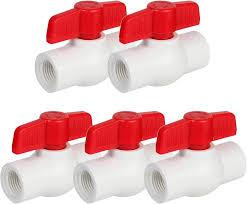
Water Project Valve systems are essential components in modern water distribution networks, where controlled flow management and pressure balancing are required to maintain stable and efficient operation. In large municipal systems, industrial supply lines, and irrigation networks, these devices are installed at key points to ensure that water movement can be regulated and monitored effectively.
One of the most common installation areas is at pipeline intersections. These junctions often connect multiple distribution lines, making them important control points within the system. By placing a Water Project Valve at these locations, engineers can isolate sections of the network for maintenance or adjust flow direction depending on demand conditions. This helps reduce disruption across the wider system.
Another important installation point is near water treatment facilities. After water is processed, it must be distributed through controlled pipelines to residential or industrial zones. Control devices placed at this stage help manage initial pressure levels and ensure that downstream systems receive stable flow conditions. This positioning also supports safety checks and operational adjustments when system demand changes.
In urban infrastructure, valves are also commonly installed along main distribution corridors. These pipelines carry large volumes of water across long distances, and control points are needed at intervals to manage pressure differences. Without proper regulation, pressure imbalance can affect flow consistency in different zones. Strategic placement helps maintain equilibrium across the network.
Storage facilities such as reservoirs and water towers also rely on control devices at inlet and outlet points. These installations allow operators to regulate filling and release cycles based on consumption patterns. This supports efficient water usage while preventing overflow or pressure instability within the system.
In industrial water systems, installation points are often selected based on process requirements. Factories and production plants may require different pressure levels for cooling, cleaning, or processing operations. Control devices positioned near these usage points help adjust flow according to operational needs, improving flexibility in system management.
A Fangyuan Water Project Valve is designed with these application scenarios in mind, focusing on practical installation environments and long-term system coordination. Rather than serving a single function, these components are integrated into broader network strategies where placement plays an important role in performance consistency.
Maintenance considerations also influence installation planning. In many systems, valves are positioned in accessible locations to allow inspection without disrupting the entire network. This approach reduces downtime and supports efficient servicing schedules over time.
As water infrastructure continues to expand in both urban and rural regions, installation planning becomes increasingly important. Proper positioning ensures that flow control, pressure balance, and system reliability are maintained across different operating conditions.For additional technical information and product details, visit https://www.fy-valve.com/

 English
 French
 Spanish
 Portuguese
 Deutsch
 Turkish
 Dutch
Dutch
 Italiano
 Russian
 Romaian
 Portuguese (Brazil)