
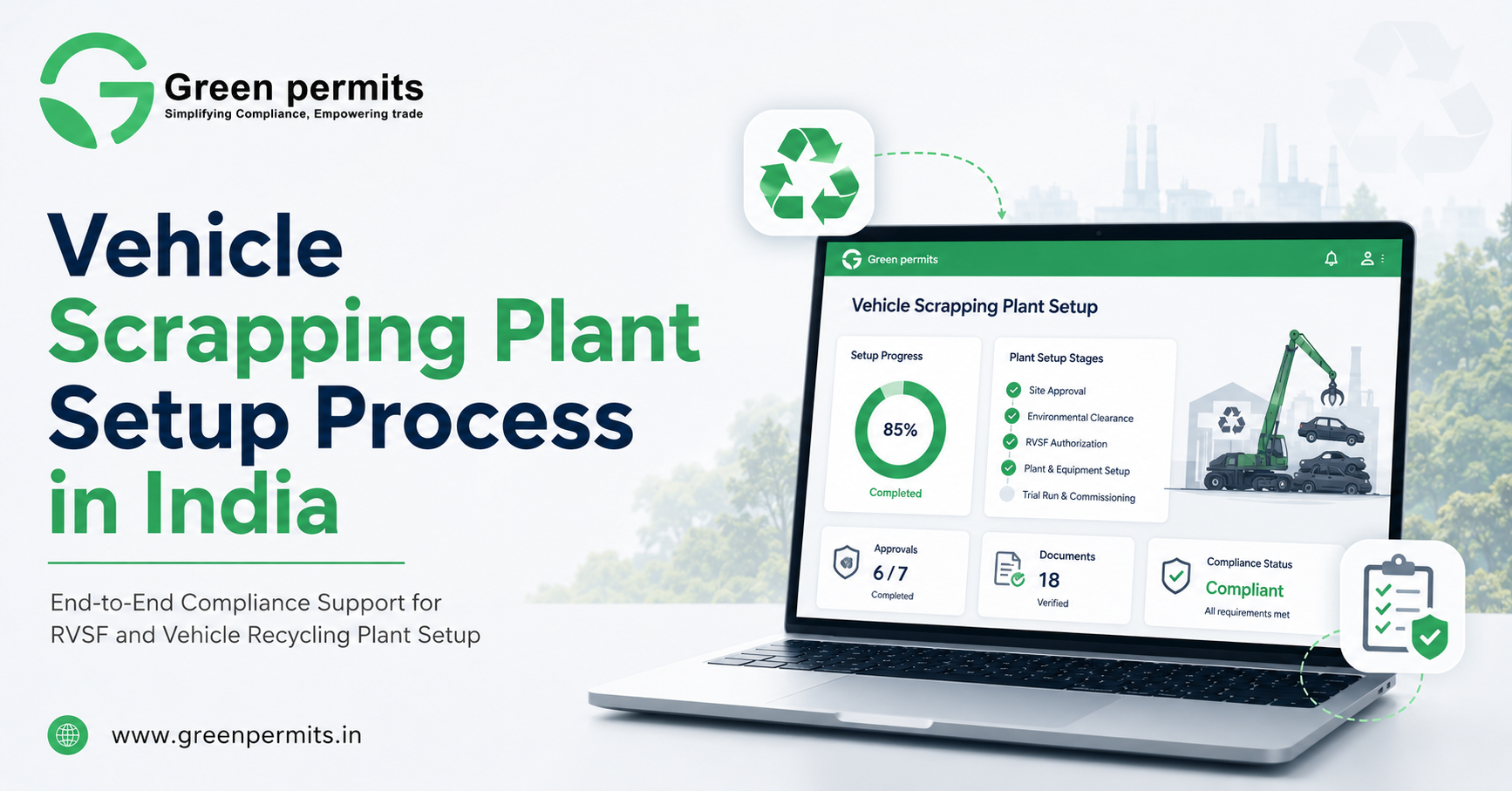
The vehicle scrapping industry in India is growing rapidly due to the implementation of the Vehicle Scrapping Policy and increasing focus on sustainable recycling practices. Every year, millions of vehicles reach the end of their useful life, creating a significant opportunity for organized recycling and resource recovery.
A Registered Vehicle Scrapping Facility (RVSF) helps safely dismantle, depollute, recycle, and dispose of end-of-life vehicles while recovering valuable materials such as steel, aluminum, copper, plastics, rubber, and glass.
The Government of India is encouraging investment in vehicle scrapping infrastructure to reduce pollution, improve road safety, promote resource efficiency, and support the circular economy. As a result, many entrepreneurs, automobile companies, recycling businesses, and investors are exploring opportunities to establish vehicle scrapping plants across the country.
However, setting up a vehicle scrapping facility requires proper planning, regulatory approvals, land selection, pollution control compliance, and registration under the applicable guidelines.
Understanding the complete setup process is essential before making an investment.
What is a Vehicle Scrapping Plant
A vehicle scrapping plant, also known as a Registered Vehicle Scrapping Facility (RVSF), is an authorized facility where end-of-life vehicles are dismantled, depolluted, recycled, and processed according to government regulations.
The facility safely removes hazardous materials such as engine oil, coolant, brake fluid, fuel residues, batteries, airbags, and other components before dismantling the vehicle.
After dismantling, recyclable materials are recovered and supplied to various industries for reuse and manufacturing.
The objective is to ensure environmentally sound recycling while reducing the environmental impact of abandoned and old vehicles.
Why Invest in a Vehicle Scrapping Plant
India has millions of old vehicles that are approaching the end of their operational life. The government's vehicle scrapping policy is expected to increase the number of vehicles entering the organized recycling sector over the coming years.
A vehicle scrapping facility can generate revenue through:
- Sale of scrap metal
- Sale of reusable spare parts
- Recycling contracts
- ELV compliance services
- Material recovery operations
- Automobile manufacturer partnerships
The growing demand for recycled steel and sustainable manufacturing practices is creating strong opportunities for this industry.
Step 1: Conduct a Feasibility Study
Before starting the project, investors should evaluate the commercial viability of the facility.
A feasibility study helps assess:
- Availability of end-of-life vehicles
- Market demand
- Competition analysis
- Investment requirements
- Revenue potential
- Land requirement
- Compliance obligations
A detailed feasibility study helps investors understand project risks and opportunities before committing capital.
Step 2: Prepare a Detailed Project Report (DPR)
A Detailed Project Report serves as the foundation of the project.
The DPR generally includes:
- Project overview
- Facility capacity
- Land requirement
- Machinery requirement
- Process flow
- Investment estimation
- Financial projections
- Compliance requirements
- Pollution control systems
The DPR is often required for bank loans, investor funding, approvals, and project planning.
A professionally prepared DPR can significantly improve project execution.
Step 3: Select Suitable Land
Land selection is one of the most important decisions during project development.
The site should preferably be located in an industrial area with good transportation access and sufficient space for vehicle storage, dismantling operations, material recovery, and future expansion.
Important considerations include:
- Industrial zoning compliance
- Road connectivity
- Availability of utilities
- Environmental suitability
- Expansion potential
- Distance from residential areas
Depending on plant capacity, land requirements may range from 40,000 square feet to several acres.
Proper site selection simplifies future approvals and operations.
Step 4: Obtain Pollution Control Board Approvals
Vehicle scrapping plants require environmental approvals before construction and operation.
The primary approvals generally include:
- Consent to Establish (CTE)
- Consent to Operate (CTO)
The Pollution Control Board evaluates the proposed facility, depollution process, hazardous waste management system, storage arrangements, wastewater management plan, and environmental safeguards.
Without these approvals, the facility cannot legally operate.
Step 5: Develop Infrastructure and Install Machinery
After obtaining initial approvals, infrastructure development and machinery installation can begin.
A typical vehicle scrapping facility may include:
- Vehicle inspection area
- Depollution stations
- Dismantling bays
- Hydraulic lifting equipment
- Vehicle shredders
- Material sorting systems
- Storage areas
- Hazardous waste storage facilities
- Weighbridge
- Fire safety systems
The machinery requirement depends on plant capacity and automation level.
Proper infrastructure improves operational efficiency and worker safety.
Step 6: Obtain RVSF Registration
After developing the facility, the business must obtain registration as a Registered Vehicle Scrapping Facility.
The registration process generally requires:
- Company details
- Land documents
- Plant layout
- Machinery details
- Pollution Control Board approvals
- Infrastructure information
- Safety arrangements
- Compliance documents
The authorities may inspect the facility before granting registration.
Only registered facilities are authorized to carry out vehicle scrapping activities.
Step 7: Establish Vehicle Procurement Network
A scrapping facility requires a continuous supply of end-of-life vehicles.
Vehicle sourcing may include:
- Individual vehicle owners
- Fleet operators
- Transport companies
- Government departments
- Insurance companies
- Automobile dealerships
- Corporate vehicle fleets
Building a strong procurement network is essential for maintaining plant utilization and profitability.
Pollution Control Requirements for Vehicle Scrapping Plants
Vehicle scrapping involves handling oils, fluids, batteries, tyres, airbags, and other potentially hazardous materials.
Therefore, the facility must implement proper pollution control measures such as:
- Oil collection systems
- Hazardous waste storage areas
- Wastewater management systems
- Spill containment systems
- Battery storage arrangements
- Fire safety systems
- Air pollution control measures
Proper environmental management is critical for compliance and operational sustainability.
Common Challenges During Vehicle Scrapping Plant Setup
Many investors face delays due to inadequate planning and compliance preparation.
Common challenges include:
- Land selection issues
- Approval delays
- Weak DPR preparation
- Environmental compliance gaps
- Infrastructure planning errors
- Vehicle sourcing challenges
Professional planning helps avoid these issues and improves project timelines.
Importance of Compliance for RVSF Operations
Compliance is not limited to obtaining registration.
Vehicle scrapping facilities must maintain records of vehicle procurement, depollution activities, dismantling operations, waste disposal, hazardous waste management, and material recovery.
Authorities may conduct inspections to verify compliance with applicable regulations.
Regular monitoring and documentation help avoid penalties and operational disruptions.
Benefits of Professional Vehicle Scrapping Plant Consulting
A professional consultant can assist throughout the project lifecycle.
Services generally include:
- Feasibility studies
- DPR preparation
- Land assessment
- Pollution Control Board approvals
- RVSF registration
- Compliance planning
- Project implementation support
Expert guidance helps investors save time, reduce compliance risks, and improve project success rates.
Learn the Complete Vehicle Scrapping Plant Setup Process
Planning to establish a Registered Vehicle Scrapping Facility in India? Understanding DPR preparation, land requirements, machinery planning, Pollution Control Board approvals, RVSF registration, and compliance requirements is essential before investing.
Read the complete guide here:
👉 https://www.greenpermits.in/vehicle-scrapping-plant-setups/
📞 Get Expert Assistance for Vehicle Scrapping Plant Setup
Need assistance with DPR preparation, RVSF Registration, Pollution Control Board approvals, plant design, feasibility studies, compliance documentation, or complete project setup support? The experts at Green Permits Consulting can guide you throughout the complete process.
🌐 Website: https://www.greenpermits.in/
📞 Phone: +91 78350 06182
📧 Email: wecare@greenpermits.in

 English
 Arabic
 French
 Spanish
 Portuguese
 Turkish
 Dutch
Dutch
 Italiano
 Russian
 Romaian
 Portuguese (Brazil)