
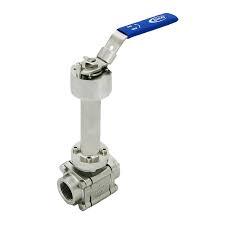
The Cryogenic Ball Valved is a critical solution for industries that handle liquefied gases, ultra-cold process media, and other temperature-sensitive fluids. In systems where material behavior changes quickly under deep cold, the Cryogenic Ball Valved provides dependable shutoff, stable sealing, and efficient operation that helps protect both equipment and personnel.
Understanding the Operating Principle
A cryogenic ball valve relies on a rotating spherical closure element that opens or blocks flow with a quarter-turn motion. In low-temperature applications, this simple action must remain smooth even when metals contract and sealing materials face severe thermal stress. The internal cavity, stem extension, and bonnet structure are carefully designed to keep critical components away from the coldest zone, helping preserve movement and reduce the risk of freezing.
This style of valve is often selected because it combines fast operation with strong sealing performance. When fully open, the flow path offers relatively low resistance, which is important in gas transfer and process lines that must maintain efficiency. When fully closed, the seat design supports tight isolation, making the valve suitable for applications where leakage cannot be tolerated.
Material Selection for Deep Cold Conditions
Material choice is one of the most important factors in cryogenic valve performance. Stainless steel is widely used because it retains toughness at very low temperatures and resists brittle fracture better than many alternative metals. In more demanding environments, special alloy options may be preferred to increase resistance to corrosion, pressure variation, and repeated thermal cycling.
The seat and sealing elements also require special attention. Soft sealing materials must remain flexible in ultra-low temperatures while still providing reliable contact when the valve closes. Engineers often select PTFE-based compounds or other low-temperature sealing materials to maintain performance through repeated open-and-close cycles. Careful matching of body, stem, and seat materials helps reduce wear and improve long-term reliability.
Applications in LNG and Industrial Gas Systems
Cryogenic ball valves are widely used in LNG terminals, air separation units, liquefied gas storage, and other industrial gas systems. In LNG service, they help control the transfer of liquefied gas during loading, storage, and regasification. Their ability to provide rapid isolation makes them especially valuable in emergency shutdown scenarios and process protection.
These valves are also common in oxygen, nitrogen, and argon processing lines, where temperature stability and accurate shutoff are essential. Because cryogenic systems often operate with limited room for error, every component must perform consistently under highly controlled conditions. A properly designed valve contributes to process safety, energy efficiency, and long-term plant stability.
Fy-Valve Engineering in Low-Temperature Service
In cold-service manufacturing, precision is more than a technical preference; it is a requirement for safe operation. Every internal component must be machined to tight tolerances so the valve can maintain alignment after repeated exposure to deep cold. Careful assembly also matters because even small errors can affect stem movement, sealing contact, and service life.
Testing is a major part of this process. Low-temperature verification, pressure checks, and leakage inspection help confirm that the finished valve can perform in real working conditions. This level of quality control supports operators who depend on reliable equipment in demanding cryogenic environments.
Maintenance and Long-Term Reliability
Even a durable cryogenic valve benefits from periodic inspection. Technicians should monitor stem movement, insulation quality, and sealing surfaces for signs of wear or abnormal behavior. Any stiffness, leakage, or temperature-related performance change should be addressed early to avoid larger system problems.Correct installation also plays a major role in long-term reliability. Proper orientation, adequate pipe support, and controlled operating procedures help extend service life and preserve sealing integrity. When these practices are followed, cryogenic valves can deliver stable performance over many years in critical low-temperature systems. For more technical information and product details, visit https://www.fy-valve.com/ .

 English
 French
 Spanish
 Portuguese
 Deutsch
 Turkish
 Dutch
Dutch
 Italiano
 Russian
 Romaian
 Portuguese (Brazil)