
Let me start with something I notice as an education consultant. When young women talk about menstrual hygiene, the conversation usually stops at "change your pad regularly." That is not enough. Poor habits formed early can lead to infections, discomfort, and long-term reproductive issues later.
So let me walk you through what actually works. Factual, practical, and free from product promotion.
What "Hygiene" Actually Means During Periods
Menstrual hygiene is not about smelling nice or hiding your period. It is about preventing infections and maintaining your natural balance. The vagina is self-cleaning. You do not need to scrub or douche it. During menstruation, blood changes the pH, making bacteria grow more easily. Your job is to manage that risk with simple habits.
Choosing the Right Product
There is no single best product. What matters is using it correctly.
-
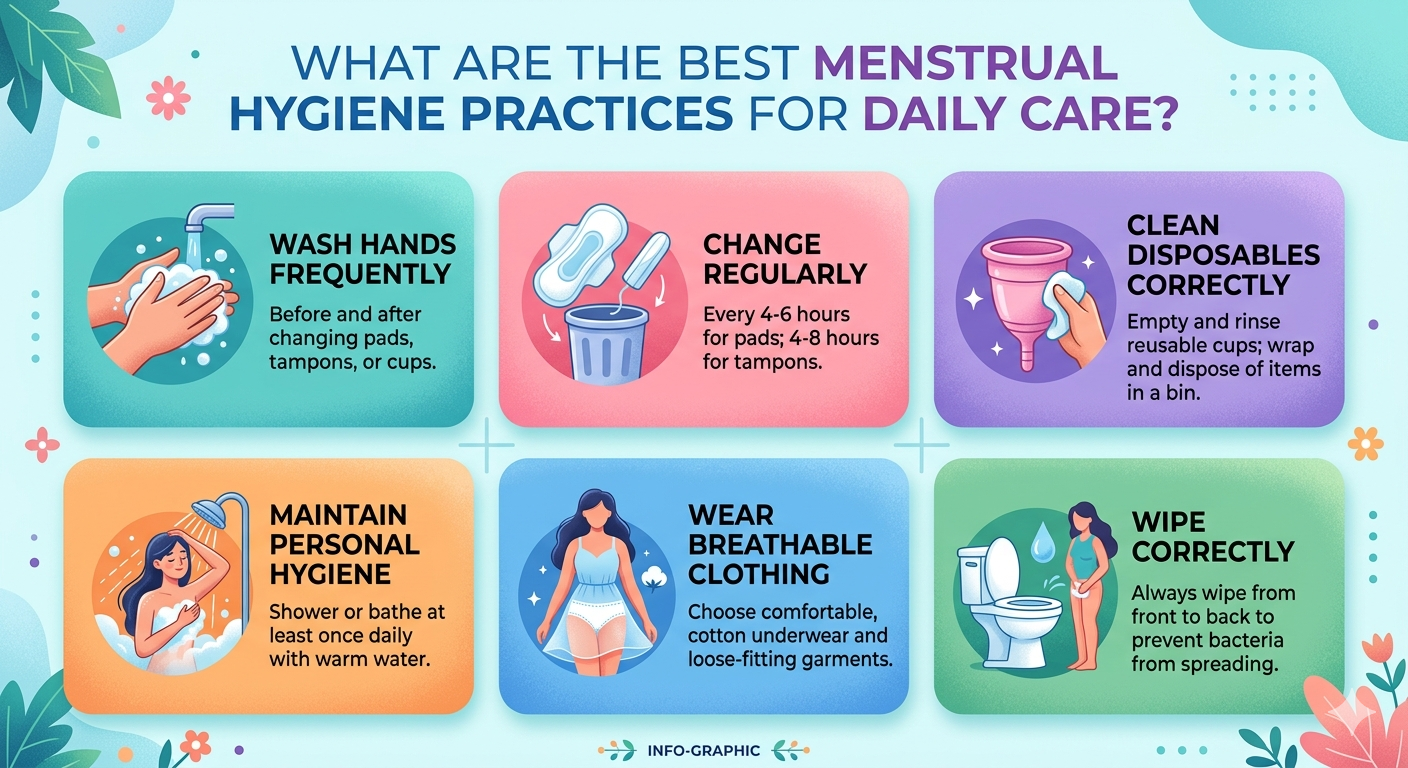
Sanitary pads: Change every 4 to 6 hours. Never go beyond 8 hours. Prolonged use creates warmth, moisture, and blood—a breeding ground for bacteria.
-
Tampons: Change every 4 to 6 hours. Never leave one in for more than 8 hours. Toxic Shock Syndrome is rare but real. Use the lowest absorbency that works.
-
Menstrual cups: Reusable silicone cups that collect blood. Wear up to 12 hours. Clean with mild, fragrance-free soap between uses. Boil after each cycle.
-
Period underwear: Wash after each use. No fabric softeners.
Whatever you choose, change or clean it on schedule. Do not wait until it feels uncomfortable.
Washing the Right Way
This is where most mistakes happen. Wash your external genital area (vulva) at least once a day with plain water or a very mild, unscented wash. Use your hand, not a cloth. Wash front to back—always. That prevents bacteria from moving toward the urethra or vagina.
Do not wash inside the vagina. No douches, scented wipes, or deodorants. They disrupt natural flora and cause infections. After washing, pat dry. Do not rub. Moisture leads to fungal infections.
Changing and Disposing Properly
Wrap used pads or tampons in toilet paper or the new product's wrapper. Dispose in a bin. Never flush. Wash your hands with soap before and after every change. Non-negotiable.
Managing Odor Naturally
A mild, metallic smell is normal. That is blood with iron. Strong, fishy, or foul odors mean infection—not poor hygiene. Douching will not fix it. See a doctor.
If you feel itching or irritation, check your product. Scented pads are a common culprit. Switch to unscented, cotton-based products. Stay hydrated. Change as soon as you feel wetness. That alone reduces odor.
Common Myths That Need to Stop
Do not bathe during periods? False. Warm water relaxes muscles and reduces cramps.
Menstrual blood is dirty? False. It is blood and uterine lining. No dirtier than blood from a cut.
Cannot swim? False. Tampons or cups work fine. Just change after.
Need special feminine washes? False. Water is usually enough.
When to See a Doctor
Good hygiene prevents most issues. But do not ignore these signs:
-
Itching, burning, or redness lasting more than a day
-
Unusual discharge between periods (yellow, green, grey, or cottage-cheese-like)
-
strong, fishy odor that does not go away after washing
-
Pain with urination
-
Sores, blisters, or lumps
-
Fever with pelvic pain
Do not guess with over-the-counter creams. See a gynecologist. For women in South Delhi, Ask about this to Best gynae in South Delhi who can examine you properly.
When Menstrual Problems Signal Something Deeper
Extremely heavy bleeding, periods longer than 7 days, cycles shorter than 21 days or longer than 35 days, or severe pain that disrupts your life are not normal. They can indicate fibroids, polyps, endometriosis, or hormonal imbalances.
Rarely, hormonal issues come from the brain. A benign pituitary tumor called prolactinoma can cause irregular periods along with headaches or vision changes. If you have menstrual problems with those symptoms, do not stop at the gynecologist. You may need to Consult with best gynecologist in south delhi or a similar specialist. Uncommon, but it happens. Do not ignore a combination of menstrual symptoms.
Simple Daily Routine
Morning: Wash external area. Put on a clean product.
During day: Change every 4 to 6 hours. Wash hands before and after.
After toilet: Wipe front to back.
Evening: Rinse with water. Fresh cotton underwear.
Night: Longer coverage pad. Change in the morning.
After your period ends, clean reusable products and store them dry.
The Final Takeaway
Menstrual hygiene is not complicated. Wash daily with water. Change your product on time. Wipe front to back. Wear breathable underwear. Listen to your body.
Do not suffer in silence. If something feels off pain, odor, itching, irregular cycles see a doctor. A good gynecologist will not judge you. And if your period problems come with severe headaches or vision changes, a neurosurgeon may be part of the team you need. Your body talks. Learn to hear it.

 English
 Arabic
 French
 Spanish
 Portuguese
 Deutsch
 Turkish
 Dutch
Dutch
 Italiano
 Russian
 Portuguese (Brazil)