
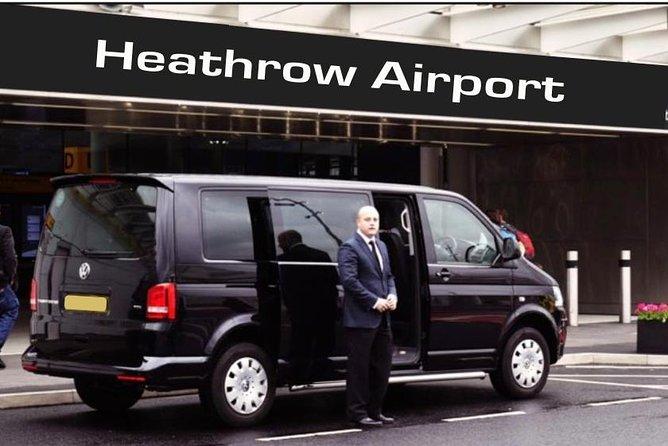
Touching down in a historic, sprawling metropolis for the first time is an exhilarating experience, but the immediate task of traveling from the arrivals terminal to your accommodation often presents an exhausting challenge. I frequently witness international holidaymakers standing over their baggage in total confusion, struggling to interpret complex transit maps, handle foreign currency at automated ticketing kiosks, or decipher fare zones after a exhausting flight. Trying to figure out a foreign transport infrastructure while carrying heavy luggage is an incredibly stressful way to begin your trip, but matching your budget and schedule with the ideal transit mode completely solves this issue. Arranging a reliable Heathrow airport transfer before you take off provides an immediate answer, bypassing crowded public platforms and ensuring a relaxed, direct route straight to your hotel doorstep.
Navigating the Capital's Complex Aviation Network
To make an informed decision about your ground transport, it helps to understand the massive scale of the aviation infrastructure serving the region. The city does not rely on a single central airport; instead, six distinct gateways are positioned across different sectors of the surrounding counties.
-
Heathrow (LHR): Situated to the west, this is the main international hub handling the vast majority of long-haul flights from global destinations.
-
Gatwick (LGW): Located directly south of the city, serving a mixture of international long-haul routes and European leisure flights.
-
Stansted (STN) and Luton (LTN): Positioned to the northeast and northwest respectively, acting as the primary bases for budget airlines operating across Europe.
-
London City (LCY): Tucked away in the eastern docklands, this small airport primarily caters to short-haul business travelers due to its proximity to the financial districts.
-
Southend (SEN): Located further east along the Essex coast, handling occasional regional flights.
Because these gateways are situated anywhere from 6 to 35 miles outside the urban center, selecting the wrong transit option can lead to massive delays or inflated travel costs.
Dedicated Rail Systems: Speed and Efficiency
For solo travelers or couples arriving with minimal luggage, the rapid rail networks offer an excellent way to bypass highway traffic congestion entirely during peak hours.
The Express Rail Links
The fastest way into town from the western, southern, and northeastern hubs is via dedicated express trains. The Heathrow Express sprints directly into Paddington Station in just fifteen minutes, while the Gatwick Express connects to Victoria Station in approximately half an hour. Stansted also offers a dedicated line arriving at Liverpool Street Station in around forty-seven minutes. These services are highly reliable and run at frequent intervals throughout the day. However, tickets are premium-priced, and your journey terminates at a major rail station, meaning you will still need to transfer to a local bus or underground train to reach your final address.
Mainline National Rail Services
An alternative to the express lines is the standard national rail network. Services like the Elizabeth Line provide fantastic connectivity from the west, traveling through central stations like Bond Street and Farringdon before heading out to Canary Wharf. This line is slightly slower than the express but is significantly cheaper and links directly to a broader variety of central neighborhoods, saving passengers from making multiple changes with heavy bags.
The Traditional Underground Network: Budget-Friendly Transport
The London Underground, affectionately known as the Tube, is the most economical transport method for visitors keeping a close eye on their vacation budget.
The Piccadilly Line services the western terminal buildings directly, taking roughly an hour to reach central hotspots like Covent Garden or Piccadilly Circus. While the fare is remarkably cheap when using a contactless bank card or Oyster card, the deep-tube system has clear physical drawbacks. The traditional carriages feature very narrow doors and lack dedicated luggage storage areas. During the morning and evening rush hours, these trains become extremely congested with daily commuters, making it physically exhausting and highly stressful to defend your space while guarding large holiday suitcases.
The Advantages of Private Pre-Booked Transfers
While public rail networks excel at moving single passengers quickly along fixed corridors, they completely lack personal flexibility. If you are traveling as a family group, carrying oversized luggage, or landing in the middle of the night when train lines close for maintenance, a private road transfer becomes a far more sensible choice.
In my ten years of analyzing tourist transit efficiency across the UK, I have seen that the most reliable travel experiences come from established private hire fleets. For example, the professional dispatchers at Aerolink Minicab provide a highly coordinated service by using real-time flight tracking software to monitor your arrival. Instead of forcing an international visitor to worry about updating their pickup time from an airplane runway, their team automatically tracks the aircraft's progress, ensuring a driver is waiting at the designated arrivals point the moment you clear customs.
Unlike traditional metered black cabs found on airport ranks, which charge variable rates that climb higher while sitting stationary in urban gridlock, pre-booked private cars offer a guaranteed fixed price. This upfront transparency allows international tourists to protect their travel budget from unexpected traffic surcharges or sudden demand multipliers.
Coach Services: Long-Distance Road Travel
National express coaches operate comfortable, long-distance bus routes from the central airport stations to Victoria Coach Station in the heart of the city.
-
Cost Efficiency: Coach travel is highly economical, often presenting the cheapest motorized transport option for solo travelers landing at outlying hubs like Stansted or Luton.
-
Baggage Accommodations: Large suitcases are stored securely in the hold beneath the vehicle, leaving the passenger cabin spacious and clear.
-
The Traffic Factor: The main disadvantage of coach travel is its vulnerability to motorway congestion, meaning your travel time can vary wildly depending on the time of day.
A Framework for Making Your Selection
To determine which transportation option best suits your arrival, consider the following checklist before finalizing your itinerary:
1. The Size of Your Travel Party
If you are traveling solo, a single train ticket is highly cost-effective. However, when traveling in a group of three or more, splitting the cost of a private hire vehicle is often cheaper than buying multiple individual rail tickets.
2. Physical Accessibility and Luggage Volume
If your group includes young children, elderly relatives, or multiple large suitcases, a door-to-door private transfer removes the physical strain of hauling bags up and down station staircases.
3. Your Final Destination
Review a map of the city before choosing your transport. A fast train to Paddington Station is only useful if your accommodation is nearby; if your hotel is in the south or east, a direct road transfer prevents a complicated multi-stage commute across town.
Ensuring an Ideal Start to Your British Holiday
Your first hour on the ground sets the tone for your entire stay in the United Kingdom. By taking the time to understand the differences between high-speed rail networks, budget-friendly underground lines, and private pre-booked transfers, you can select a method that fits your schedule perfectly. Prioritizing your personal comfort and budget predictability ensures you arrive at your accommodation completely relaxed and ready to enjoy the incredible sights of the capital.

 English
 Arabic
 Spanish
 Portuguese
 Deutsch
 Turkish
 Dutch
Dutch
 Italiano
 Russian
 Romaian
 Portuguese (Brazil)