
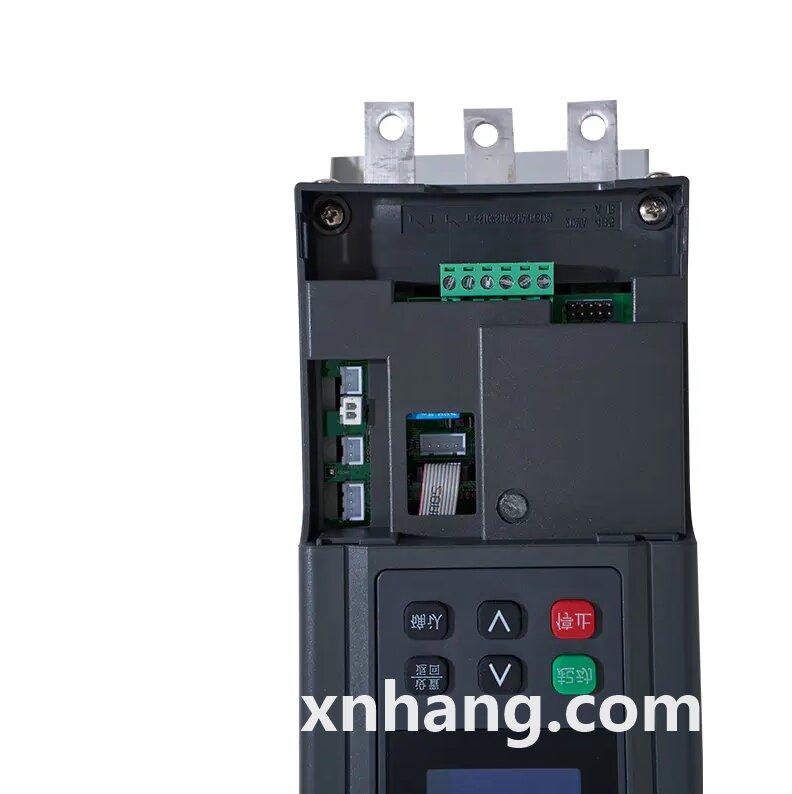
In industrial plants that depend on stable equipment startup, a Built-in Bypass Soft Starter can reduce electrical stress, and a properly selected Built-in Bypass Soft Starter can also improve operating consistency, protect connected machinery, and support smoother daily production. When motors must start under load, the difference between abrupt energizing and controlled acceleration often determines how long the system remains reliable.
1. Why Controlled Startup Matters
Many industrial motors do not start in ideal conditions. Pumps may face pressure resistance, conveyors may carry material immediately, and fans may need to overcome inertia from the first second. If a motor receives full power instantly, the resulting current surge can affect the supply network and create unnecessary torque shock. Over time, those stresses may shorten the lifespan of bearings, couplings, shafts, and other connected parts.
A controlled startup method helps avoid that problem by increasing voltage gradually. Instead of demanding maximum torque right away, the motor is allowed to reach speed in a more measured way. This improves mechanical comfort, lowers noise, and reduces the kind of vibration that can slowly weaken equipment. In plants where reliability matters, this smoother behavior is not a minor improvement; it is a practical way to protect production quality.
2. How the Bypass Stage Improves Daily Operation
The bypass stage is what makes this type of starter especially attractive for continuous duty applications. During acceleration, the starter manages current and voltage carefully, allowing the motor to rise to operating speed. Once the motor reaches the target level, the bypass path carries the running current so the starter section no longer bears the full operational load.
That shift has several advantages. Heat generation inside the control enclosure drops, electrical losses are reduced, and the system runs more efficiently during long periods of operation. In facilities where motors remain active for hours at a time, this can make a measurable difference in thermal stability and cabinet longevity. The result is a setup that supports both startup protection and steady running performance.
3. Practical Panel Design for Real Industrial Sites
The success of any starter system depends not only on performance, but also on how practical it is to install and maintain. Clear wiring paths, accessible terminals, and logical internal arrangement make a major difference when technicians need to inspect the panel or resolve a fault quickly. A good layout reduces service time and lowers the chance of human error during commissioning.
Many industrial environments are demanding in ways that do not show up on a specification sheet. Cabinets may be exposed to dust, humidity, heat, or vibration, and those factors can influence how long electrical components remain stable. A well-organized panel makes better use of space, improves airflow, and gives maintenance teams a cleaner environment to work in. These design details may seem simple, but they often determine whether the system remains easy to support after installation.
4. Xnhang Integrated Design for Industrial Reliability
For buyers who value long-term reliability, the overall cabinet structure matters as much as the control function itself. A thoughtfully built system should combine clear indicators, accessible service points, and a structure that supports predictable operation in busy plant conditions. In real use, technicians want equipment that is easy to understand and quick to maintain, because downtime is always more costly than planning.
A strong integrated starter solution also needs to fit a wide range of loads. Pumps, compressors, mixers, and conveyors all place different demands on the equipment, so flexibility in design is important. When the control system can adapt to varied operating needs without becoming complicated, it becomes much easier to keep production stable and maintenance manageable. That kind of practical engineering is one reason many industrial buyers look for equipment that balances protection, simplicity, and durability.
5. Long-Term Value in Motor-Driven Systems
The real value of a starter is often seen over months and years, not only on the first day of operation. By reducing startup stress, improving thermal behavior, and supporting smoother transitions to full speed, the system helps extend equipment life and lower maintenance frequency. Those savings accumulate gradually, but in a production environment they can be substantial.
Operational consistency is another major advantage. When motors behave predictably, operators can plan better, maintenance teams can work more proactively, and managers can reduce the number of surprises that interrupt output. That is why controlled motor starting is often considered part of overall process quality rather than a separate electrical detail.For product details, application notes, and related specifications, visit https://www.xnhang.com/product .

 Arabic
 French
 Spanish
 Portuguese
 Deutsch
 Turkish
 Dutch
Dutch
 Italiano
 Russian
 Romaian
 Portuguese (Brazil)