
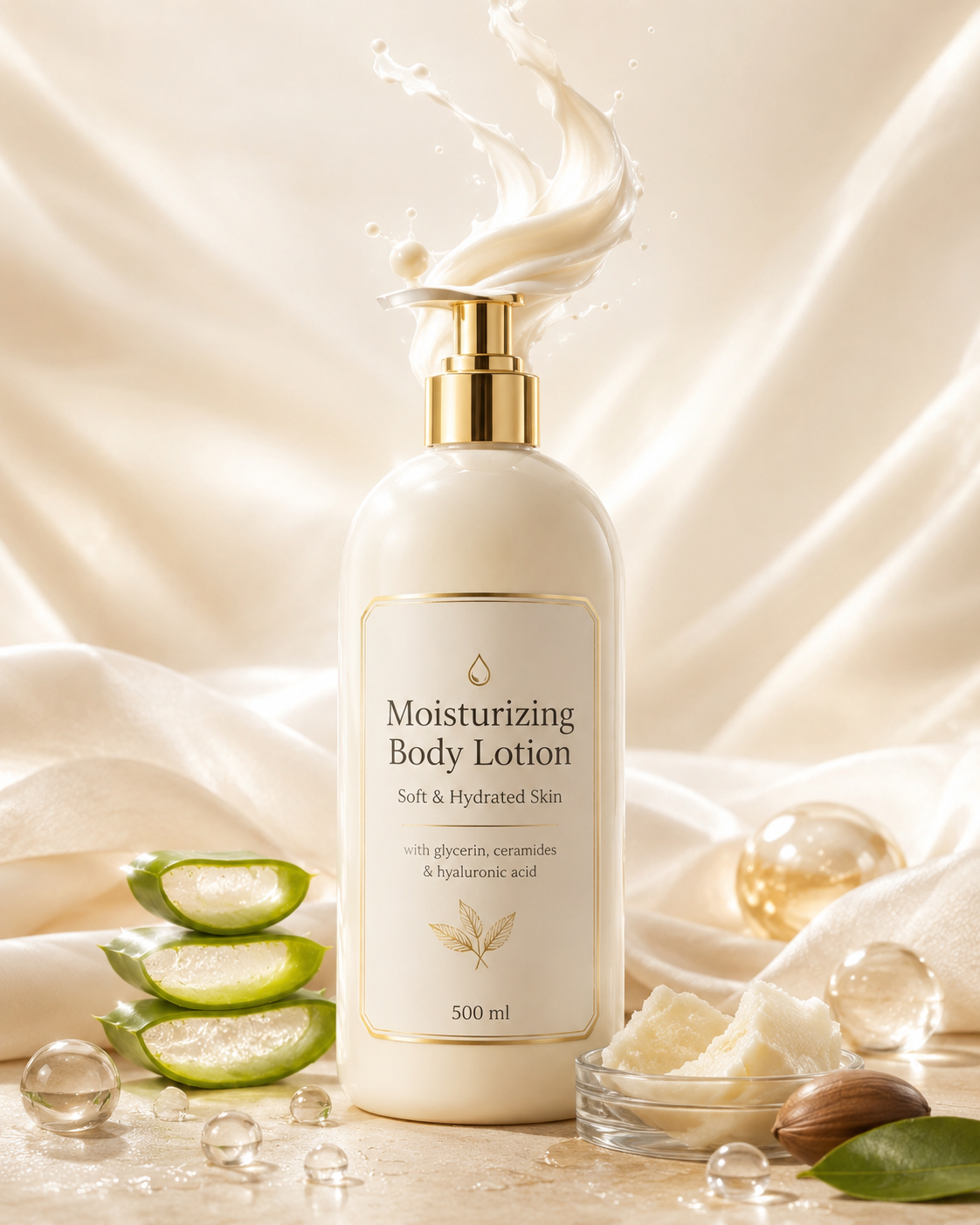
The best moisturizing body lotion is one that matches your skin type, contains proven hydrating ingredients like glycerin, ceramides, or hyaluronic acid, and supports your skin barrier without causing irritation. There is no single product that works for everyone. The right choice depends on whether your skin is dry, oily, sensitive, or exposed to harsh weather.
If your skin feels tight after showering, looks dull, or develops rough patches, your lotion is either too light or missing key ingredients. Soft and hydrated skin comes from consistent use of a formula that locks in moisture and prevents water loss throughout the day.
What Makes a Body Lotion Truly Moisturizing?
Many people assume thicker means better. In reality, hydration depends more on formulation than texture.
A good moisturizing lotion usually includes three types of ingredients:
Humectants
These draw water into the skin. Examples include glycerin, hyaluronic acid, and urea.
Emollients
These smooth and soften the skin surface. Examples include shea butter, squalane, and fatty acids.
Occlusives
These reduce water loss by forming a light barrier. Examples include petrolatum and certain plant oils.
When these elements work together, the skin stays comfortable for longer hours instead of drying out by midday.
Choosing Based on Skin Type
Selecting the best moisturizing body lotion starts with understanding your skin.
For Dry Skin
Dry skin needs both hydration and protection. Look for:
-
Ceramides to repair the skin barrier
-
Glycerin or hyaluronic acid for hydration
-
Shea butter or petrolatum for sealing moisture
Avoid lotions that are heavily fragranced, as they can worsen dryness.
For Sensitive Skin
Sensitive skin reacts quickly to harsh ingredients. Choose:
-
Fragrance free formulas
-
Minimal ingredient lists
-
Dermatologist tested products
In professional skincare clinics, simple formulations consistently outperform trendy, heavily scented products for sensitive clients.
For Oily or Acne Prone Body Skin
Body acne on the back and chest is common. In this case:
-
Choose lightweight, non comedogenic lotions
-
Look for gel cream textures
-
Avoid heavy oils
Hydration is still necessary. Skipping lotion can lead to increased oil production as the skin tries to compensate.
For Very Rough Areas
Elbows, knees, and heels need more than regular hydration. Products with urea or lactic acid can gently soften thickened skin while moisturizing.
Climate and Environment Matter
Your location affects your skin more than most people realize.
In dry or cold climates, the air pulls moisture from the skin. You need a richer lotion with stronger occlusive ingredients.
In humid regions, a lighter formula is usually enough. Heavy creams may feel sticky and uncomfortable.
Professionals working in air conditioned offices often experience hidden dryness. Indoor cooling systems reduce humidity levels, which slowly dries the skin even in tropical regions.
Texture Versus Performance
Consumers often choose based on feel alone. That can be misleading.
-
Lotions are lighter and absorb quickly
-
Creams are thicker and suited for dry skin
-
Body butters are dense and ideal for very dry patches
The best moisturizing body lotion is not necessarily the thickest one. It is the one you will use consistently because it feels comfortable on your skin.
From a retail perspective, brands with balanced textures and fast absorption often see higher repeat purchases. Customers prefer products that fit into their daily routine without feeling heavy or greasy.
Ingredient Quality Over Marketing Claims
Packaging often highlights words like natural, herbal, or advanced formula. These terms do not automatically mean better hydration.
Instead, check:
-
Ingredient list order
-
Presence of clinically studied components
-
Absence of unnecessary irritants
For example, glycerin is inexpensive but highly effective. Many luxury brands still rely on it because it works. Expensive does not always mean more hydrating.
In product development environments, formulators focus more on ingredient synergy and stability than on flashy marketing terms.
How to Apply for Maximum Hydration
Even the best moisturizing body lotion will not perform well if applied incorrectly.
Follow this method:
-
Apply within five minutes after showering
-
Pat skin slightly dry, do not rub completely
-
Use enough product to lightly coat the skin
-
Reapply to dry areas at night
Applying on damp skin helps trap existing moisture. This simple habit can significantly improve results without changing products.
Common Mistakes That Prevent Soft Skin
Many people think their lotion is not working, when the issue is routine.
Common problems include:
-
Using too little product
-
Skipping application in summer
-
Changing products too frequently
-
Ignoring exfoliation
Dead skin buildup can block proper absorption. Gentle exfoliation once or twice a week allows moisturizers to penetrate better.
In spa and skincare practice, clients who combine mild exfoliation with daily moisturizing see smoother results within weeks.
How Businesses Select Body Lotions for Professional Use
Spas, hotels, and dermatology clinics choose products differently than casual buyers.
They consider:
-
Consistency across skin types
-
Low irritation risk
-
Stable supply chain
-
Cost per application
A clinic cannot afford frequent reactions or inconsistent batches. Reliability and safety matter more than trendy ingredients.
This professional approach can guide individual buyers as well. Choose products that prioritize skin health and long term use rather than short term cosmetic appeal.
Signs You Have Found the Right Lotion
You likely found the best moisturizing body lotion for your needs if:
-
Skin feels comfortable all day
-
There is no tightness after bathing
-
Rough patches reduce over time
-
There is no burning or itching
Hydrated skin should feel balanced, not sticky or overly coated.
Conclusion
The best moisturizing body lotion is not defined by price, brand popularity, or thickness. It is defined by ingredient balance, suitability for your skin type, and consistent daily use.
Focus on formulas with humectants, emollients, and occlusives. Adjust based on climate and skin condition. Apply correctly and give the product time to work.
Soft and hydrated skin comes from steady care, not constant switching.
FAQs
Q.1 How often should I apply body lotion for dry skin?
Apply at least once daily, ideally after showering. For very dry skin, reapply at night or on rough areas as needed.
Q.2 Can I use the same body lotion in summer and winter?
You can, but many people need a lighter formula in summer and a richer one in winter due to humidity changes.
Q.3 Is expensive body lotion better than affordable options?
Not necessarily. Many affordable lotions contain effective ingredients like glycerin and ceramides that perform very well.
Q.4 What ingredients should I avoid in body lotion for sensitive skin?
Avoid strong fragrances, high alcohol content, and heavily dyed products. Simple formulas are usually safer.
Q.5 How long does it take to see results from a moisturizing lotion?
You may feel immediate softness, but visible improvement in dryness or roughness usually takes one to two weeks of consistent use.

 English
 Arabic
 French
 Spanish
 Portuguese
 Deutsch
 Turkish
 Dutch
Dutch
 Italiano
 Russian
 Portuguese (Brazil)