
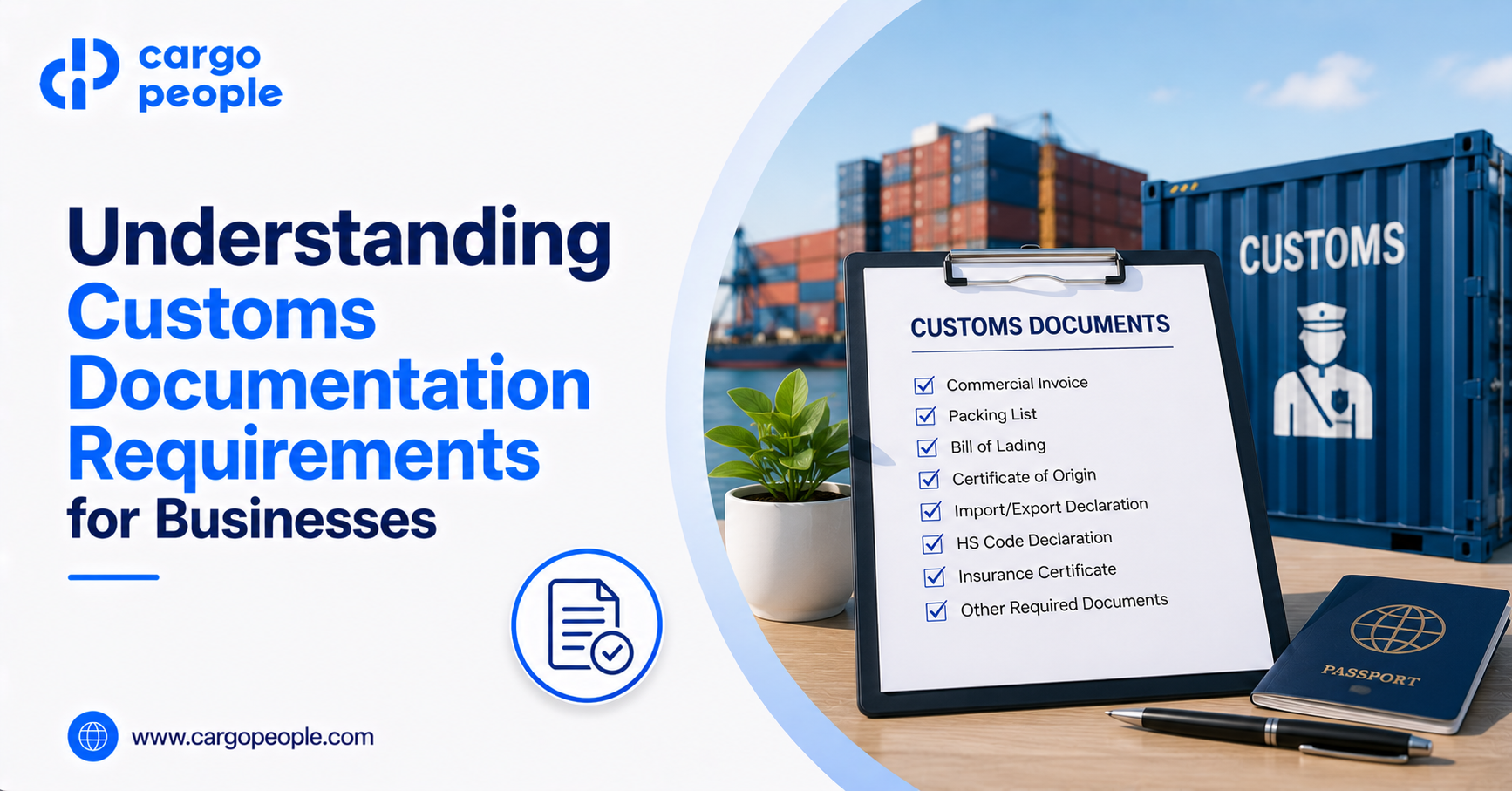
Customs documentation requirements are very important for businesses involved in import and export activities. Every international shipment must pass through customs, and proper documents are needed to verify the cargo, value, origin, and compliance details. Without correct documentation, shipments may face delays, penalties, or additional charges.
For businesses, customs documents are not just paperwork. They help in smooth clearance, accurate duty calculation, and proper shipment tracking. Understanding these requirements allows companies to manage international trade more confidently and avoid unnecessary problems during cargo movement.
Why Customs Documentation Is Important
Customs documentation helps authorities check whether goods are legally allowed to enter or leave a country. It also helps confirm product details, shipment value, buyer and seller information, and applicable duties or taxes.
For businesses, proper documentation reduces the risk of shipment holds and clearance delays. It also improves coordination between customs brokers, freight forwarders, transport teams, and customers.
Commercial Invoice Requirement
A commercial invoice is one of the most important customs documents. It includes details such as seller name, buyer name, product description, quantity, value, currency, and payment terms.
Customs officers use this document to calculate duties and taxes. If the invoice has incorrect value, missing product details, or mismatch with other documents, the shipment may be stopped for verification.
Packing List Requirement
A packing list explains how the goods are packed inside cartons, pallets, or containers. It includes package count, weight, dimensions, item quantity, and packing details.
This document helps customs officers and warehouse teams inspect the shipment easily. A proper packing list also helps avoid confusion during unloading, checking, and final delivery.
Bill of Lading or Airway Bill
For sea freight, businesses need a bill of lading. For air freight, an airway bill is required. These documents act as proof of shipment and include details about the shipper, consignee, carrier, origin, destination, and transport route.
Customs authorities use these documents to verify cargo movement and ownership details. Freight forwarders also use them to track and manage the shipment throughout the logistics process.
Certificate of Origin
A certificate of origin confirms the country where the goods were manufactured or produced. This document is important when customs needs to check duty benefits, trade agreements, or import restrictions.
Some countries offer lower duty rates for goods from specific origins. Providing the correct certificate of origin helps businesses claim benefits and avoid disputes during clearance.
HS Code and Product Classification
Every product must be classified under the correct HS code. This code helps customs identify the product category and apply the correct duty rate.
Incorrect HS code selection can result in wrong duty calculation, penalties, or delays. Businesses should check product classification carefully before submitting customs documents.
Import Export Code and Business Details
Businesses involved in import and export usually need proper registration details. In India, an Import Export Code is required for most international trade activities.
Along with IEC, businesses may also need GST details, PAN details, bank information, and company registration documents. These details help customs identify the importer or exporter and process the shipment correctly.
Permits, Licenses, and Special Certificates
Some products require additional approvals before import or export. These may include health certificates, test reports, safety certificates, fumigation certificates, or government permissions.
Goods such as food products, chemicals, pharmaceuticals, electronics, machinery, and hazardous materials may have special documentation needs. Preparing these documents early helps avoid last-minute clearance issues.
Insurance and Freight Documents
Insurance documents show that the cargo is protected during transportation. Freight documents show shipping charges and transport-related details.
These documents may be required for customs valuation and shipment records. They also help businesses manage risk and maintain transparency in international trade transactions.
Common Documentation Mistakes Businesses Should Avoid
Many customs delays happen because of small documentation errors. Common mistakes include wrong product description, incorrect invoice value, missing HS code, mismatch in weight, incomplete consignee details, or missing certificates.
Businesses should review all documents before submission. Working with experienced customs clearance and logistics professionals can help reduce errors and ensure faster processing.
Importance of Understanding Customs Documentation Requirements
Understanding customs documentation requirements helps businesses plan shipments better. It reduces the chances of delays, penalties, storage charges, and shipment rejection.
A strong documentation process also improves supply chain efficiency and helps businesses maintain compliance in international trade. For importers and exporters, proper customs documentation is essential for smooth and successful cargo movement.
Learn More About Customs Documentation and Clearance
If you are planning to import or export goods, it is important to understand customs documentation, duty calculation, compliance rules, and clearance procedures in detail.
Read the complete guide here:
👉 https://www.cargopeople.com/blog/export-compliance-and-documentation-what-your-cha-should-handle/
📞 Get Expert Support for Customs Documentation
If you need assistance with customs documentation, import-export clearance, freight forwarding, or logistics planning, Cargo People Logistics can guide you at every step.
📞 +91 97174 65454
📧 wecare@cargopeople.com

 English
 Arabic
 French
 Spanish
 Portuguese
 Deutsch
 Turkish
 Italiano
 Russian
 Romaian
 Portuguese (Brazil)