
If you've spent any time in Dubai's wellness circles recently, you've almost certainly heard people talking about red light therapy with the kind of enthusiasm usually reserved for life-altering discoveries. And honestly? The enthusiasm is justified. What was once a treatment found only in dermatology clinics and elite sports recovery centres has quietly but decisively moved into the mainstream — and the UAE, with its appetite for cutting-edge wellness innovation, has embraced it faster than almost anywhere else in the region. But if you're new to red light therapy and feeling slightly overwhelmed by the devices, the terminology, the wavelength numbers, and the conflicting claims flooding your social media feed, this guide is written specifically for you. We're going to cut through the noise, give you the real science, help you choose the right device for your needs, and tell you exactly what to expect when you start — no hype, no fluff, just everything you actually need to know.
What Exactly Is Red Light Therapy?
Let's start with the fundamentals, because understanding what red light therapy actually is makes everything else — the buying decisions, the usage protocols, the realistic expectations — fall into place much more clearly. Red light therapy, also called photobiomodulation or low-level laser therapy (LLLT), is the application of specific wavelengths of red and near-infrared light to the body's tissues. The wavelengths that matter most fall in the range of 630 to 670 nanometres for red light — the wavelength you can see as a warm, deep red glow — and 800 to 850 nanometres for near-infrared light, which is invisible to the naked eye but penetrates deeper into tissue.
When these specific wavelengths of light hit your cells, they are absorbed by mitochondria — the energy-producing organelles inside every cell in your body. This absorption triggers a cascade of biological responses: mitochondrial function improves, ATP (cellular energy) production increases, inflammation pathways are modulated, collagen synthesis accelerates, and cellular repair mechanisms are activated. Think of it as charging your cells the way you'd charge a phone — except the results extend across every system in your body, from your skin to your muscles to your brain. This is not pseudoscience. The research base supporting red light therapy now includes thousands of peer-reviewed studies across dermatology, sports medicine, neurology, and pain management.
Why the UAE Is the Perfect Market for Red Light Therapy
The UAE's unique combination of climate, lifestyle, and wellness culture makes it an almost ideal environment for red light therapy adoption. The intense sun exposure that characterises life in Dubai and Abu Dhabi accelerates skin ageing, increases pigmentation issues, and drives a consistent demand for skin health solutions that go beyond topical creams and occasional facials. Red light therapy addresses sun-related skin damage at the cellular level in a way that surface treatments cannot reach. The region's population of high-performance athletes, driven executives, and health-obsessed residents also creates strong demand for the therapy's well-documented benefits in muscle recovery, inflammation reduction, and cognitive performance. And the UAE's residents — accustomed to accessing world-class products and investing meaningfully in their health — represent exactly the kind of informed, motivated consumer that the premium red light therapy device market is built for.
The Real Benefits: What the Science Supports
Before you spend your dirhams, you deserve an honest breakdown of what red light therapy can and cannot do — because the wellness industry's enthusiasm for this technology sometimes outpaces its accuracy.
Skin health is the most robustly researched application, and the results are genuinely impressive. Regular red light therapy has been shown to stimulate collagen and elastin production, reduce fine lines and wrinkles, improve skin texture and tone, accelerate wound healing, reduce acne inflammation, and address hyperpigmentation. For UAE residents dealing with the skin consequences of year-round sun exposure and dry climate conditions, these are particularly relevant benefits.
Muscle recovery and physical performance represent the second major pillar of evidence. Red light therapy reduces exercise-induced muscle damage and inflammation, shortens recovery time between training sessions, and has been shown in multiple studies to improve strength and endurance outcomes when used consistently as part of a training programme. Elite sports teams worldwide now use photobiomodulation as a standard recovery protocol.
Pain management is another well-supported application — specifically for joint pain, arthritis, tendinopathy, and chronic inflammation conditions. The therapy's anti-inflammatory mechanisms work at the cellular level to reduce the inflammatory markers that drive chronic pain, offering a drug-free alternative that many users find genuinely transformative.
Emerging research also points to compelling benefits for sleep quality, mood, cognitive function, and hormonal health, though these areas require more large-scale human studies before definitive claims can be responsibly made.
What to Buy: Navigating the UAE Device Market
Here is where many beginners go wrong — and where the difference between a genuinely effective device and an expensive disappointment is determined. The red light therapy device market in the UAE has grown rapidly, and it now ranges from small, affordable handheld units to full-body panels that cover everything from head to toe. Understanding the key variables helps you make a purchase you'll actually be satisfied with.
Wavelength is the most critical specification. Look for devices that deliver red light at 630–670nm and near-infrared at 800–850nm. Devices offering both wavelengths in combination deliver broader benefits than single-wavelength units. Be very skeptical of cheap devices that claim therapeutic wavelengths without providing verifiable spectral data.
Power density (irradiance) determines how effectively the light penetrates tissue and how long your sessions need to be. Measured in milliwatts per square centimetre (mW/cm²), a quality therapeutic device should deliver at least 50–100 mW/cm² at the treatment distance specified by the manufacturer. Underpowered devices exist in abundance at attractive price points — and they simply don't deliver enough photon energy to trigger the cellular responses you're paying for.
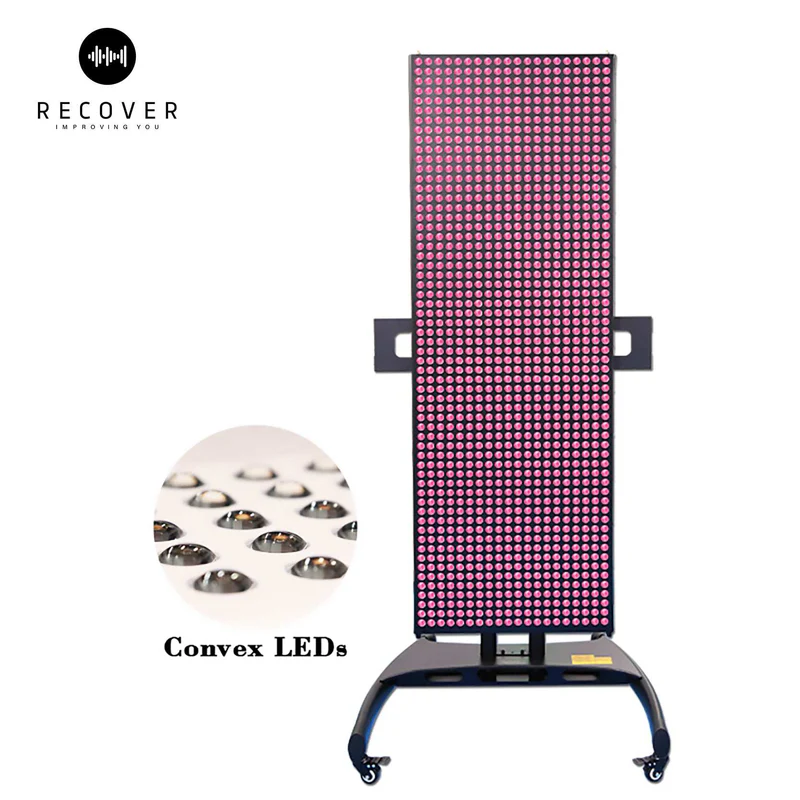
Treatment area is a practical consideration that depends on your primary goals. A small facial panel is perfectly adequate for skin health and anti-ageing applications. A mid-size panel covering the torso is more appropriate for gut health, hormonal support, and upper body recovery. A full-body panel delivers the broadest systemic benefits but comes with a significantly higher price tag — typically AED 5,000 to AED 15,000 for quality full-body units available in the UAE market.
In the UAE, reputable suppliers and brands include Recover (recover.ae), which stocks internationally recognised red light therapy panels with local delivery and support, alongside international brands available through regional distributors. Always verify that devices come with a warranty, proper electrical certification for UAE power standards, and clear specification documentation before purchasing.
How to Use It: Building Your Protocol
Owning a quality red light therapy device is only the beginning — using it correctly and consistently is what actually produces results. The good news is that the protocol is genuinely simple once you understand the basic principles.
Distance matters significantly. Most therapeutic panels are designed to be used at a distance of 15 to 30 centimetres from the skin. Too far away and the irradiance drops below therapeutic thresholds. Too close and you risk thermal discomfort without additional benefit. Follow the manufacturer's recommended treatment distance for your specific device.
Session duration for most quality devices ranges from 10 to 20 minutes per treatment area per session. More is not always better — photobiomodulation operates on a dose-response curve, and excessive exposure can actually reduce the beneficial effects. Ten to fifteen minutes per area at the correct distance and power density is the evidence-backed sweet spot for most applications.
Consistency is non-negotiable. The benefits of red light therapy build gradually over weeks and months of regular use. Most users report initial improvements in skin quality within four to six weeks of daily or every-other-day use. Recovery and pain benefits often appear more quickly — sometimes within the first few sessions — but sustainable, deep improvement requires ongoing commitment. Think of it as training, not treatment: you wouldn't expect six weeks of gym sessions to produce permanent fitness without continued effort, and red light therapy works on the same principle.
Skin preparation makes a meaningful difference. Clean, product-free skin absorbs light most efficiently. Remove sunscreen, moisturiser, and any topical treatments before your session. Eye protection is strongly recommended when using panels near the face — the light is not harmful at therapeutic intensities, but the brightness is uncomfortable and potentially damaging to the eyes with prolonged direct exposure.
What to Realistically Expect
Managing expectations is the most important service any honest guide to red light therapy can provide — because the gap between social media promises and realistic timelines has left many enthusiastic buyers feeling disappointed unnecessarily. In the first two weeks, most beginners notice improved skin hydration and a subtle improvement in skin tone. Recovery from exercise may feel slightly faster. Sleep quality sometimes improves early, particularly if you use the device in the morning rather than the evening. Between weeks four and eight, the more significant skin changes — reduction in fine lines, improvement in texture, fading of hyperpigmentation — begin to become visible and measurable. Pain and inflammation benefits in musculoskeletal conditions typically become clearly apparent within this same timeframe with consistent use. By months three and four, committed users are seeing results that are genuinely difficult to attribute to anything other than the therapy — and at this point, the majority of people who started consistently never willingly stop.
Conclusion
Red light therapy is not a miracle cure and it is not overhyped wellness nonsense — it sits firmly, and increasingly convincingly, in the evidence-based middle ground where real science meets real results. For UAE residents dealing with sun-related skin ageing, demanding training schedules, chronic inflammation, or simply a desire to optimise how they look and feel at the cellular level, a quality red light therapy device is one of the most intelligent wellness investments available in 2026. Buy the right device From Recover, use it correctly, and give it the time it needs to work — and the results will speak clearly for themselves.
FAQs
1. Is red light therapy safe? Yes — it is non-invasive, drug-free, and extensively researched with an excellent safety profile.
2. How long before I see results? Most users notice skin improvements within four to six weeks of consistent daily use.
3. Can I use red light therapy every day? Yes — daily sessions of 10 to 20 minutes per area are safe and produce the best results.
4. What wavelength is most effective? A combination of 630–670nm red and 800–850nm near-infrared delivers the broadest benefits.
5. Can red light therapy help with acne? Yes — it reduces inflammation and bacteria associated with acne effectively and without side effects.
6. Should I use it before or after exercise? Both work well — pre-workout enhances performance; post-workout accelerates muscle recovery.
7. Is red light therapy suitable for all skin tones? Yes — it is safe and effective across all skin tones and types without risk of hyperpigmentation.
8. Where can I buy a quality red light therapy device in the UAE? Reputable local suppliers like Recover (recover.ae) stock certified devices with UAE delivery and support.
9. Does red light therapy work through clothing? No — skin must be directly exposed to light for the therapy to be effective.
10. Can I use red light therapy while pregnant? Consult your doctor first — while generally considered safe, professional medical advice is recommended during pregnancy.

 Arabic
 French
 Spanish
 Portuguese
 Deutsch
 Turkish
 Dutch
Dutch
 Italiano
 Russian
 Romaian
 Portuguese (Brazil)