
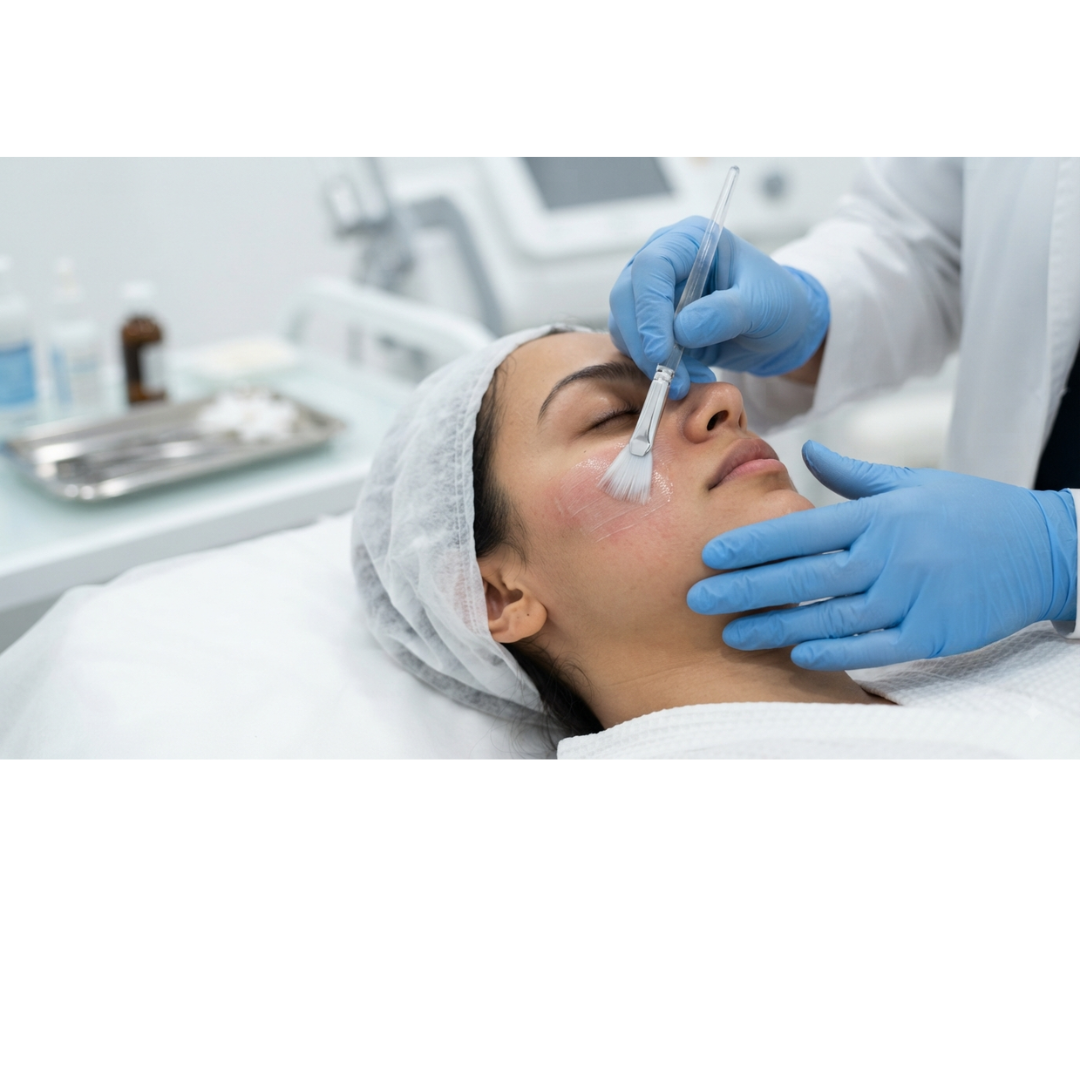
Chemical peeling is a skin treatment where a chemical solution is applied to the skin to remove damaged outer layers, revealing fresher, smoother skin underneath. It treats a wide range of skin concerns, from acne scars and pigmentation to fine lines and uneven texture. It is not a one-size-fits-all procedure. The type of peel, its depth, and the formulation used all depend on the skin condition being targeted.
If you are wondering whether this treatment is right for your skin concern, here is a clear breakdown of what it actually addresses.
Acne and Post-Acne Marks
Active acne and the marks it leaves behind are among the most common reasons people seek this treatment. Certain chemical solutions, particularly salicylic acid and glycolic acid peels, work by deeply cleansing pores, reducing oil production, and speeding up cell turnover.
For post-acne marks (the flat, discoloured spots left after a breakout heals), peels help fade them faster than most topical creams. They do not erase deep pitted scars in one session, but a series of treatments shows measurable improvement over time.
Hyperpigmentation and Melasma
Uneven skin tone caused by sun damage, hormonal changes, or post-inflammatory responses responds well to chemical peels. Melasma, which appears as brown or grey patches mostly on the cheeks and forehead, is a condition that many people in Dubai deal with due to high sun exposure throughout the year.
Peels containing kojic acid, lactic acid, or TCA (trichloroacetic acid) target excess melanin production and help even out skin tone progressively. It is worth noting that melasma is a recurring condition. Peels manage it effectively but require maintenance and sun protection to sustain results.
Sun Damage and Dullness
Years of sun exposure cause the skin to look dull, rough, and uneven. Sunspots, fine surface lines, and a generally tired appearance are signs of photoaged skin. Chemical peeling in Dubai is particularly relevant here because the climate accelerates skin ageing through consistent UV exposure.
Superficial and medium-depth peels remove the damaged outer layer and stimulate collagen production, which gradually improves skin brightness and firmness. The results are not instant but build progressively with each session.
Fine Lines and Early Signs of Ageing
Peels are not a replacement for injectable treatments like Botox or fillers, but they do address surface-level signs of ageing effectively. Fine lines around the eyes, mouth, and forehead, along with rough skin texture, respond well to medium and deep peels.
Glycolic acid peels are particularly useful here because they stimulate collagen while also improving skin hydration levels. Over a course of treatments, the skin looks noticeably more refreshed without any invasive procedures.
Uneven Skin Texture
Rough, bumpy, or congested skin often comes from a buildup of dead skin cells that do not shed properly. This makes the skin look dull and can cause issues like closed comedones (whiteheads) and milia.
A well-chosen chemical peel speeds up the natural exfoliation process, clears congestion, and smooths the skin surface. This is one of the more immediate results people notice, often after just a few sessions.
Enlarged Pores
While no treatment permanently shrinks pores (pore size is largely genetic), chemical peels keep them cleaner and less visible. When pores are clogged with oil and dead skin, they appear larger. Regular peeling keeps the buildup minimal, which makes pores look tighter over time.
Keratosis Pilaris and Rough Patches
This is a common condition where small, rough bumps appear on the upper arms, thighs, or cheeks. Chemical exfoliation with lactic or salicylic acid significantly improves the texture of skin affected by keratosis pilaris. It does not cure the condition, but consistent treatment keeps the skin noticeably smoother.
Who Should Perform the Treatment
The outcome of any peel depends heavily on who applies it and which formulation they choose. Self-administered peels available over the counter are much weaker and carry risk if misused. A clinic with trained dermatologists and aestheticians will assess your skin type, concerns, and sensitivity before selecting the right peel depth and acid combination.
Athena Derma is one of the clinics in Dubai offering professional chemical peel treatments with a focus on customised skin assessment before any procedure. Their approach at athenaderma.com covers a range of peel options suited to different skin concerns and types, which matters because using the wrong peel on sensitive or darker skin tones can cause more damage than benefit.
Conclusion
Chemical peeling addresses real, common skin problems, including acne, pigmentation, sun damage, ageing, and texture issues. It is not a single treatment but a category of procedures that vary in depth and formulation. Results depend on the right peel being matched to the right concern, applied by someone who understands skin properly. In a climate like Dubai's, where sun exposure is a year-round factor, this treatment has practical long-term value when done correctly and maintained well.
Frequently Asked Questions
Q.1 How many sessions of chemical peeling are needed to see results?
Most people see initial improvement after two to three sessions. For concerns like melasma or acne scarring, a full course of six to eight sessions spaced a few weeks apart is typically recommended.
Q.2 Is chemical peeling safe for darker skin tones?
Yes, but the peel type matters significantly. Certain acids at high concentrations can cause post-inflammatory hyperpigmentation on darker skin. A qualified professional will choose milder formulations and lower concentrations to reduce that risk.
Q.3 What is the downtime after a chemical peel?
Superficial peels have minimal downtime, sometimes just mild redness for a day or two. Medium-depth peels may cause peeling and redness for up to a week. Deep peels require longer recovery and are less commonly used.
Q.4 Can chemical peeling in Dubai be done year-round?
Yes, but post-treatment sun protection is critical, especially given the year-round UV intensity in Dubai. Most clinics recommend avoiding direct sun exposure for at least a week after treatment and using SPF 50 consistently.
Q.5 How long do the results last?
Results are not permanent. Maintenance sessions every few months, combined with a good skincare routine and sun protection, help sustain the improvements achieved through peeling.
Q.6 Is chemical peeling painful?
Most people experience a mild tingling or stinging sensation during the application, which settles quickly. It is generally well-tolerated. Deeper peels may require numbing cream beforehand.

 Arabic
 French
 Spanish
 Portuguese
 Deutsch
 Turkish
 Dutch
Dutch
 Italiano
 Russian
 Romaian
 Portuguese (Brazil)