
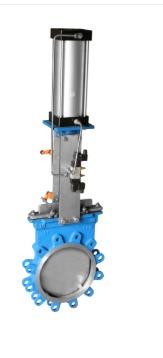
In modern industrial operations, selecting the right valve is essential for ensuring smooth flow control, operational safety, and long-term reliability. Industries dealing with slurry, semi-solid materials, and abrasive media require specialized solutions that can handle tough conditions without frequent maintenance. The Knife Edge Gate Valve is one such solution, widely used across industries for its durability and efficiency.
This complete guide to Knife Edge Gate Valve will help you understand its working, applications, benefits, and how to choose the right valve for industrial use.
What Is a Knife Edge Gate Valve?
A Knife Edge Gate Valve is a type of valve designed to control the flow of fluids containing solid particles, slurry, or viscous materials. It uses a sharp-edged gate that can cut through solids and ensure effective sealing.
Unlike conventional valves, the Knife Edge Gate Valve is specifically engineered to handle challenging applications where clogging and wear are common issues. Its simple yet robust design makes it ideal for industries such as mining, wastewater treatment, and chemical processing.
Working Principle of Knife Edge Gate Valve
The Knife Edge Gate Valve operates using a linear motion mechanism. The gate moves up and down to open or close the flow path.
- When the valve is open, the gate is lifted, allowing fluid to pass through freely.
- When the valve is closed, the sharp edge cuts through the media and creates a tight seal.
This working mechanism allows the Knife Edge Gate Valve to perform effectively even in slurry and abrasive conditions.
Key Features of Knife Edge Gate Valve
1. Sharp Cutting Edge
The Knife Edge Gate Valve is equipped with a blade-like gate that cuts through solid particles, preventing clogging.
2. Full Bore Design
Its straight-through flow path ensures minimal pressure drop and smooth fluid movement.
3. Robust Construction
Manufactured using materials like cast iron, carbon steel, and stainless steel, the Knife Edge Gate Valve is built for durability.
4. Abrasion Resistance
Designed to handle abrasive media, it offers extended service life.
5. Easy Maintenance
The simple design allows quick maintenance and reduced downtime.
Types of Knife Edge Gate Valve
Uni-Directional Knife Edge Gate Valve
Designed for flow in one direction, offering cost-effective solutions for standard applications.
Bi-Directional Knife Edge Gate Valve
Provides sealing in both directions, suitable for systems with reverse flow.
Actuated Knife Edge Gate Valve
Available with pneumatic or electric actuators for automated operation.
Each type of Knife Edge Gate Valve is selected based on the specific requirements of the application.
Applications of Knife Edge Gate Valve
The Knife Edge Gate Valve is widely used in industries where handling of slurry, solids, and viscous fluids is required:
- Mining and mineral processing
- Wastewater and sewage treatment
- Pulp and paper industry
- Cement and ash handling
- Chemical and pharmaceutical processing
In all these applications, the Knife Edge Gate Valve ensures reliable flow control and minimal maintenance.
Material Selection for Industrial Use
Choosing the right material is crucial for the performance of a Knife Edge Gate Valve. Common materials include:
- Cast Iron (CI): Suitable for general industrial applications
- Carbon Steel (CS): Offers strength for heavy-duty operations
- Stainless Steel (SS 304/316): Ideal for corrosive environments
Sealing materials such as EPDM, NBR, and PTFE are selected based on temperature and media conditions.
Advantages of Knife Edge Gate Valve
Efficient Slurry Handling
The Knife Edge Gate Valve is designed to handle slurry without clogging, ensuring smooth operation.
Long Service Life
Its durable construction reduces wear and extends lifespan.
Cost-Effective
Low maintenance requirements make it a cost-effective solution.
Reliable Performance
Performs consistently in harsh industrial environments.
Automation Options
Modern Knife Edge Gate Valve systems can be automated for improved efficiency. Common options include:
- Pneumatic Actuators: Provide fast and reliable operation
- Electric Actuators: Allow remote control and precise operation
Automation enhances productivity and reduces manual intervention.
How to Choose the Right Knife Edge Gate Valve
Selecting the right Knife Edge Gate Valve involves considering several factors:
Media Type
Determine whether the fluid contains solids, slurry, or chemicals.
Pressure and Temperature
Ensure the valve can handle the operating conditions.
Size and Flow Requirements
Choose the appropriate size for efficient flow control.
Actuation Method
Decide between manual, pneumatic, or electric operation.
Material Compatibility
Select materials that resist corrosion and wear.
Why Choose a Reliable Manufacturer?
The performance of a Knife Edge Gate Valve depends on the quality of manufacturing. A trusted manufacturer offers:
- High-quality materials and precision engineering
- Compliance with industry standards
- Customization options
- Technical support and timely delivery
Choosing the right supplier ensures that the Knife Edge Gate Valve meets your operational requirements effectively.
Conclusion
The Knife Edge Gate Valve is a versatile and reliable solution for industrial applications involving slurry, solids, and abrasive media. Its unique design, robust construction, and efficient performance make it an essential component in modern industrial systems.
By understanding its features, applications, and selection criteria, industries can make informed decisions and improve operational efficiency. Investing in a high-quality Knife Edge Gate Valve ensures long-term reliability and reduced maintenance costs.

 English
 Arabic
 French
 Spanish
 Portuguese
 Deutsch
 Turkish
 Italiano
 Russian
 Romaian
 Portuguese (Brazil)