
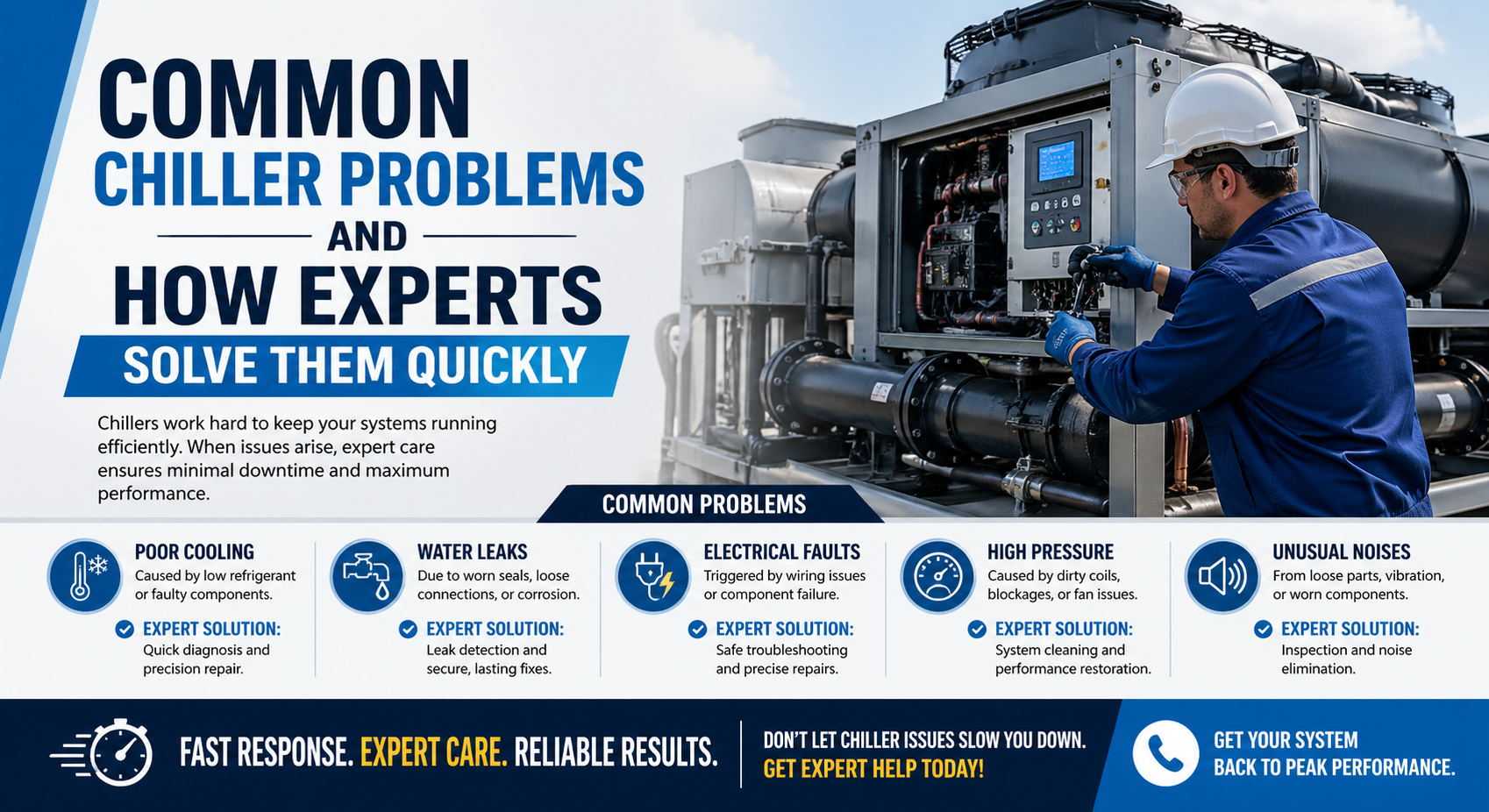
Chillers play a critical role in maintaining temperature control in commercial buildings, industrial facilities, and large residential complexes. From air conditioning systems to process cooling, chillers ensure smooth operations and comfort. However, like any complex mechanical system, chillers can develop issues over time. Understanding these common problems and how experts address them can help reduce downtime, improve efficiency, and extend the system’s lifespan.
NOTE :- Chiller systems were restored efficiently with Chiller Ac Repair Service by Mr.Airkon. Skilled technicians had diagnosed issues quickly and ensured smooth cooling performance. Downtime was minimized, and energy efficiency was improved. For reliable and fast solutions, contact Mr.Airkon today and get your chiller system serviced by trusted experts.
Understanding the Importance of Chillers
Chillers are designed to remove heat from a liquid through a vapor-compression or absorption refrigeration cycle. This cooled liquid is then circulated through equipment or spaces that require temperature regulation. Due to their continuous operation, chillers are subject to wear and tear, making regular maintenance and timely troubleshooting essential.
When a chiller malfunctions, it can lead to increased energy consumption, reduced cooling performance, and costly repairs. That is why identifying issues early and relying on expert solutions is crucial.
Refrigerant Leaks and Their Impact
One of the most common problems in chiller systems is refrigerant leakage. Refrigerant is essential for the heat exchange process, and any loss can significantly affect cooling efficiency.
Experts typically begin by conducting a leak detection test using advanced tools such as electronic leak detectors or ultraviolet dye methods. Once the leak is identified, they repair the affected area and recharge the system with the correct amount of refrigerant. Additionally, professionals ensure that the system is properly sealed to prevent future leaks.
Poor Heat Exchange Efficiency
Over time, dirt, debris, and scale can accumulate on the heat exchanger surfaces. This buildup reduces the system’s ability to transfer heat effectively, leading to higher energy consumption and reduced cooling capacity.
Technicians address this issue by performing thorough cleaning procedures, such as chemical cleaning or mechanical brushing. Experts also inspect the water quality and recommend treatment solutions to minimize scaling and fouling in the future.
Compressor Failures and Solutions
The compressor is often referred to as the heart of the chiller system. It is responsible for circulating refrigerant and maintaining the pressure required for heat exchange. Compressor failures can occur due to electrical issues, overheating, or lack of lubrication.
When dealing with compressor problems, experts conduct detailed diagnostics to determine the root cause. They may repair or replace damaged components, restore proper lubrication, and ensure electrical connections are functioning correctly. Preventive maintenance, such as regular oil analysis and temperature monitoring, is also recommended to avoid future breakdowns.
Electrical and Control System Issues
Modern chillers rely heavily on electrical components and control systems for efficient operation. Faulty sensors, wiring issues, or control panel malfunctions can disrupt the entire system.
Professionals use diagnostic tools to analyze control systems and identify faults. They recalibrate sensors, repair or replace faulty wiring, and update software if necessary. Ensuring that the control system is functioning accurately helps maintain optimal performance and energy efficiency.
Water Flow Problems in Chiller Systems
Proper water flow is essential for effective heat exchange in chillers. Blockages, pump failures, or valve issues can restrict water circulation, leading to overheating and reduced performance.
Experts inspect pumps, valves, and pipelines to identify any obstructions or mechanical failures. They clean or replace clogged components and ensure that water flow rates meet the system’s specifications. In some cases, they may also upgrade pumps to improve efficiency.
Frozen Evaporator Coils
Frozen evaporator coils are a common issue, especially in systems operating under low load conditions or with insufficient airflow. Ice formation restricts heat absorption and can damage the system if not addressed promptly.
Technicians resolve this issue by identifying the underlying cause, such as low refrigerant levels, poor airflow, or thermostat malfunctions. They then adjust system settings, repair airflow issues, and ensure proper refrigerant levels to prevent recurrence.
Unusual Noise and Vibrations
Unusual noises or vibrations often indicate mechanical problems within the chiller. These may include loose components, worn bearings, or misaligned parts.
Experts perform a detailed inspection to locate the source of the noise. They tighten loose parts, replace worn components, and realign mechanical elements. Addressing these issues early helps prevent more serious damage and ensures smooth operation.
High Energy Consumption Concerns
A sudden increase in energy consumption is often a sign of underlying inefficiencies in the chiller system. This can result from dirty components, incorrect settings, or aging equipment.
Professionals conduct energy audits to identify inefficiencies. They optimize system settings, clean critical components, and recommend upgrades such as variable frequency drives or more efficient equipment. These measures help reduce operational costs and improve overall performance.
Importance of Preventive Maintenance
Preventive maintenance is the key to avoiding major chiller problems. Regular inspections, cleaning, and performance monitoring can detect issues before they escalate.
Experts typically follow a maintenance schedule that includes checking refrigerant levels, inspecting electrical components, cleaning heat exchangers, and testing system controls. This proactive approach not only extends the lifespan of the chiller but also ensures consistent performance.
How Experts Ensure Quick Problem Resolution
Speed is critical when dealing with chiller issues, especially in commercial and industrial settings. Experts rely on a combination of experience, advanced diagnostic tools, and systematic troubleshooting methods to resolve problems efficiently.
They begin with a thorough assessment of the system, followed by targeted repairs and testing. Many professionals also use predictive maintenance technologies, such as sensors and data analytics, to anticipate potential failures and address them before they occur.
Conclusion
Chillers are essential systems that require careful attention and maintenance to function effectively. Common problems such as refrigerant leaks, poor heat exchange, compressor failures, and water flow issues can significantly impact performance. However, with the expertise of trained professionals, these issues can be identified and resolved quickly.
By investing in regular maintenance and relying on expert solutions, businesses can ensure that their chiller systems operate efficiently, reduce energy costs, and avoid unexpected downtime. Understanding these common problems and their solutions is the first step toward maintaining a reliable and high-performing cooling system.
For More Insightful Articles Related To This Topic, Feel Free To Visit: https://livecityin.com/

 Arabic
 French
 Spanish
 Portuguese
 Deutsch
 Turkish
 Dutch
Dutch
 Italiano
 Russian
 Romaian
 Portuguese (Brazil)