
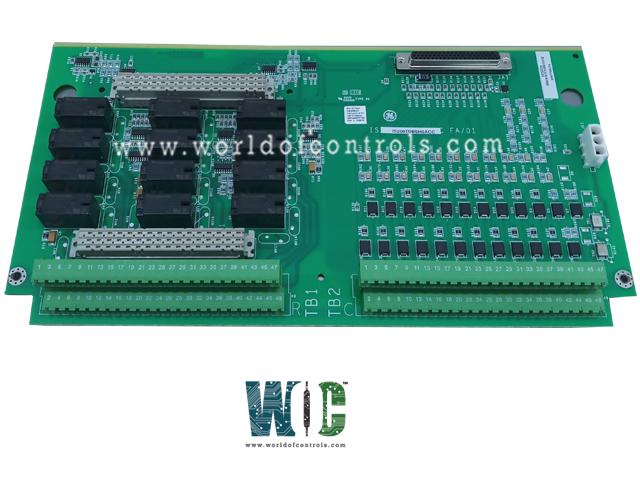
In modern industrial environments, automation and control systems rely heavily on precise and reliable data to maintain efficiency, safety, and productivity. Among the different types of data processed in these systems, discrete signals play a crucial role. These signals—typically representing binary states such as ON/OFF, OPEN/CLOSED, or TRUE/FALSE—form the backbone of many operational decisions.
To ensure that these signals are accurately captured and processed, specialized hardware components are required. One such component is the T Discrete Simplex Module (IS200TDBSH2A). Designed to handle discrete signal processing with high reliability, this module is widely used in industrial control systems where accuracy and consistency are non-negotiable. This article explores why the T Discrete Simplex Module is essential for reliable discrete signal processing and how it contributes to the overall performance of industrial systems.
Understanding Discrete Signal Processing in Industrial Systems
Discrete signals differ from analog signals in that they represent distinct states rather than continuous values. In industrial systems, these signals are used to indicate conditions such as whether a valve is open, a motor is running, or an alarm has been triggered.
Common examples of discrete signals include:
- Limit switch activations
- Relay statuses
- Emergency stop signals
- Alarm triggers
These signals are fundamental to automation because they enable systems to respond quickly to changes in operational conditions. However, processing discrete signals is not without challenges. Electrical noise, signal degradation, and incorrect wiring can lead to misinterpretation, potentially causing system faults or safety risks. Therefore, reliable signal processing hardware is critical.
Overview of the T Discrete Simplex Module (IS200TDBSH2A)
The IS200TDBSH2A T Discrete Simplex Module is specifically designed to manage discrete input and output signals within industrial control systems. It acts as an interface between field devices (such as sensors and switches) and the central control system.
This module is commonly integrated into larger control architectures, including turbine control systems, manufacturing automation platforms, and process control environments. Its primary function is to receive discrete signals, condition them, and transmit accurate information to the control processor.
The term “simplex” refers to its single-channel design. Unlike redundant systems that use multiple channels for fault tolerance, simplex modules operate on a single processing path. While this may seem like a limitation, it is often ideal for applications where redundancy is not required, offering a simpler and more cost-effective solution.
Key Features That Enable Reliable Signal Processing
High Signal Integrity
One of the most important aspects of discrete signal processing is maintaining signal integrity. The IS200TDBSH2A module is designed with noise immunity and signal conditioning capabilities that ensure accurate data transmission. This reduces the likelihood of false signals or data corruption, even in electrically noisy environments.
Fast and Accurate Signal Response
In industrial systems, delays in signal processing can lead to inefficiencies or even hazardous situations. The module provides real-time or near-real-time signal detection, enabling rapid system responses. This is particularly important in applications such as safety interlocks and emergency shutdown systems.
Robust Industrial Design
Industrial environments are often harsh, with exposure to high temperatures, vibration, dust, and electromagnetic interference. The T Discrete Simplex Module is built to withstand these conditions, ensuring long-term reliability and consistent performance.
Seamless System Integration
Another advantage of the IS200TDBSH2A is its compatibility with established control systems. It can be easily integrated into existing architectures, reducing installation time and complexity. This makes it a practical choice for both new installations and system upgrades.
Importance of Simplex Architecture in Specific Applications
Simplex architecture, characterized by a single processing channel, is often misunderstood. While redundant systems (such as duplex or triplex configurations) provide higher fault tolerance, they are not always necessary.
In many industrial applications, simplex modules are sufficient and even preferable. For example:
- Non-critical monitoring systems
- Cost-sensitive projects
- Systems with external redundancy mechanisms
The benefits of simplex architecture include:
- Lower hardware and maintenance costs
- Reduced system complexity
- Easier troubleshooting and diagnostics
However, it is important to carefully evaluate system requirements before choosing a simplex configuration, especially in safety-critical environments.
Applications of the T Discrete Simplex Module
The versatility of the IS200TDBSH2A module makes it suitable for a wide range of industrial applications, including:
- Power Generation: Monitoring turbine states, breaker positions, and alarm conditions
- Oil & Gas: Managing discrete signals from valves, pumps, and safety systems
- Manufacturing: Controlling assembly line operations and machine states
- HVAC Systems: Monitoring system status and controlling operational modes
- Building Automation: Handling security systems, fire alarms, and access controls
In each of these applications, reliable discrete signal processing is essential for maintaining operational efficiency and safety.
Benefits of Using the IS200TDBSH2A Module
Implementing the T Discrete Simplex Module offers several advantages:
- Improved Reliability: Accurate signal processing reduces system errors and downtime
- Enhanced Monitoring: Provides clear and dependable status information for operators
- Cost Efficiency: Ideal for applications that do not require redundant systems
- Simplified Maintenance: Easier to diagnose and repair compared to complex architectures
- Reduced Risk: Minimizes the chances of incorrect signal interpretation
These benefits make the module a valuable component in many industrial control systems.
Best Practices for Implementation and Maintenance
To maximize the performance and lifespan of the IS200TDBSH2A module, it is important to follow best practices:
- Proper Installation: Ensure correct wiring and secure connections
- Routine Inspections: Regularly check for signs of wear, damage, or loose connections
- Signal Verification: Test inputs and outputs to confirm accurate operation
- Environmental Control: Protect the module from excessive heat, moisture, and dust
- Preventive Maintenance: Schedule periodic maintenance to avoid unexpected failures
By adhering to these practices, organizations can ensure consistent and reliable operation.
Future Trends in Discrete Signal Processing Modules
As industrial automation continues to evolve, discrete signal processing modules are becoming more advanced. Emerging trends include:
- Integration with IoT: Enabling remote monitoring and data analytics
- Smart Diagnostics: Built-in tools for fault detection and predictive maintenance
- Advanced Communication Protocols: Improving data exchange and system interoperability
- Modular Designs: Allowing for easier scalability and customization
These innovations will further enhance the capabilities of modules like the IS200TDBSH2A, making them even more valuable in modern industrial systems.
Conclusion
Discrete signal processing is a fundamental aspect of industrial automation, enabling systems to monitor conditions, execute control logic, and maintain safety. The IS200TDBSH2A - T DISCRTE SIMPLEX plays a critical role in this process by providing reliable, accurate, and efficient signal handling.
With its robust design, high signal integrity, and ease of integration, the module is well-suited for a wide range of applications. While its simplex architecture may not be appropriate for every scenario, it offers a cost-effective and dependable solution for many industrial systems.
Ultimately, investing in reliable components like the IS200TDBSH2A ensures better system performance, reduced downtime, and enhanced operational safety—key factors for success in today’s competitive industrial landscape.

 Arabic
 French
 Spanish
 Portuguese
 Deutsch
 Turkish
 Dutch
Dutch
 Italiano
 Russian
 Romaian
 Portuguese (Brazil)