
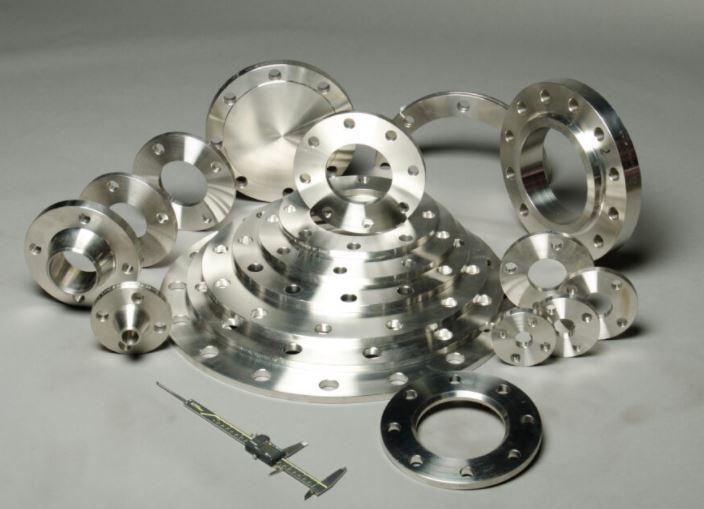
Weld neck flanges are a type of flange used widely in industrial piping systems. They are characterized by the neck of the flange being tapered to be welded onto the end of a pipe. Weld neck flanges are preferred for high temperature, high pressure, and other demanding service conditions. This article provides dimensions and key details for weld neck flanges ranging from Class 150 to Class 2500.
What is a Weld Neck Flange?
A weld neck flange consists of a circular flange with a tapered inner diameter that is matched to the outer diameter of a pipe. The angled neck provides a smooth transition from the flange thickness to the pipe wall thickness. This allows the flange to be fully penetration welded on the inside and outside to form a strong union optimized for handling high stresses.
The term "weld neck" comes from this distinctive tapering neck design. The result is a compact, smooth, and robust flanged joint. Weld Neck Flanges are used on process piping in refineries, chemical plants, power plants, and other industrial systems needing optimal performance.
Weld Neck Flange Standards
There are several key standards that define weld neck flange designs, dimensions, ratings, and materials. These include:
- ASME B16.5 - Smaller carbon steel flanges from 1⁄2” to 24” diameter
- ASME B16.47 - Large flanges from 24” to 96” diameter
- ASME B16.36 - Stainless steel flange standard
- MSS SP-44 - Material standard for flanges
Manufacturers produce weld neck flanges to comply with these ASME and MSS standards to ensure proper performance.

Class Ratings
Weld neck flanges have different maximum pressure capabilities depending on their size, materials, and design class rating. Some common class ratings include:
- Class 150
- Class 300
- Class 400
- Class 600
- Class 900
- Class 1500
- Class 2500
Higher class ratings have thicker flange sections and can withstand greater internal pressures. Selecting the appropriate class depends on the service conditions and ASME pressure piping codes.
Key Weld Neck Flange Dimensions
There are several important weld neck flange dimensions that define their size and capabilities. These include:
- Nominal Pipe Size (NPS) - The pipe size the flange is designed for such as 8”, 12”, 24” etc.
- Inside Diameter (ID) - The inside bore diameter of the flange.
- Outside Diameter (OD) - The outer overall dimension of the flange.
- Bolt Circle Diameter (BCD) - The diameter of the bolt circle.
- Flange Thickness - The thickness of the flange based on materials and class.
Class 150 Weld Neck Flange Dimensions
For Class 150 carbon steel weld neck flanges per ASME B16.5, some example dimensions are:
| NPS | OD | ID | BCD | Thickness |
| 1⁄2” | 3” | 0.52” | 1 7/8” | 0.25” |
| 2” | 5” | 2.02” | 3 1/2” | 0.38” |
| 8” | 11” | 7.98” | 7 1/2” | 0.50” |
| 12” | 14” | 12.00” | 9” | 0.50” |
| 24” | 23” | 23.92” | 17” | 0.75” |
Class 300 Weld Neck Flange Dimensions
Here are some example Class 300 carbon steel weld neck flange dimensions per ASME B16.5:
| NPS | OD | ID | BCD | Thickness |
| 1⁄2” | 3 1/8” | 0.54” | 1 7/8” | 0.38” |
| 2” | 5 1/4” | 2.06” | 3 1/2” | 0.50” |
| 8” | 11 1/4” | 8.00” | 7 1/2” | 0.75” |
| 12” | 15” | 12.06” | 9” | 0.75” |
| 24” | 25” | 24.00” | 17” | 1.00” |
The thicker sections provide the strength to handle 300 lb pressure ratings.
Higher Class Weld Neck Flanges
As the pressure class rating increases, the flange OD, ID, and thickness all increase accordingly. Some example dimensions for larger classes include:
- Class 600 - 1.00 to 1.50 inch thickness
- Class 900 - 1.44 to 2.50 inch thickness
- Class 1500 - 2.00 to 3.00 inch thickness
- Class 2500 - 2.50 to 4.00 inch thickness
Heavy wall thicknesses give these flanges incredible strength for extreme pressures and temperatures.
Materials of Construction
The most common materials used to manufacture weld neck flanges include:
- Carbon steel - SA105, SA516, SA350 etc.
- Stainless steel - 304, 304L, 316L
- Alloy steel - F5, F9, F11, F22, F91
- Nickel alloys - Alloy 20, Monel, Inconel, Incoloy
- Duplex/Super Duplex stainless</


 English
 Arabic
 French
 Spanish
 Portuguese
 Deutsch
 Turkish
 Dutch
Dutch
 Russian
 Romaian
 Portuguese (Brazil)