
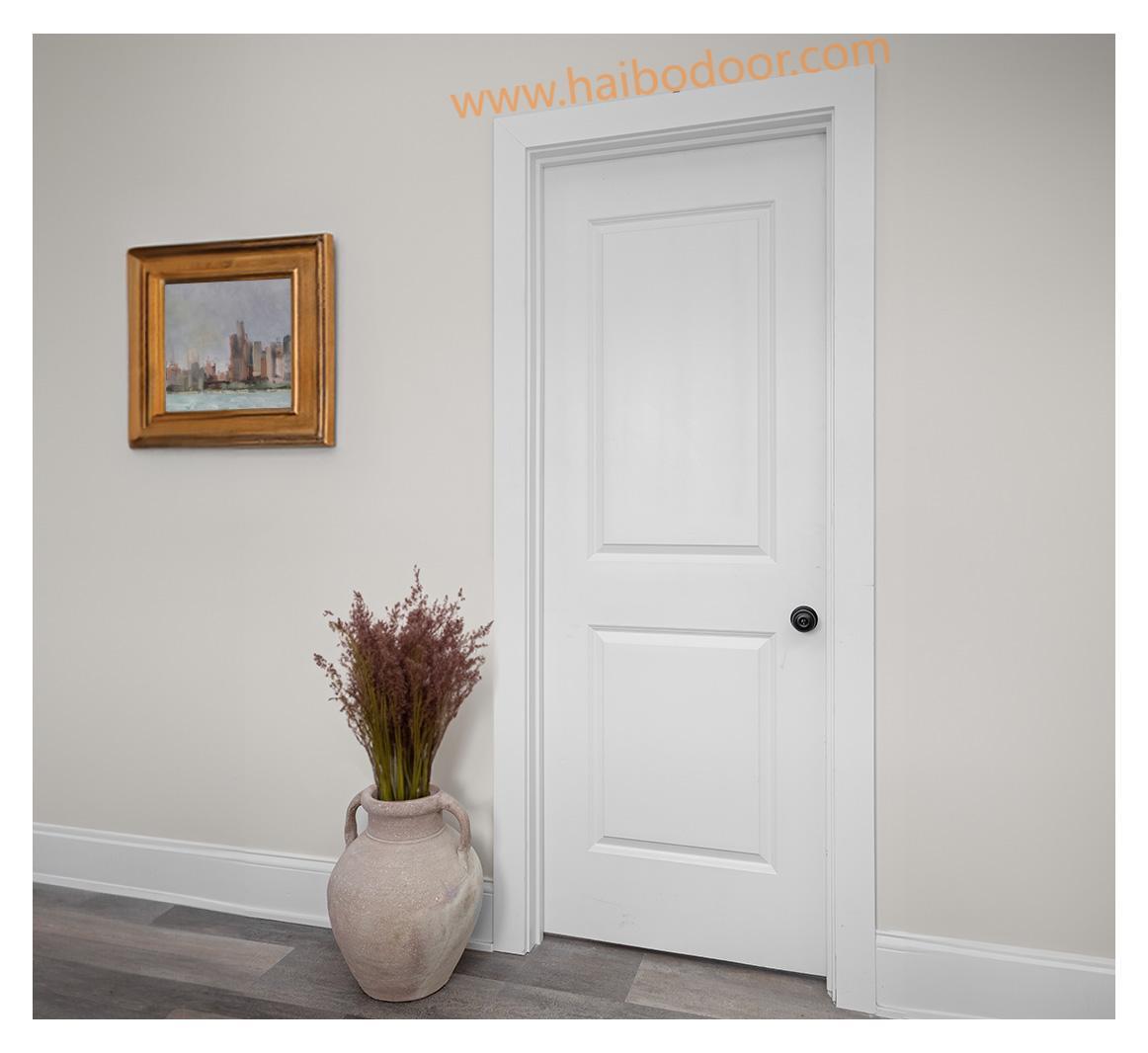
Material technology continues to redefine the standards for strength, weight, and stability in door manufacturing. For a professional Interior Door Factory , achieving optimal rigidity without adding unnecessary weight has long been a technical priority. Traditional MDF or solid-wood cores, while reliable, often presented issues such as warping or inconsistent density. Today, new composite blends are emerging as practical solutions—offering improved stiffness, dimensional stability, and uniformity across various interior applications.
Evolving Composite Structures for Rigidity
The new generation of composite materials integrates reinforcing fillers and polymer-based matrices that distribute stress more efficiently throughout the door core. By combining thermoplastic resins with micro-mineral additives such as calcium carbonate, glass microspheres, or wood fibers, manufacturers can enhance rigidity while maintaining processability and consistent finishes. These blends improve load-bearing capacity and reduce deformation over time—critical traits for interior doors exposed to temperature or humidity variations.
For instance, some engineered cores use a sandwich configuration: a reinforced PVC or WPC skin over a high-density composite core. This multi-layered approach minimizes torsional stress and prevents bending, especially in tall or wide door panels. The result is a structure that remains flat and stable, even under everyday use in environments like offices, schools, or hotels.
Real-World Application: Healthcare Facility Renovation
A useful example can be drawn from a hospital renovation project in southern China. The design team needed lightweight doors that resisted both moisture and impact from equipment movement. Instead of conventional plywood cores, the manufacturer proposed a hybrid composite made of thermoplastic resin combined with fine mineral particles and a small percentage of glass fiber.
Testing revealed that this composition improved rigidity by approximately 25% compared with standard MDF-core doors, while maintaining a surface suitable for laminate or paint finishes. Over the following 18 months, maintenance records showed no visible bowing or swelling, even in areas subject to constant temperature changes from air-conditioning and sterilization cycles. This case highlights how targeted use of composite reinforcement can directly enhance performance in demanding interior environments.
Practical Guidance for Specifying Rigid Interior Doors
Evaluate the core structure, not just the surface. Request technical data on the door’s internal materials to understand how the composite contributes to rigidity.
- Consider environmental conditions. Select blends with proven resistance to humidity and heat, especially for kitchens, bathrooms, or healthcare facilities.
- Check third-party testing standards. Look for compliance with ISO 178 or ASTM D790 flexural strength tests for objective rigidity benchmarks.
- Balance density with ease of handling. Excessive stiffness can increase door weight; ensure the selected blend provides structural support without overloading hinges.
- Review installation guidelines. Even rigid composites benefit from proper frame alignment and controlled fastener pressure to maintain long-term performance.
By focusing on the internal composition and verified testing data, architects and builders can make informed decisions that ensure both stability and functional longevity. As composite science evolves, the interior door is becoming not only more durable but also more adaptable to modern architectural needs. For further technical insights and practical applications, visit https://www.haibodoor.com/ .

 Arabic
 French
 Spanish
 Portuguese
 Deutsch
 Turkish
 Dutch
Dutch
 Italiano
 Russian
 Romaian
 Portuguese (Brazil)