
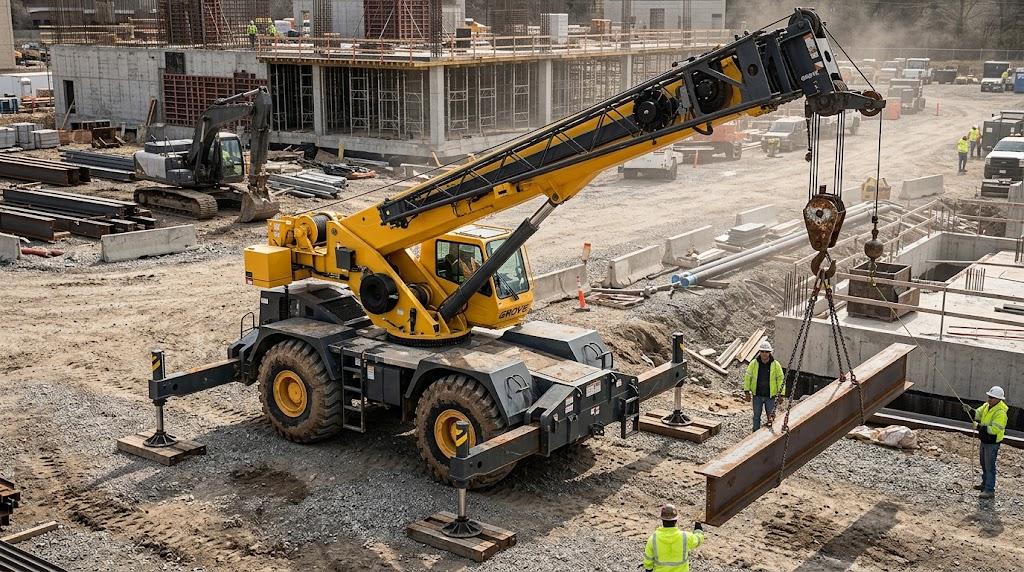
Every crane operator knows the feeling: the lift is mid-swing when something does not sound right. That instant decision—to push through or shut down—is where maintenance discipline separates well-run sites from disaster-prone ones. Grove RT series cranes are designed for demanding environments, but they are not exempt from mechanical failure.
The key is knowing where failures originate. Wear patterns on these machines are predictable once you understand the systems involved. The sections below map out the components that demand your closest attention.
Lifting Components Under Constant Stress
The hoist and boom assembly carries every load on every shift. These systems experience continuous mechanical stress with no rest period between cycles. Faults here affect both productivity and safety directly.
Wire Rope: This cable fails through progressive damage rather than sudden catastrophic events. Daily inspection catches fraying, broken wires, and deformation before they become dangerous. Match the rope diameter and construction type to your crane model precisely. An incorrect fit damages sheave grooves and accelerates wear on both components.
Sheaves and Bearings: Sheave grooves maintain a specific profile that protects the wire rope passing through them. Once that profile erodes, the rope contacts sharp metal edges and degrades rapidly. Inspect groove depth, flange thickness, and bearing condition at every planned service stop. Keeping stock on hand lets you replace these items immediately rather than waiting weeks for delivery.
Hoist Brake Elements: Brake friction material loses effectiveness gradually as pads and shoes wear down. The first sign is often a slight slippage under full load—not a complete failure. Establish a replacement schedule based on your usage patterns and maintain adequate inventory. Having a crane parts supplier ready for overnight shipment protects you when a brake approaches its wear limit.
Hydraulic Hoist Motors: Motors that drive the hoist drum experience internal wear that shows up as declining output. Slower drum speeds under load, leaking seals, and unusual noise are all warning signs. Addressing these symptoms early prevents complete motor failure during a critical operation. Replacing a degraded motor proactively avoids the cascade of secondary damage a hard failure causes.
Hydraulic System Integrity
Hydraulic pressure drives the boom telescope, outrigger deployment, steering response, and hoist operation. The system operates under extreme conditions and tolerates very little compromise. Component failures in this circuit can halt work without warning.
Hoses and Fittings: Hose degradation happens steadily from the inside out as rubber compounds break down. Heat cycling, ozone exposure, and constant pressure pulses weaken line integrity over time. Keep spares for the main pump, boom cylinder, and outrigger circuits. Fittings must carry the correct pressure rating for their specific circuit—this is not a place to improvise.
Telescoping Cylinder Seals: Seals inside telescoping cylinders harden and crack as they age, allowing fluid bypass. Many leaking cylinders do not require full replacement—a seal kit often resolves the issue completely. The critical step is identifying the correct seal design for your specific machine year. Grove updated these components at various points, so serial number verification matters.
Pump and Motor Performance: Hydraulic pumps and motors are durable, but they are not invulnerable to wear. Audible whining, pressure drops, and rising case temperatures are early indicators. Case drain flow analysis provides a reliable measure of internal clearance loss. Monitoring these metrics catches degradation before it becomes a shutdown event.
Drivetrain and Axle Endurance
Rough terrain cranes work on surfaces that would destroy road vehicles. The drivetrain absorbs impacts, shocks, and thermal stress on every cycle. Each component in the chain requires deliberate monitoring.
Tire Condition: RT crane tires experience accelerated wear on rock, gravel, and debris-covered surfaces. Tread depth drops quickly, and sidewall damage often goes unnoticed until it becomes critical. Run weekly tread and sidewall inspections as a minimum. Tire specifications must match the drive system design—consult your parts reference or a crane parts supplier for correct load ratings.
Axle Hub Components: Planetary gear sets in the axle hubs depend on hub seals to keep lubricant contained. A failing seal allows gear oil to escape, and without lubrication the planetary gears overheat and fail. This type of damage is far more expensive than the seal that caused it. Check the oil sight glass regularly and order replacements before visible oil loss occurs.
Transmission Health: Rough or delayed gear shifting points to either valve body problems or clutch pack wear. Both conditions produce metallic debris that shows up in the transmission fluid during inspection. Performing this check on a regular schedule catches developing problems early. These are heavy-duty components, but they still respond to proactive maintenance attention.
Electronic Monitoring and Operator Controls
Modern RT cranes incorporate sophisticated electronic systems that manage safety, precision, and operator feedback. The shift from mechanical linkages to electronic controls improved performance across the board. It also introduced maintenance considerations that earlier operators did not face.
Load Moment Indicator System: The LMI monitors boom angle, load weight, radius, and length in real time. It functions as the crane's primary safety system during every operation. Sensors drift over time and display units develop intermittent faults. Test the system at the start of each shift and address any warning codes immediately. A single faulty sensor can distort every reading the system provides.
Joystick and Proportional Control: Operator commands flow through the joystick to proportional valves that regulate hydraulic flow. When the joystick develops sticking or intermittent response, crane movements become jerky and unpredictable. Replacing the joystick controller is usually a straightforward fix. Inspect wiring harnesses for corrosion and damage, particularly at the boom connection point.
Foundation and Structural Systems
The outrigger system and structural framework form the foundation for every safe lift. These components bear enormous loads and experience repeated stress cycles. Failures in this area leave no room for recovery.
Outrigger Beams and Slide Pads: The beams extend and retract under hydraulic power with each deployment cycle. Slide pads reduce friction between the beam and its housing, and they wear down over time. A grinding sound during outrigger operation indicates the pads have exceeded their useful life. Replace pads before they damage the beam surfaces they protect.
Pins, Bushings, and Pivot Points: Every articulation point on the crane contains pins and bushings that wear with repeated load cycles. Accumulated play from worn pins loosens the boom and reduces control accuracy. Replace pins and bushings as matched sets—mixing new pins with old bushings recreates the problem quickly. This practice ensures the connection is restored to its original tolerance.
Turntable Bearing Maintenance: The turntable bearing carries the crane's entire rotational load across the chassis frame. It experiences some of the highest stresses of any single component. Verify bolt torque and inspect gear mesh patterns during each scheduled service. Follow the lubrication schedule and specification outlined in your manual without deviation. Premature turntable failure typically results in the crane being retired.
Parts Sourcing Strategy
Selecting the right replacement components involves evaluating both quality and availability. The decision between original and aftermarket options affects not just cost but also long-term reliability. Understanding the trade-offs helps you make informed choices for each situation.
Original Equipment Components: Factory parts are manufactured to Grove's exact specifications for material and fitment. They provide the highest assurance for safety-critical assemblies such as hydraulic systems and boom structure. The trade-off is cost and delivery time—certain components take weeks to arrive. When a part affects load capacity or structural safety, OEM remains the dependable choice.
Aftermarket Alternatives: The aftermarket for Grove cranes has matured significantly, with many producers delivering components to factory specifications. Hoses, seals, brake bands, and even hydraulic parts are widely available. Choosing a crane parts supplier with strong technical knowledge helps you avoid substandard alternatives. Quality varies across the aftermarket, so evaluate carefully before committing to critical systems.
Model Year Verification: Grove introduced design modifications at various points during production, even within the same model designation. A seal kit for one year may not match the requirements of a newer or older variant. Always keep your serial number handy when ordering replacement parts. Cross-referencing part numbers against your machine's configuration prevents ordering mistakes. Operators who check first always fare better than those who guess.
Preventive Maintenance Essentials
The most cost-effective approach to crane maintenance is preventing failure before it occurs. Filters, fluids, and lubrication work together to protect expensive components from internal damage. Neglecting these basics creates a domino effect across the entire machine.
Hydraulic Filter Service: Contaminants in hydraulic fluid cause the most wear to pumps, valves, and cylinders. Filters trap these particles, but they eventually saturate and begin bypassing oil. Replace them on the manufacturer's recommended schedule, not when convenient. Order from a crane parts supplier that stocks OEM-compatible filter options.
Air Filtration Systems: Dusty job site environments clog engine air filters much faster than normal conditions. A restricted filter starves the engine of clean air, reducing power output across every hydraulic circuit. Monitor the restriction gauge and replace filters proactively. Clean air intake directly affects the crane's hydraulic performance and engine longevity.
Engine Belts and Coolant Hoses: Engine compartment components endure sustained heat and constant vibration that degrade rubber materials. Cracked belts and softened hoses fail unpredictably, and an overheated engine can shut down the entire crane. Inspect belts and hoses on every service visit. Replace anything showing cracking, hardening, or soft spots immediately.
Planning for Long-Term Reliability
Successful crane maintenance depends on identifying your machine's specific wear patterns. Different RT models experience different stress profiles depending on job site conditions and duty cycles. A crane working abrasive surfaces consumes different components than one operating in urban environments.
Building a parts strategy based on your actual usage patterns keeps the fleet running when it matters most. Stocking high-turnover items like filters, hoses, and seal kits prevents the scramble that follows unexpected breakdowns. The right preparation makes the difference between a minor delay and a major disruption.

 Arabic
 French
 Spanish
 Portuguese
 Deutsch
 Turkish
 Dutch
Dutch
 Italiano
 Russian
 Romaian
 Portuguese (Brazil)