
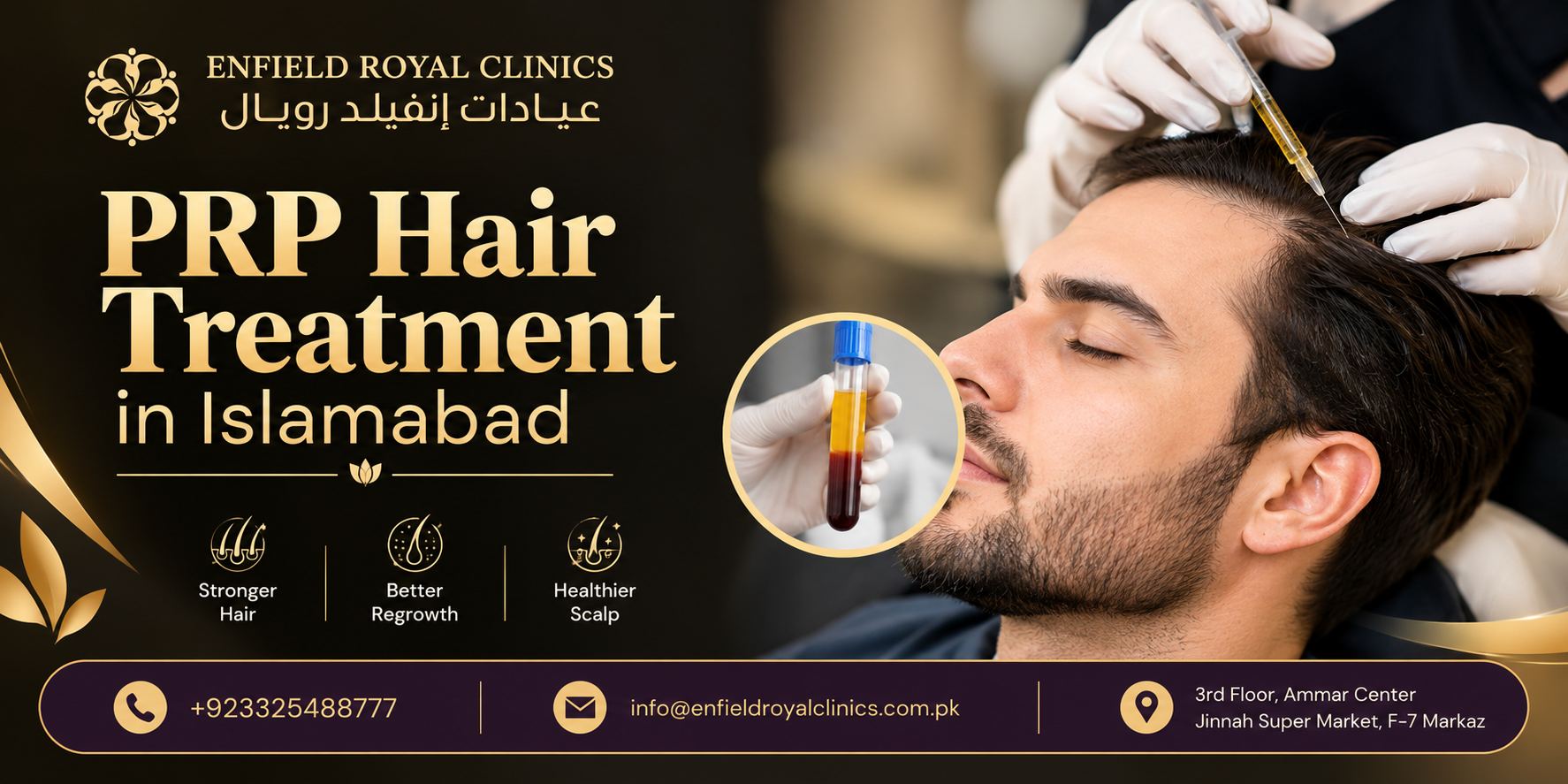
Hair loss can develop gradually, making it difficult to notice changes until the hair becomes visibly thinner. When follicles become weaker, they may produce finer strands, resulting in reduced density around the hairline, crown, or other areas of the scalp. PRP Hair Treatment in Islamabad is a non-surgical treatment that may help support weakened follicles and encourage healthier-looking hair growth in suitable individuals.
PRP stands for platelet-rich plasma. The treatment uses a concentrated portion of the patient’s own blood and introduces it into targeted areas of the scalp. Unlike a hair transplant, PRP does not move follicles from one part of the scalp to another. Instead, it aims to support follicles that are still present but may be functioning less effectively.
What Is PRP Hair Treatment?
PRP hair treatment is a procedure designed to use the natural components found in a patient’s blood to support hair follicles. A small blood sample is collected and processed to separate the platelet-rich portion from other components.
Platelets contain growth-related substances involved in natural tissue repair and cellular communication. The concentrated plasma is then administered into areas affected by thinning or weakened hair.
The purpose is to provide targeted support around existing follicles. Because the treatment works with the patient’s own biological material, it is different from procedures that involve transplanted follicles or synthetic materials.
How Does PRP Work on Weak Hair Follicles?
Hair follicles can gradually become less productive for several reasons, including genetic factors and certain forms of hair loss. A weakened follicle may continue producing hair, but the strands can become progressively finer and less noticeable.
PRP may help create a more supportive environment around these follicles. The growth-related components in platelet-rich plasma may influence cellular activity and tissue repair processes around the treatment area.
When follicles remain active, this support may help improve the quality and strength of the hair they produce. Over time, some patients may notice thicker-looking strands, improved coverage, or reduced visible thinning.
However, PRP does not create new follicles. Its potential benefits are mainly associated with supporting existing follicles that have not completely stopped functioning.
How Is PRP Prepared and Applied to the Scalp?
The treatment begins with collecting a small amount of blood from the patient. The sample is then processed to concentrate the platelets and separate the desired plasma component.
After preparation, the PRP is carefully delivered into selected areas of the scalp where hair thinning is present. The treatment focuses on areas where follicular support may be beneficial.
The exact treatment approach can vary according to the degree and pattern of hair loss. Areas around the hairline, crown, or general scalp thinning may be treated depending on the individual’s needs.
Because PRP is generally performed without surgery or transplantation, patients can typically undergo the procedure without the lengthy recovery associated with surgical hair-restoration procedures.
Which Types of Hair Loss May Benefit From PRP?
PRP may be considered for certain types of hair loss, particularly when thinning follicles remain active. Pattern hair loss is one situation in which PRP may be discussed because affected follicles can gradually become smaller and produce finer hairs.
However, not every type of hair loss responds in the same way. Hair thinning may also be associated with stress, nutritional deficiencies, hormonal changes, scalp conditions, medications, or other health factors.
Identifying the underlying cause is therefore an important part of treatment planning. If a nutritional or medical problem is contributing to hair loss, addressing that issue may be necessary alongside or instead of PRP.
A proper evaluation can help determine whether the follicles are likely to benefit from supportive treatment.
How Long Does PRP Take to Show Results?
PRP does not produce immediate hair growth. Hair follicles follow natural growth cycles, and any response develops gradually.
Some patients may initially notice changes in shedding or hair quality. With time, existing hairs may appear stronger or thicker, while overall density may gradually improve.
Visible results can take several weeks or months, and the timeline varies from person to person. Factors such as age, genetics, severity of hair loss, follicle condition, scalp health, nutrition, and individual response can all influence the outcome.
Because hair growth takes time, patients should evaluate progress over an extended period rather than expecting a dramatic change immediately after treatment.
How Many PRP Sessions May Be Required?
PRP treatment may involve multiple sessions because continued follicular support can be useful throughout the hair-growth cycle. The number and timing of sessions depend on the patient’s hair condition and treatment goals.
Individuals with mild thinning may have different requirements from those with more noticeable hair loss. Maintenance sessions may also be considered in some cases after the initial treatment course.
A personalized schedule allows progress to be monitored and helps determine whether additional treatment may be beneficial. More sessions do not automatically mean better results, as the response depends on the condition of the follicles and the underlying cause of hair loss.
Can PRP Regrow Hair in Completely Bald Areas?
PRP works primarily by supporting existing follicles. It cannot create new hair follicles in areas where follicles are completely absent.
This means that patients with early or moderate thinning may have more potential for improvement than individuals with long-standing, completely bald areas. Where follicles are still producing fine or weak hairs, there may be an opportunity to support their function.
For advanced hair loss, other restoration options may need to be considered depending on the individual’s condition. Realistic expectations are important when deciding whether PRP is appropriate.
What Factors Can Affect PRP Hair Results?
Several factors can influence how a person responds to PRP. The cause and severity of hair loss are particularly important. Follicles that remain active may have greater potential for improvement than follicles that have been inactive for a prolonged period.
Overall health, nutritional status, scalp condition, age, genetics, and consistency with treatment can also influence outcomes. Good hair-care practices and a balanced diet may provide additional support for normal hair growth.
Patients should also understand that PRP is not a guaranteed cure for hair loss. It may help improve follicular support and the appearance of existing hair, but future hair loss can still occur depending on its underlying cause.
Frequently Asked Questions
1. Does PRP actually work for hair loss?
PRP may help suitable individuals by supporting weakened but active hair follicles. Its effectiveness varies according to the cause of hair loss, follicle condition, treatment plan, and individual response.
2. Is PRP better for early hair loss?
PRP may have greater potential when follicles are still active but becoming weaker. Early treatment can focus on supporting existing follicles before significant follicular loss occurs.
3. How many PRP sessions are usually needed?
The number of sessions varies according to the severity of thinning, follicle health, treatment goals, and response. A personalized treatment schedule may include multiple sessions and maintenance treatment.
4. Does PRP permanently stop hair loss?
PRP is not a guaranteed permanent solution. It may support existing follicles and improve hair quality, but the underlying cause of hair loss can continue to affect hair growth over time.
For individuals exploring PRP Hair Treatment in Islamabad, understanding how the treatment works can help set realistic expectations. PRP focuses on supporting existing, weakened follicles through concentrated platelet-rich plasma. While results are gradual and vary between individuals, suitable patients may experience improvements in hair strength, thickness, and the appearance of thinning when the treatment is incorporated into an appropriate hair-loss management plan.
For more information visit Enfield royal clinic in islamabad

 English
 Arabic
 French
 Spanish
 Portuguese
 Deutsch
 Turkish
 Dutch
Dutch
 Italiano
 Russian
 Romaian