
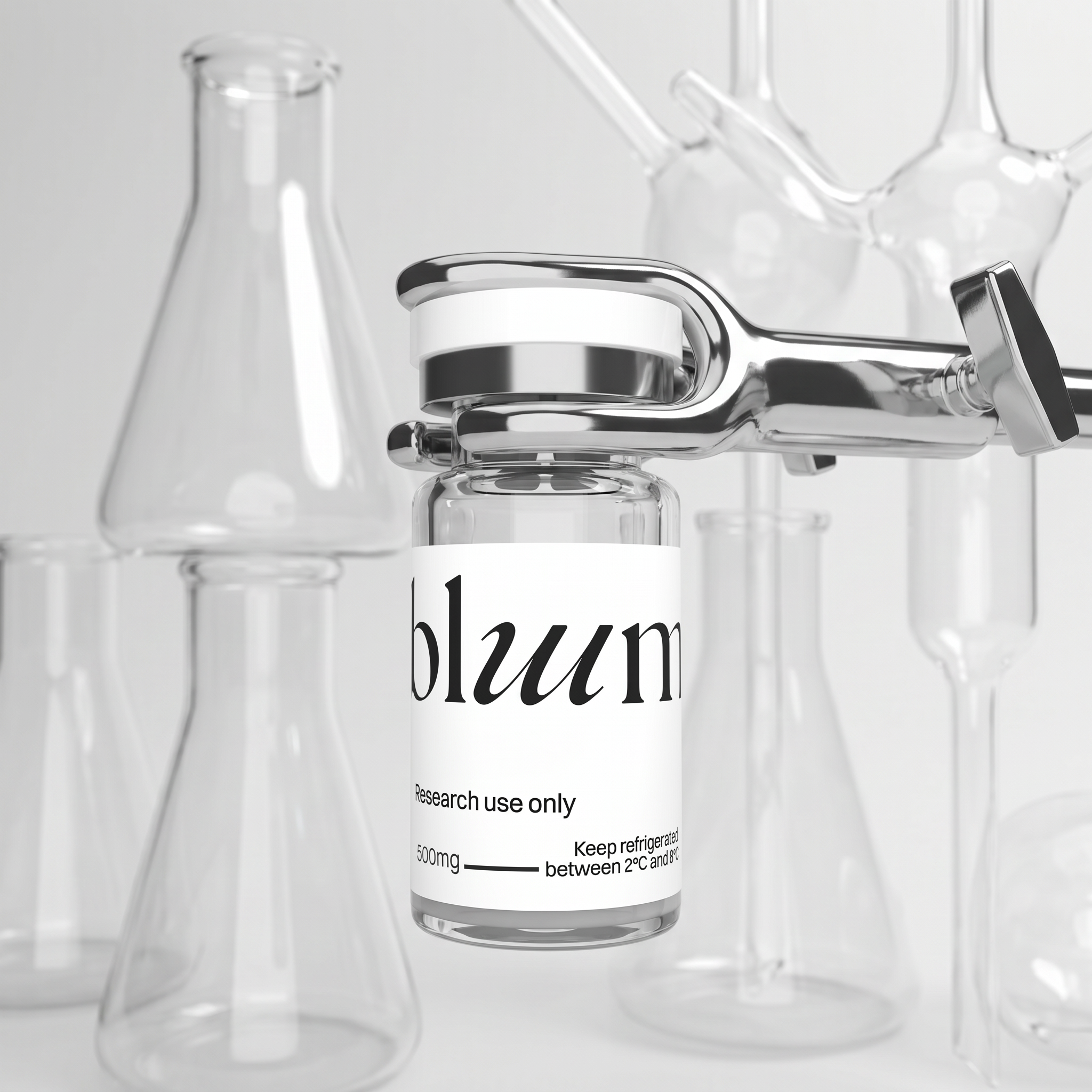
Peptide research has expanded into many areas of modern laboratory science, with researchers examining how short chains of amino acids interact with cells, proteins, signaling pathways, and tissue processes. Among the multi-peptide formulations discussed in research settings, klow blend peptides have attracted attention because they combine four distinct compounds into one preparation. Understanding how each component is studied provides a more accurate picture than treating KLOW as a single molecule with one established mechanism.
KLOW is generally described as a combination of GHK-Cu, BPC-157, TB-500, and KPV. Each component has its own molecular characteristics and research history, which means the scientific rationale for the blend comes from several different areas of investigation. Importantly, available evidence is primarily based on the individual components rather than controlled studies of the complete four-peptide combination. This distinction is essential when interpreting potential mechanisms and research applications.
What Are Klow Blend Peptides?
The exact ratio can vary between products, so researchers should examine the specifications of the particular preparation being studied rather than assuming every KLOW product contains identical quantities. Klow blend peptides are generally described as a research formulation containing GHK-Cu, BPC-157, TB-500, and KPV. Unlike a single peptide molecule, the blend consists of multiple chemically distinct peptides that remain separate within the formulation.
The scientific interest in this combination comes from the different biological areas associated with its components. GHK-Cu is studied in connection with extracellular matrix and cellular remodeling, BPC-157 has been investigated extensively in preclinical tissue-response models, TB-500 is associated with thymosin beta-4-related cellular migration research, and KPV has attracted attention for its relationship with inflammatory signaling. These separate research areas provide the theoretical rationale for studying them together.
However, a theoretical rationale should not be confused with proof of synergy. Combining compounds with different mechanisms does not automatically mean their effects will be additive or complementary. Researchers would need controlled experiments to determine whether the components interact positively, remain independent, or potentially interfere with one another. Current evidence does not establish a clinically validated mechanism for the complete KLOW formulation.
How GHK-Cu Is Studied
GHK-Cu is a copper-binding tripeptide that has been investigated in several areas of cellular and tissue biology. Research has examined its relationship with extracellular matrix regulation, collagen-associated processes, cellular signaling, antioxidant activity, and tissue remodeling. Its ability to bind copper is central to its scientific identity and helps explain its continued interest in laboratory research.
Researchers studying GHK-Cu may examine changes in cellular behavior, gene-expression patterns, extracellular matrix components, and other biological markers. These experiments can help identify pathways that may respond to the peptide and provide clues about its biological activity. However, results observed in cell cultures or experimental models cannot automatically be translated into predictable outcomes in humans.
Within a KLOW formulation, GHK-Cu is often described as the component associated most strongly with matrix and structural biology. This makes it an interesting part of research involving cellular repair processes and tissue organization. Nevertheless, researchers should evaluate the actual composition and analytical documentation of a preparation because different suppliers may use different formulations.
Understanding BPC-157 Research
BPC-157 is a synthetic pentadecapeptide that has received considerable attention in preclinical research. Laboratory and animal studies have investigated the compound in models involving gastrointestinal tissues, tendons, ligaments, muscles, and other forms of tissue injury. Proposed mechanisms have included pathways associated with vascular signaling, cellular responses, and tissue repair.
The scientific interest in BPC-157 comes largely from experimental observations rather than established clinical evidence. Animal models can provide valuable information about biological mechanisms and help researchers identify questions for future investigation. They cannot, however, establish that a particular result will occur in humans or demonstrate that a research compound is an approved medical treatment.
This distinction is particularly important when encountering commercial searches such as bpc 157 for sale. Availability through a research marketplace does not establish regulatory approval, therapeutic effectiveness, manufacturing quality, or safety for personal use. Researchers should focus on molecular identity, analytical documentation, evidence quality, and the intended laboratory purpose rather than interpreting commercial availability as proof of clinical validity.
BPC-157 also illustrates why KLOW should not be evaluated simply by adding together the findings from its individual components. Even if BPC-157 demonstrates a particular activity in an experimental model, researchers cannot assume that the same activity will occur at the same magnitude when BPC-157 is combined with GHK-Cu, TB-500, and KPV.
The Role of TB-500 in Research
TB-500 is commonly discussed in connection with thymosin beta-4-related research and mechanisms involving cellular movement. Research on thymosin beta-4 has examined processes such as cell migration, wound-related responses, and tissue organization. However, an important scientific distinction is that commercially described TB-500 should not automatically be treated as identical to full-length thymosin beta-4.
This difference matters when interpreting published research. Findings involving full-length thymosin beta-4 cannot automatically be transferred to a shorter or differently structured peptide preparation simply because the compounds are related. Molecular structure can influence biological behavior, activity, stability, and experimental interpretation. Responsible research therefore requires precise identification of the material being studied.
Within the conceptual framework of KLOW, TB-500 represents another pathway connected with cellular movement and tissue-related processes. Researchers may find this interesting when examining how different cellular mechanisms operate within the same experimental system. Yet the proposed relationship remains a research hypothesis unless supported by studies using the actual KLOW formulation.
How KPV Contributes to the Research Concept
KPV is a short peptide fragment derived from alpha-melanocyte-stimulating hormone and has been investigated primarily for its relationship with inflammatory signaling. Experimental research has explored pathways involving NF-kB and other cellular signaling mechanisms. These findings have made KPV an interesting subject for laboratory investigations into inflammatory responses.
The inclusion of KPV gives KLOW a research dimension that differs from the structural and tissue-related pathways associated with some of its other components. Researchers can theoretically investigate whether inflammatory signaling changes when KPV is studied alongside peptides associated with cellular remodeling or tissue responses. However, theoretical pathway relationships should not be presented as confirmed effects of the combined formulation.
This distinction becomes especially important when discussing potential applications. KPV research may provide a scientific reason to investigate inflammation-related markers, but it does not establish that a KLOW preparation treats an inflammatory disease or produces a particular therapeutic result. Research content should clearly separate mechanistic observations from clinical conclusions.
How Researchers Evaluate a Multi-Peptide Mechanism
Studying a multi-peptide preparation requires more than identifying the mechanisms associated with each individual compound. Researchers need to establish what is actually present in the sample before interpreting biological results. Analytical techniques such as high-performance liquid chromatography and mass spectrometry can provide complementary information about purity and molecular identity.
For a multi-component preparation, batch-specific documentation is particularly valuable. A certificate of analysis may provide information about the tested batch, analytical methods, reported purity, and other specifications. Researchers can use this information to assess whether the material being investigated is consistent with its stated composition and whether experimental results can be reasonably compared across batches.
Experimental design is equally important. If a study only examines the complete blend, it may be difficult to determine which component is responsible for an observed result. Including appropriate controls and, where scientifically justified, individual-component comparison groups can help researchers distinguish the effects of the overall formulation from those of its separate constituents.
Researchers should also consider whether observed activity is reproducible. A single experimental result does not establish a biological mechanism. Repeated experiments, appropriate controls, independent verification, and transparent reporting provide stronger evidence. This process is especially important for emerging peptide combinations where the evidence base may be considerably smaller than promotional discussions suggest.
What Current Evidence Can and Cannot Establish
One of the most important facts about klow blend peptides is that the evidence surrounding the individual components should not be confused with evidence for the complete blend. Current research discussions describe substantial interest in the individual peptides, but there is no established clinical evidence demonstrating that the four-component KLOW formulation produces a particular therapeutic outcome.
This evidence gap also means that claims about synergy require caution. Scientists would need controlled studies comparing the complete blend with individual components and suitable controls before determining whether combining the peptides provides an additional biological effect. Studies would also need to consider formulation stability, pharmacokinetics, dose-response relationships, potential interactions, and safety.
The distinction between research evidence and medical evidence is essential. Cell and animal studies are valuable because they help researchers investigate mechanisms and develop new hypotheses. However, they do not establish human safety or effectiveness by themselves. This is why responsible peptide research avoids turning preliminary findings into definitive claims.
The same principle applies to purchasing-related searches such as bpc 157 for sale. A product being listed commercially does not mean that it has undergone the type of clinical testing required for an approved medicine. Researchers should instead evaluate the quality and relevance of scientific evidence, the identity and purity of the material, and the reliability of available documentation.
Quality, Documentation, and Research Integrity
Research integrity begins with knowing exactly what material is being studied. For KLOW, researchers should review the stated components, quantities, batch information, and available analytical results. A product name alone is insufficient because the same blend designation may be used for formulations with different ratios or specifications.
HPLC can be useful for assessing purity profiles, while mass spectrometry can support molecular identification. These methods answer different analytical questions, so a comprehensive quality-control strategy should consider the requirements of the specific research project. A reported purity percentage is useful, but it does not by itself establish every aspect of product quality.
Researchers should also recognize that analytical verification has limitations. Testing one batch does not automatically prove that every future batch will have identical characteristics. Good documentation therefore includes traceability and batch-specific information whenever available. This makes research findings easier to interpret and can improve reproducibility between experiments.
Ultimately, the scientific value of klow blend peptides depends on careful research rather than marketing language. GHK-Cu, BPC-157, TB-500, and KPV each provide different research perspectives involving cellular signaling, tissue-related processes, extracellular matrix biology, and inflammation. Yet the complete blend remains a distinct research question. Understanding that difference allows researchers to investigate the formulation with appropriate scientific caution and prevents component-level findings from being presented as established evidence for the combination.

 Arabic
 French
 Spanish
 Portuguese
 Deutsch
 Turkish
 Dutch
Dutch
 Italiano
 Russian
 Romaian
 Portuguese (Brazil)