

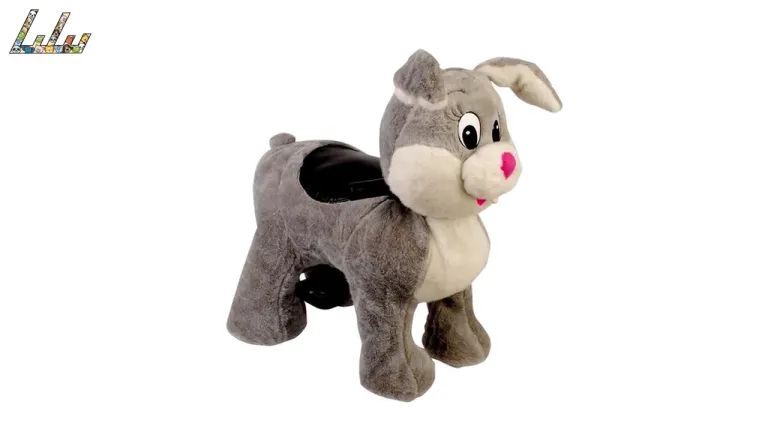
Watch a toddler on a slow-moving plush animal and you can see the whole design problem in a single glance. The child wants movement that feels like an adventure but not like a jolt. Parents want the ride to be predictable, stable, and easy to stop. Delivering that experience takes more than attaching a motor to a stuffed animal. It involves physics, human development, materials, and careful tuning. The rides from Lulu Toy Car, a Shanghai manufacturer with about twenty years of experience, are specified at a gentle two kilometers per hour. Here is a plain-language look at how smooth, child-friendly motion is achieved in an animal electric scooter and why small engineering choices matter so much.
Designing for a Child's Body
Young children have limited balance and muscle control, with a higher center of gravity than adults. Sudden acceleration or sharp turns can easily unsettle them. Designers therefore aim for low, stable seats, secure positioning, and gentle motion. The maximum load of fifty kilograms confirms that the ride targets small riders. Handles or grips give children something to hold, and soft plush surfaces cushion small bumps. A friendly animal face also matters psychologically, since a reassuring character helps nervous children feel safe. Understanding how real children sit, lean, and react is the starting point for any ride that aims to be both enjoyable and secure.
Low Speed and Controlled Power
The stated speed of about two kilometers per hour is roughly a slow walking pace. This is deliberate. At such speeds, a collision carries little force, and parents can easily keep up. The power system, a six-volt, four-amp-hour battery driving a six-volt motor in the twenty-five-watt class, is modest. Low power limits acceleration, which supports smooth starts and stops. Controllers and gearing, details of which are not published, further shape how the ride moves. Buyers should ask how the ride behaves when starting and stopping, and test samples to confirm that the motion feels gentle and predictable rather than abrupt.
Stability and Weight Distribution
Smooth motion requires a stable base. A wide footprint and low center of gravity reduce the chance of tipping. Weight distribution matters: the battery and motor should sit low in the body, balancing the weight of the child above. PU wheels, described as environmentally friendly, help provide steady contact with the floor and quiet rolling. Floors should be level and clean, since debris or uneven surfaces can disturb movement. Operators should place rides away from stairs, ramps, and drains. Even a well-designed ride can behave poorly on poor flooring, so installation conditions are part of the engineering picture.
Wheels, Floors, and Noise
Wheels determine how the ride interacts with the environment. Soft PU wheels tend to roll more quietly and gently than hard plastic ones, which matters in malls where noise and floor damage are concerns. Different floors, such as tile, carpet, and rubber, create different levels of grip and resistance. Test the sample on your own flooring to see whether movement stays smooth. Listen for squeaks or grinding, which can indicate poor alignment or wear. Regular inspection and cleaning of wheels and axles keeps motion consistent. Small details like these determine whether a ride glides pleasantly or rattles in a way that irritates parents and staff. Keep these points in mind whenever you evaluate any animal electric scooter for your own venue.
Sensory Comfort and Predictability
Children enjoy predictability. They like knowing what will happen when they press a button or when the ride starts. Smooth transitions, quiet operation, and consistent behavior build trust. Plush surfaces provide gentle touch, and cheerful characters add emotional comfort. Public information does not state whether the rides include music or lights, so buyers should confirm any such features and check that they are not overwhelming. Operators can add to comfort by supervising rides, keeping the track clear, and ensuring that children are seated properly. When motion, materials, and environment all work together, the experience feels effortless, and that quiet smoothness is the real science behind the smile.

 English
 Arabic
 French
 Portuguese
 Deutsch
 Turkish
 Dutch
Dutch
 Italiano
 Russian
 Romaian
 Portuguese (Brazil)