
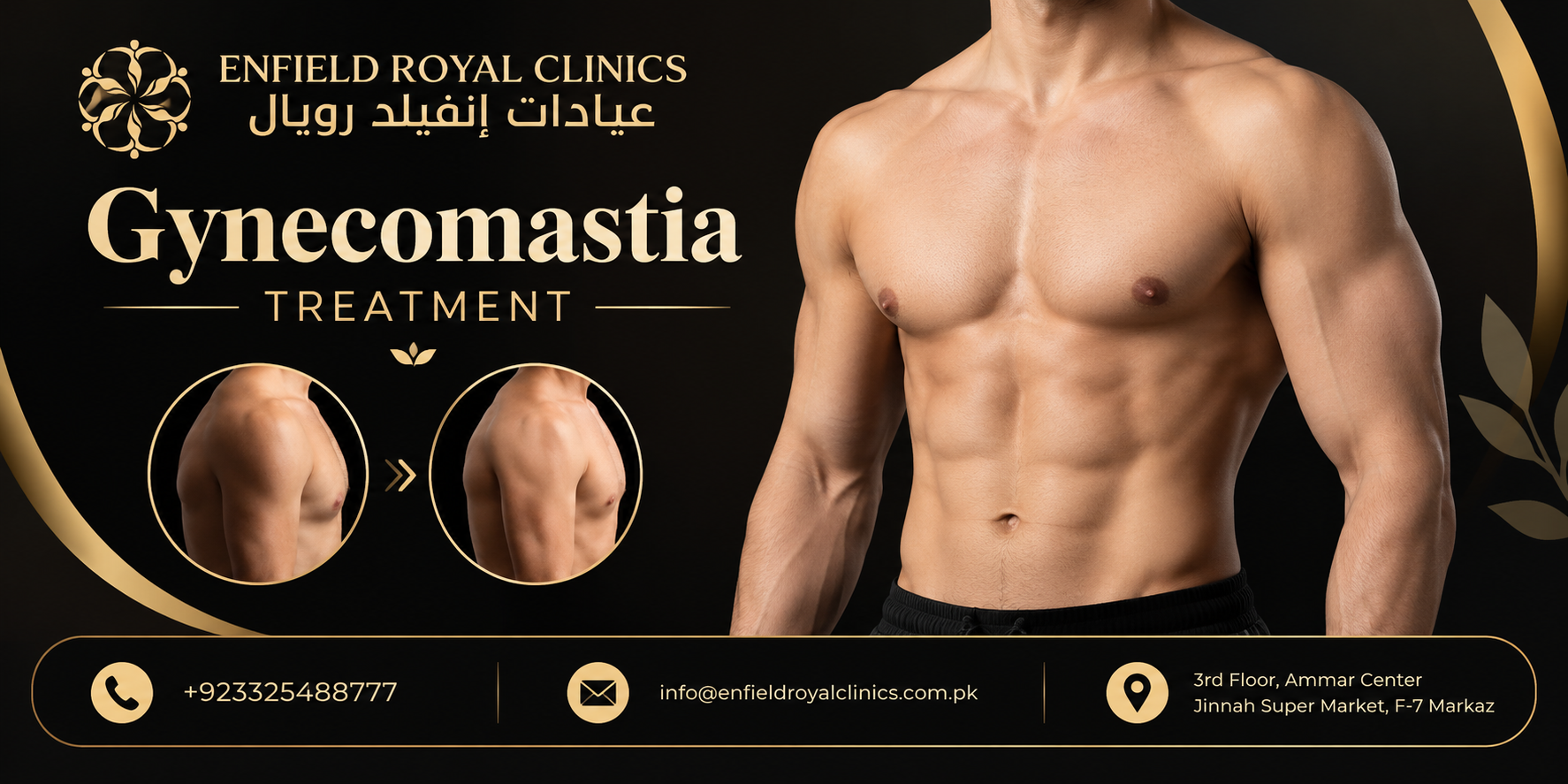
Chest asymmetry is common among men with gynecomastia. One side of the chest may appear fuller, larger, or more prominent than the other, making the overall chest look uneven. While some natural difference between the two sides of the body is normal, noticeable asymmetry can become a cosmetic concern when it is associated with excess breast tissue or fat.
Gynecomastia treatment can help address this imbalance by identifying the type and distribution of excess tissue and creating a more proportionate chest contour. For men considering Gynecomastia in Islamabad, treatment planning usually focuses on the individual's chest structure rather than using exactly the same approach on both sides.
Why Does Gynecomastia Cause Chest Asymmetry?
Gynecomastia can affect one or both sides of the chest. When both sides are affected, the amount of tissue may not be identical. One side may develop more glandular tissue or contain more fat, resulting in a visible difference in size or shape.
Hormonal changes can contribute to glandular breast tissue growth, while increased body fat can add volume to the chest. Some men experience a combination of both.
Asymmetry may also become more noticeable because of differences in skin elasticity, nipple position, or the natural shape of the chest wall. These factors are considered when determining how treatment should be planned.
How Is Chest Asymmetry Evaluated Before Treatment?
A careful assessment is an important part of gynecomastia treatment. The chest is examined to determine where excess tissue is located and whether the enlargement is primarily fatty, glandular, or a combination of both.
The amount of fullness on each side may be compared, along with the position and appearance of the nipples and areolas. Skin quality and elasticity can also influence how the chest is expected to look after tissue reduction.
Medical history can provide additional information. Hormonal changes, medications, weight fluctuations, and other factors may be relevant when evaluating persistent chest enlargement.
This assessment helps establish realistic expectations and allows treatment to be tailored to the individual's anatomy.
Can Gynecomastia Treatment Improve Uneven Chest Size?
Yes, treatment can reduce differences in chest volume when excess gynecomastia tissue is responsible for the asymmetry. However, the objective is not necessarily to make both sides mathematically identical.
If one side has more fatty tissue, a greater amount of fat reduction may be appropriate on that side. If one side has more firm glandular tissue, direct tissue removal may be considered where necessary.
This individualized approach can help create a more balanced appearance while preserving natural contours. Attempting to remove exactly the same amount of tissue from both sides may not always produce the most symmetrical result because the starting anatomy can be different.
How Do Fat and Glandular Tissue Affect Symmetry?
Understanding the type of tissue involved is particularly important when treating chest asymmetry. Fatty tissue tends to be softer and may be distributed across a wider area of the chest. Glandular tissue is typically firmer and may be concentrated beneath the nipple.
Liposuction can help reduce localized fatty fullness when appropriate. However, firm glandular tissue may require direct removal because it cannot always be adequately treated through fat reduction alone.
Some men have mixed gynecomastia, meaning both fat and glandular tissue contribute to chest enlargement. Addressing the different tissue types can help improve the overall contour and reduce visible differences between the two sides.
Can Treatment Improve Nipple and Areola Symmetry?
Chest asymmetry is not limited to differences in overall volume. The nipples and areolas may also appear uneven when one side has greater tissue beneath or around the nipple.
Reducing the underlying excess tissue can allow the nipple area to appear flatter and more proportionate. Careful contouring around the surrounding chest can also create a smoother transition.
However, natural differences in nipple position and chest structure may remain. Treatment generally aims to improve noticeable asymmetry rather than guarantee perfect symmetry.
What Happens During Recovery?
Recovery is an important part of achieving the final chest appearance. Immediately after treatment, swelling and bruising can affect both sides differently. One side may temporarily appear more swollen than the other, which does not necessarily mean that the final result will remain uneven.
A compression garment may be recommended to support the healing tissues and manage swelling. Light activity can usually be increased gradually, while strenuous exercise and heavy lifting may need to be avoided during the early healing period.
As swelling decreases, the chest gradually becomes easier to evaluate. The final contour can continue developing over several weeks or months as the tissues heal and settle.
What Can Influence the Final Symmetrical Appearance?
Several factors can affect the final result. Skin elasticity plays a role because skin needs to adjust to the reduced volume after excess tissue is removed. The amount of tissue present, chest wall structure, body weight, and natural anatomy can also influence the outcome.
Following postoperative instructions is equally important. Returning to strenuous activities too early may increase swelling and interfere with comfortable recovery.
Maintaining a stable weight after treatment can also help preserve the improved contour. Significant weight gain may increase chest fat and affect the overall appearance.
Realistic expectations are essential because every chest has some natural asymmetry. The goal of treatment is generally a smoother, more balanced, and proportionate appearance rather than absolute perfection.
FAQs
1. Can gynecomastia surgery correct uneven chest size?
It can reduce asymmetry when excess fat or glandular tissue is responsible. Treatment can be adjusted according to the amount of tissue present on each side.
2. Is it normal for one side to be larger after gynecomastia surgery?
Temporary differences can occur because swelling may not be identical on both sides. The appearance often becomes more balanced as healing progresses.
3. Can gynecomastia affect only one side of the chest?
Yes. Gynecomastia can affect one or both sides. When only one side is enlarged, treatment may focus specifically on the affected area.
4. Will gynecomastia treatment create perfectly symmetrical breasts?
Treatment can improve noticeable asymmetry, but perfect symmetry cannot always be guaranteed because natural differences in body structure, nipple position, skin, and chest shape may remain.
For more information visit Enfield royal clinic in islamabad

 English
 Arabic
 French
 Spanish
 Portuguese
 Deutsch
 Turkish
 Dutch
Dutch
 Italiano
 Romaian
 Portuguese (Brazil)