
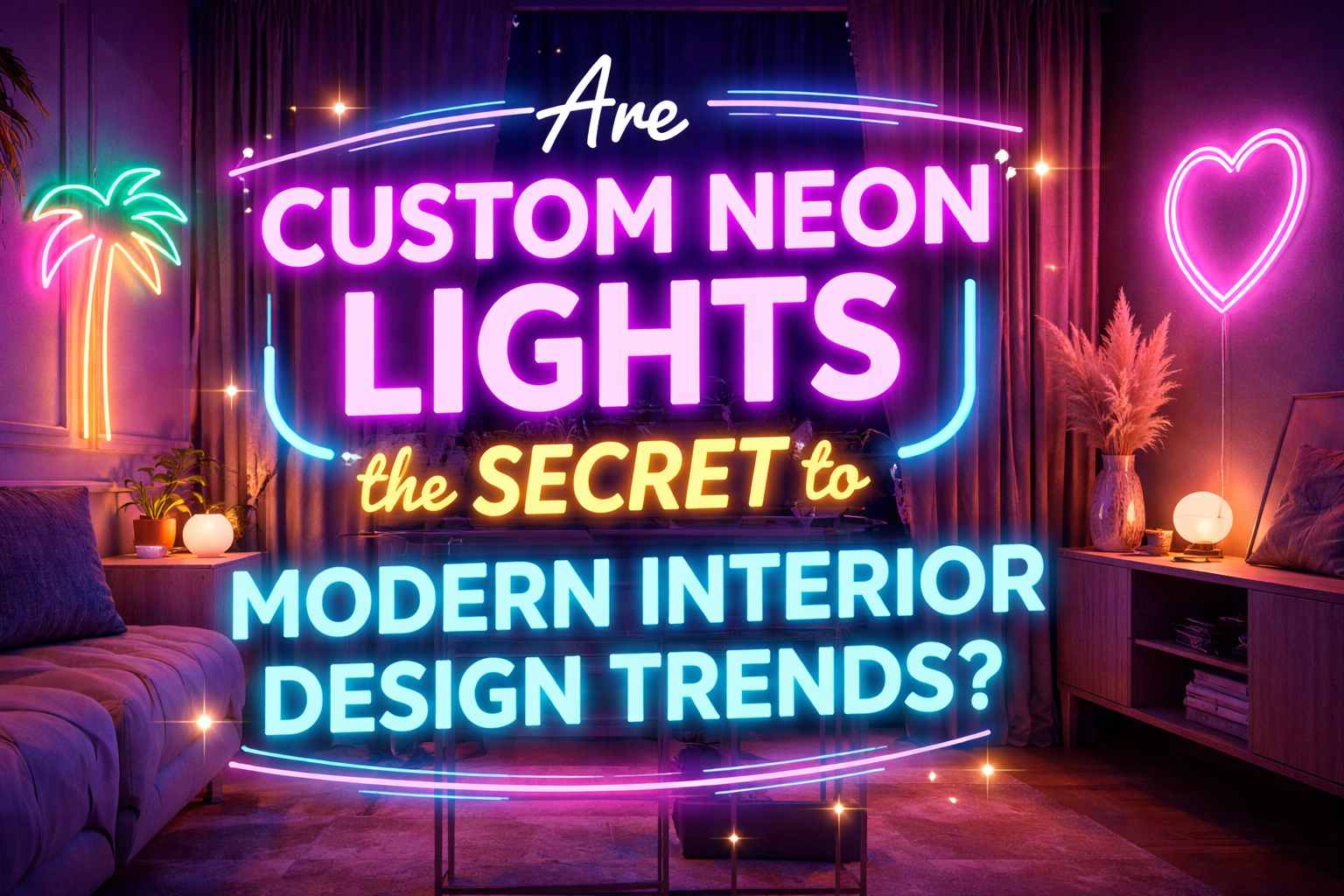
Lighting can have a major influence on the appearance of a room, shop, office, studio, café, or event space. While standard lighting is mainly used to illuminate an area, decorative lighting can also contribute to the identity and atmosphere of a space. This is one reason personalised illuminated signs have become increasingly popular for both residential and commercial interiors.
Custom Neon Lights offer a way to combine personal design with decorative illumination. Instead of selecting a ready-made design, buyers can create a sign around a name, phrase, logo, symbol, number, or other visual idea. This flexibility makes them suitable for bedrooms, living rooms, gaming spaces, offices, cafés, restaurants, salons, retail shops, studios, reception areas, and events.
However, buying a customised sign should not be an impulse decision. A design that looks attractive online may not necessarily be suitable for your wall, room size, colour scheme, or intended use.
Before choosing Neon Lights, it is worth considering several practical factors. Size, design, brightness, material, installation, power requirements, placement, maintenance, and warranty can all affect your experience with the finished product.
1. Decide Where the Sign Will Be Used
The first question to ask is where you plan to install the sign.
A bedroom may require a different design from a retail shop. A home office may need something professional, while a gaming room can accommodate a more expressive style.
Think about whether the sign will be used in:
- Bedroom
- Living room
- Home office
- Gaming room
- Café
- Restaurant
- Salon
- Retail shop
- Studio
- Reception area
- Wedding venue
- Event space
The purpose of the space should influence the design, size, brightness, and wording you select.
2. Measure the Available Space
Never order Custom Neon Lights without measuring the installation area.
Measure the width and height of the wall where the sign will be placed. Also consider furniture, shelves, windows, doors, and other objects that may surround it.
A sign that is too small may lose its visual impact, while an oversized design can make the wall feel crowded.
If the sign will be installed above a sofa, reception desk, bed, or counter, measure the furniture as well. The sign should have a natural relationship with the object beneath it.
3. Choose the Right Design
The design should reflect the purpose of the space and your personal or business identity.
Possible designs include:
- Names
- Initials
- Short phrases
- Quotes
- Numbers
- Logos
- Symbols
- Simple illustrations
Avoid adding too many elements simply because customisation is available.
A clean design is often easier to read and more visually effective than one containing excessive text or complicated shapes.
4. Keep the Wording Simple
If you are creating a text-based sign, consider how quickly people will understand it.
Long sentences can require a larger sign and may become difficult to read from a distance.
Short phrases, names, initials, or a few carefully selected words can create a stronger visual result.
For a business, the company name or logo may be more useful than a long promotional message.
For a bedroom or living room, a short personal phrase may work better.
5. Consider the Font Style
Typography has a significant impact on the final appearance.
A script-style font can create a personal or elegant look, while bold lettering can provide stronger visibility.
When selecting a font, consider:
- Readability
- Letter spacing
- Character size
- Viewing distance
- Room style
- Overall design
A decorative font may look attractive in a digital preview but become difficult to read once illuminated.
Always prioritise clarity when selecting lettering.
6. Select the Right Colour
Colour should work with the existing interior rather than appearing disconnected.
Look at the colours of:
- Walls
- Furniture
- Curtains
- Flooring
- Artwork
- Branding
- Other lighting
A contrasting colour can make the sign stand out, while a complementary shade can create a more coordinated appearance.
For businesses, the sign should ideally follow the company's existing branding.
For homes, the colour can be selected according to the atmosphere you want to create.
7. Think About Brightness
Brightness is another important consideration.
A bedroom generally does not need the same visual intensity as a shop or event venue.
If the sign is too bright, it may become distracting, particularly in smaller rooms.
For offices and gaming spaces, excessive brightness can also create unwanted reflections on computer or television screens.
Before purchasing, ask about the brightness level and whether the product offers suitable controls or operating options.
8. Check the Materials and Build Quality
The quality of the materials can influence durability and appearance.
Ask the supplier about:
- Sign backing
- LED components
- Acrylic or other materials
- Wiring
- Mounting hardware
- Power supply
- Overall construction
The sign should be constructed appropriately for its intended environment.
For a commercial installation, durability may be especially important because the sign could operate for long hours every day.
9. Check Indoor or Outdoor Suitability
Not every sign is designed for outdoor use.
If you plan to install Neon Lights outside, confirm whether the specific product is suitable for exposure to environmental conditions.
Ask about:
- Weather resistance
- Moisture protection
- Suitable operating conditions
- Electrical protection
- Recommended installation methods
Never assume that an indoor product can automatically be used outdoors.
10. Plan the Installation Method
Installation should be considered before purchasing.
Different signs may require different mounting methods depending on their size, weight, backing, and location.
Check whether the sign can be:
- Wall mounted
- Suspended
- Placed on a counter
- Mounted on a frame
- Integrated into a backdrop
If you live in a rented property, also check whether drilling or permanent installation is permitted.
11. Think About Power Access
A customised illuminated sign needs a suitable power connection.
Before finalising the design, identify where the nearest power source is located.
The cable should reach the connection without creating unnecessary loops or crossing walking areas.
For commercial spaces, cable management is especially important because customers and employees need to move around safely.
12. Consider Placement Carefully
Placement can determine how effective the sign looks.
A sign may be attractive by itself but lose its impact if it is placed too high, too low, or behind other objects.
Before installation, consider:
- Viewing distance
- Viewing angle
- Furniture
- Natural light
- Existing lighting
- Customer movement
- Camera positions
A sign should be visible from the locations where people are most likely to see it.
13. Think About Photography
Many buyers use personalised signs as photo backdrops.
If photographs are important, test the design through a smartphone camera before the final installation.
Check whether:
- Text remains readable
- Brightness is balanced
- Colours appear correctly
- Reflections are distracting
- People can stand comfortably in front of it
This is particularly useful for weddings, events, cafés, studios, and social-media-friendly business interiors.
14. Consider Maintenance
Before purchasing Custom Neon Lights, ask how the sign should be cleaned and maintained.
Basic care may include:
- Removing dust regularly
- Using a soft cloth
- Keeping unsuitable products away from the surface
- Following manufacturer instructions
- Checking visible cables periodically
Avoid using harsh cleaning products unless they are specifically recommended by the manufacturer.
For commercial installations, regular maintenance can help preserve the appearance of the sign.
15. Check Warranty and After-Sales Support
A customised product represents an investment, so warranty support should not be overlooked.
Before buying, ask about:
- Warranty period
- LED component coverage
- Power supply coverage
- Wiring issues
- Repair process
- Replacement parts
- Customer support
A supplier that clearly explains its after-sales process can provide greater confidence.
16. Compare the Total Cost
Price is important, but the cheapest option is not necessarily the best value.
When comparing suppliers, consider the complete package.
Look at:
- Design quality
- Materials
- Size
- Brightness
- Power supply
- Mounting hardware
- Installation
- Warranty
- Customer support
A slightly higher initial cost may be worthwhile if the product offers better construction and reliable support.
17. Check the Design Preview Carefully
Before approving a custom order, review the design carefully.
Check:
- Spelling
- Font
- Letter spacing
- Size
- Symbol placement
- Colour
- Overall proportions
This is particularly important because customised products may be made specifically according to the approved design.
Make sure everything is correct before production begins.
18. Avoid Overdecorating the Space
A personalised sign can become a strong focal point.
Adding too many other decorative lighting elements around it may reduce its impact.
Instead, allow some empty space around the sign.
Simple furniture, restrained décor, and a clean wall can make the illuminated design more noticeable.
The objective should be visual balance rather than maximum decoration.
Common Mistakes to Avoid
Before buying Custom Neon Lights, avoid these common mistakes:
- Ordering without measuring
- Choosing a design with too much text
- Selecting an unreadable font
- Ignoring the room's colour scheme
- Choosing excessive brightness
- Forgetting the power connection
- Ignoring installation requirements
- Using an indoor product outdoors
- Overlooking warranty details
- Choosing solely on price
- Approving a design without checking spelling
- Installing without planning cable management
A few minutes of planning can prevent many avoidable problems.
Final Thoughts
Buying Custom Neon Lights is an opportunity to add a personalised visual feature to your home, workplace, business, studio, or event space. However, the best results come from choosing a product based on both appearance and practical requirements.
Before selecting Neon Lights, consider where the sign will be used, how much space is available, what design and wording you want, which colour suits the surroundings, and how bright the sign needs to be.
You should also check materials, build quality, installation requirements, power access, maintenance, warranty, and after-sales support. For businesses and event spaces, photography, customer movement, and operating hours should also be considered.
A well-designed sign does not need to be oversized or overly complicated. The right combination of size, wording, colour, brightness, and placement can create a strong focal point while keeping the surrounding space balanced.
Whether you are decorating a bedroom, upgrading a home office, creating a café feature wall, branding a reception area, or preparing a special event, careful planning can help ensure that your Custom Neon Lights look attractive, remain practical, and provide value long after installation.

 English
 Arabic
 French
 Spanish
 Portuguese
 Deutsch
 Turkish
 Dutch
Dutch
 Italiano
 Russian
 Portuguese (Brazil)