
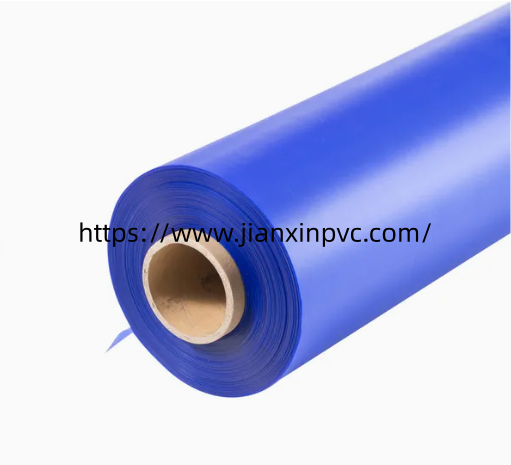
Rainwear depends heavily on the material used to create its protective surface, and PVC Raincoat Film can provide a practical foundation for garments designed to handle wet outdoor environments. The film needs to work as part of a complete clothing structure rather than simply act as a waterproof covering. Flexibility, surface feel, processing behavior, appearance, and ease of maintenance can all influence how the finished rainwear performs in everyday use.
Material selection begins with understanding the role of PVC within the finished garment. Polyvinyl chloride can be formulated into flexible film suitable for products that need to bend and fold during use. Plasticizers and other formulation components influence how the material feels and behaves, while the production process can affect surface consistency and handling. A suitable film should therefore be selected according to the requirements of the finished rainwear rather than judged only by its appearance as a raw material.
Surface treatment is another consideration. A smooth surface can create a clean and simple visual effect, while embossed finishes can introduce texture and a different tactile experience. Clear or colored film can also create different design possibilities depending on whether visibility, color expression, privacy, or decorative appeal is important. Zhejiang Jianxin Plastic Co., Ltd. develops PVC calendered film products covering clear, translucent, colored, embossed, and application-specific categories, including materials intended for rainwear.
When choosing film for rainwear production, buyers should first identify the intended garment and usage environment. Lightweight outdoor clothing, emergency rainwear, fashion-oriented raincoats, and work-related protective garments may have different material priorities. The film should correspond with the garment structure, sewing or sealing method, expected handling, and desired appearance. Considering the complete manufacturing process can help buyers avoid choosing a material that looks suitable but creates difficulties during production.
Processing compatibility is also important. Rainwear film may need to be cut, joined, printed, embossed, folded, or otherwise converted before becoming a finished garment. A material that handles consistently during these processes can make production easier to manage. Buyers can discuss the intended converting method with the film supplier and consider how the surface behaves during cutting, joining, printing, or other finishing operations.
Technology plays a role in how film materials are manufactured. Calendering can produce continuous film surfaces with controlled visual and handling characteristics, while subsequent processing can introduce colors, textures, or other functional effects. Zhejiang Jianxin Plastic Co., Ltd. identifies PVC calendering as a core part of its production capabilities and also supports additional processing and customized film development for different applications.
User experience should not be overlooked when selecting rainwear material. A garment may provide useful protection from rain but still feel inconvenient if the film is excessively stiff, uncomfortable against the body, difficult to fold, or unpleasant to handle. Flexibility and surface feel can influence how easily the garment moves with the wearer. For products intended for repeated use, the relationship between comfort, cleaning, storage, and material durability becomes especially relevant.
Noise can also affect the perceived quality of rainwear. Some plastic films may create noticeable sounds when folded or moved, which can influence comfort during walking or outdoor activities. While this characteristic depends on formulation, construction, and garment design, buyers can consider it when evaluating samples. Handling a material before large-scale production can provide useful insight into how it may feel in an actual garment.
Maintenance is another practical aspect of material selection. Rainwear is regularly exposed to water, dirt, dust, and outdoor surfaces, so a film that can be cleaned without complicated treatment may be more convenient for users. The finished garment should also be designed so that seams, closures, printed areas, and other components can be cared for appropriately. Material selection and garment construction therefore need to be considered together.
Appearance has become increasingly important as rainwear moves beyond purely functional clothing. Transparent surfaces can create a modern visual effect, while colored films can support stronger styling and product differentiation. Embossed surfaces can add texture and help create a distinctive appearance. For manufacturers serving different markets, the ability to coordinate color, surface finish, and garment design can provide greater creative flexibility.
Customization can be valuable when buyers have specific design requirements. Different rainwear products may call for particular colors, surface effects, printing compatibility, or processing characteristics. A manufacturer with experience across several PVC film categories can make it easier to discuss these requirements from both material and finished-product perspectives. Zhejiang Jianxin Plastic Co., Ltd. provides customized PVC film development and lists rainwear among its application areas, allowing material selection to be discussed in relation to the intended product.
For rainwear manufacturers, distributors, and product designers, evaluating film through material composition, processing compatibility, surface treatment, user comfort, maintenance, and visual design can make the purchasing process more practical. These factors are especially useful when the finished garment needs to combine weather protection with a comfortable and recognizable appearance. More information about Zhejiang Jianxin Plastic Co., Ltd. and its PVC film products is available at https://www.jianxinpvc.com/

 English
 Arabic
 French
 Spanish
 Deutsch
 Turkish
 Dutch
Dutch
 Italiano
 Russian
 Romaian
 Portuguese (Brazil)