
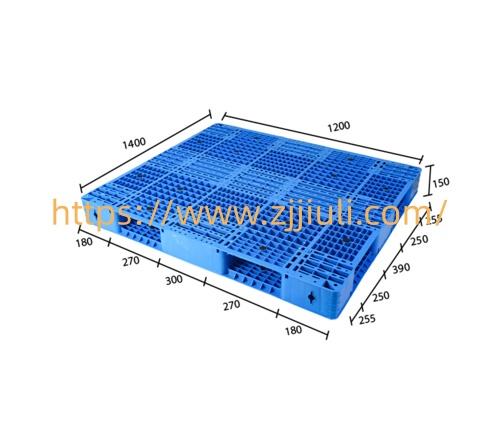
Grid Pallet selection deserves careful attention because the right platform needs to match the goods, handling equipment, storage environment, and transportation process. Buyers should review dimensions, load requirements, structural design, and operating conditions before making a purchasing decision. Industry guidance also recommends checking static, dynamic, and racking loads separately because these figures can vary according to how the product is used.
One of the first points to examine is the weight of the goods being handled. A load may remain stationary for part of its journey and then experience different forces during lifting, movement, or storage. For this reason, buyers should not rely on a single capacity figure. Technical specifications commonly distinguish between floor, fork, and rack capacities, while some manufacturers also provide separate static and dynamic figures.
Load distribution deserves similar attention. A uniformly distributed load places different demands on a support structure than concentrated loads positioned around a small area. Buyers should consider the shape of cartons, containers, bags, machinery parts, or other goods and determine how their weight will be positioned during normal operations. Uline specifications, for example, state that certain capacity figures are based on evenly distributed loads.
Dimensions are another practical consideration. The selected platform needs to fit the products being transported while also working with warehouse aisles, shelving systems, vehicles, forklifts, and pallet trucks. Even a small mismatch can affect handling convenience or available storage space. Congost recommends considering the relationship between dimensions, storage shelves, transport vehicles, and product size when selecting a plastic logistics platform.
Fork access should also be reviewed before an order is confirmed. Different facilities may use forklifts, pallet trucks, or other material handling equipment. The opening arrangement needs to support the equipment used at the facility and provide sufficient clearance for normal operations. Four way access is available on some commercial models, while other designs may follow different handling configurations.
Storage conditions can influence material selection as well. Temperature, moisture, cleaning procedures, and exposure to outdoor conditions should all be considered. Certain HDPE products are specified for particular temperature ranges, while waterproof construction is available for applications where exposure to moisture is expected. Buyers should compare these technical details with the actual environment rather than selecting solely by appearance.
Surface structure is another detail worth checking. An open surface can provide airflow and may make cleaning around the underside easier, while a solid surface can offer continuous support for certain loads. The choice depends on the goods and the working environment. Some commercial designs use perforated surfaces to facilitate cleaning, while other versions use smooth surfaces where enclosed support is preferred.
Stacking and storage density should be included in the evaluation. When empty units need to be stored between production cycles or shipments, nesting or stackable construction can influence the amount of warehouse space required. Buyers should ask how the units behave when empty and whether the configuration fits their existing storage practices. Some commercial models are specifically designed to nest when not in use.
Reinforcement may also matter when the application involves rack storage or heavier loads. Some designs can incorporate internal metal supports to change their load handling characteristics. Congost product specifications show examples where metal reinforcement changes dynamic and racking capacity, demonstrating why buyers should review the complete technical specification instead of considering dimensions alone.
Cleaning and maintenance are especially relevant in facilities where goods must be kept in a controlled environment. A design with accessible surfaces can make routine cleaning easier, while rounded edges and suitable construction may support safer movement of packaged goods. The appropriate choice depends on the products handled and the facility procedures already in place.
Supplier communication is the final part of a careful purchasing process. Buyers can prepare a specification sheet covering dimensions, load type, handling equipment, storage method, operating temperature, surface requirements, and expected usage. Zhiguang can use these application details to help customers review suitable plastic logistics products and compare technical requirements before ordering. The company product range is available at https://www.zjjiuli.com/ providing a convenient starting point for customers planning warehouse handling and storage solutions.

 English
 Arabic
 French
 Spanish
 Portuguese
 Deutsch
 Turkish
 Italiano
 Russian
 Romaian
 Portuguese (Brazil)