
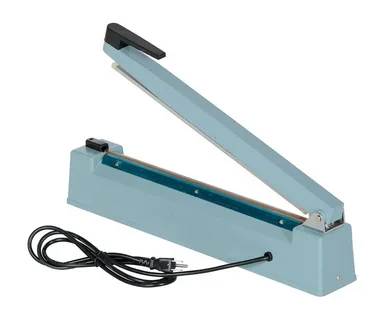
Medical packaging is an area where reliability matters from the very first seal. Medical devices, instruments and healthcare products may need to remain protected during handling, transportation, storage and sterilisation. A packaging failure can create unnecessary waste, quality concerns and additional costs, which is why UK healthcare organisations and medical-device manufacturers need dependable sealing processes.
A Medical Bag Sealer can help create a more consistent and controlled packaging workflow. Rather than depending entirely on manual techniques, businesses can use purpose-designed equipment to produce repeatable seals on compatible medical bags and pouches. When correctly selected and integrated into a validated process, a Medical Bag Sealer can support packaging efficiency while helping businesses maintain consistent quality.
Why Reliable Medical Packaging Matters
Medical packaging is not simply about placing a product inside a bag. The packaging system has to perform its intended protective function throughout the product's handling, distribution and storage journey. For sterile medical devices, the sterile barrier is especially important because the packaging is intended to maintain sterility until the point of use.
This makes the sealing stage a critical part of the overall packaging process. Even a high-quality packaging material cannot deliver the expected performance if the seal is inconsistent, damaged or improperly formed. A reliable Medical Bag Sealer helps businesses establish controlled sealing conditions that can be repeated across production batches.
ISO 11607-2:2019 specifies requirements for the development and validation of forming, sealing and assembly processes for packaging used with terminally sterilised medical devices. The standard applies to industry, healthcare facilities and other settings where applicable medical devices are packaged and sterilised.
What Is a Medical Bag Sealer?
A Medical Bag Sealer is a specialised sealing machine designed to close compatible medical bags, pouches, reels and other flexible packaging materials. Depending on the equipment design, the machine may provide controlled temperature, sealing time, pressure and other operating parameters.
The purpose is not simply to close packaging. A professional Medical Bag Sealer is intended to support a repeatable process where the sealing conditions can be established, monitored and maintained.
Different medical packaging applications require different equipment. A small healthcare facility may need a compact machine for lower-volume operations, while a medical-device manufacturer may require more advanced equipment for continuous production and process monitoring.
For price-conscious UK businesses, choosing the right machine means looking at the entire application rather than simply choosing the lowest purchase price.
How a Medical Bag Sealer Improves UK Packaging Efficiency
Efficiency is about more than processing as many bags as possible in the shortest time. In medical packaging, true efficiency means producing consistent results while reducing unnecessary waste, rework and downtime.
A Medical Bag Sealer can help standardise the sealing stage by allowing operators to work with defined process parameters. Instead of relying heavily on individual judgement, employees can follow an established procedure designed around the specific packaging material.
This can make everyday operations more predictable. When operators use the same process repeatedly, businesses can find it easier to identify deviations, investigate problems and maintain consistent production standards.
For UK companies watching operating costs, this kind of consistency can provide genuine long-term value.
The Role of a Medical Heat Sealing Machine
A medical heat sealing machine uses controlled heat to seal suitable packaging materials. The precise settings depend on the construction of the pouch or bag and the requirements of the packaging process.
Temperature is an important variable, but it is not the only one. Dwell time, pressure, sealing speed and material characteristics can all influence the final result. If these variables are not controlled properly, the finished seal may not perform as expected.
A suitable Medical Bag Sealer gives operators greater control over these variables and can help establish repeatable conditions.
That is particularly useful when the same packaging process is repeated hundreds or thousands of times. Consistency becomes much harder to achieve when every operator uses slightly different techniques.
Sterile Bag Sealing Equipment and Packaging Quality
For businesses working with sterile medical devices, sterile bag sealing equipment can become an important part of the overall packaging process.
The equipment should not be selected in isolation. The packaging material, sterile barrier system, sealing conditions and intended sterilisation process all need to work together.
ISO/TS 16775:2021 provides guidance on applying ISO 11607-1 and ISO 11607-2, including the selection and use of packaging materials, sterile barrier systems and packaging systems, as well as validation of forming, sealing and assembly processes.
This reinforces the importance of taking a complete-process approach when selecting a Medical Bag Sealer.
Hospital-Grade Bag Sealer for Healthcare Operations
Healthcare facilities often have different packaging requirements from large-scale medical-device manufacturers. A hospital-grade bag sealer may be used for packaging instruments and other items as part of a sterilisation workflow, while a manufacturer may require equipment capable of handling much higher production volumes.
The working environment also matters. Hospitals may place greater emphasis on ease of use, cleaning and workflow integration, while manufacturers may focus more heavily on production capacity, monitoring and documentation.
A Medical Bag Sealer should therefore be selected according to the actual application rather than assuming that one machine can meet every healthcare packaging requirement.
Medical Packaging Sealing Systems for Modern Businesses
Modern medical packaging sealing systems can provide much more than basic heat application. Depending on the equipment, they may incorporate controlled settings, monitoring functions, alarms, data recording or other process-management features.
This can help businesses move towards a more structured packaging workflow.
Instead of treating sealing as a simple manual task, companies can establish documented procedures that define the appropriate packaging material, machine settings, operating conditions and inspection requirements.
A Medical Bag Sealer can then become part of a wider quality-controlled system rather than functioning as a standalone piece of equipment.
Why Temperature Control Matters
Temperature is one of the most important considerations when using heat-sealing equipment.
If the temperature is too low, the packaging layers may not bond adequately. If the temperature is too high, excessive heat can potentially damage the material or affect the appearance and performance of the seal.
The correct temperature depends on the packaging construction and equipment being used. Businesses should establish suitable conditions through appropriate process development and validation rather than relying on guesswork.
A reliable Medical Bag Sealer can make it easier to maintain consistent temperature conditions across production.
The Importance of Dwell Time and Pressure
Temperature alone does not determine sealing performance. Dwell time and pressure can also affect how the packaging material forms a seal.
Dwell time controls how long heat is applied, while pressure helps bring the sealing surfaces together. If either variable changes unexpectedly, the finished seal may also change.
A controlled Medical Bag Sealer allows businesses to establish suitable parameters and repeat them consistently. This can help reduce operator-to-operator variation and make the packaging process easier to monitor.
For companies producing medical devices at scale, that repeatability can be a significant advantage.
Reducing Packaging Waste
Packaging waste can become a hidden expense for medical-device businesses.
A failed seal can require a replacement pouch, additional labour and another sealing cycle. In some situations, repackaging may also require additional inspection or documentation.
Using a suitable Medical Bag Sealer can help reduce avoidable waste by supporting more consistent sealing conditions.
For price-conscious businesses, reducing waste can be just as important as increasing production speed. Saving a small amount of material or labour per package can become a meaningful saving when multiplied across a large production volume.
Improving Operator Productivity
Medical packaging can involve repetitive sealing activities. When operators have to constantly adjust equipment or compensate for inconsistent results, productivity can suffer.
A Medical Bag Sealer can simplify the sealing stage by providing defined controls and repeatable cycles.
Operators still play an important role. They need to position packaging correctly, follow procedures, inspect seals and identify potential problems. The difference is that the machine handles the controlled sealing operation while the operator manages the wider workflow.
This can make the process more predictable without requiring businesses to completely automate their packaging lines.
Using an Impulse Sealer for Medical Bags
An impulse sealer for medical bags may be suitable for specific flexible packaging applications. Impulse technology uses controlled heat for a defined period to create a seal.
The suitability of an impulse system depends on the packaging material, pouch construction, production requirements and process specifications.
Businesses should not assume that a general-purpose impulse sealer is automatically suitable for medical packaging. Medical applications require a more careful assessment of the complete process.
A properly selected Medical Bag Sealer should provide the control and repeatability required for the specific packaging application.
Supporting ISO 11607-2 Requirements
ISO 11607-2 is particularly relevant when businesses package terminally sterilised medical devices.
The standard addresses the development and validation of processes for forming, sealing and assembling packaging systems. ISO currently lists ISO 11607-2:2019 as confirmed and current, with Amendment 1:2023 addressing the application of risk management.
It is important to understand that purchasing a Medical Bag Sealer does not automatically make a packaging process compliant with ISO 11607.
Instead, the equipment needs to be incorporated into an appropriate process-development and validation strategy. Businesses need to demonstrate that their selected process can consistently produce packaging that meets the applicable requirements.
Why Process Validation Matters
Validation should be considered before purchasing a Medical Bag Sealer, not after the equipment has already been installed.
Businesses should understand which process parameters need to be controlled and what documentation will be required. They should also consider whether the machine offers the necessary monitoring and adjustment capabilities.
A well-selected Medical Bag Sealer can provide a stronger foundation for developing and validating a repeatable sealing process.
This can be particularly valuable for manufacturers supplying regulated markets where packaging performance and process documentation are important parts of the quality system.
Choosing the Right Medical Bag Sealer
Choosing a Medical Bag Sealer starts with understanding the actual packaging application.
Businesses should consider the material being sealed, bag dimensions, required seal width, expected production volume and available workspace. They should also consider whether additional functions such as monitoring, printing, data recording or recipe storage are necessary.
A small healthcare facility may have no need for features designed for high-volume manufacturing. On the other hand, a growing manufacturer may regret buying equipment that barely meets its current requirements.
The right choice should provide the capabilities the business genuinely needs without paying for unnecessary complexity.
Balancing Price and Long-Term Value
For many UK businesses, purchase price is an important factor. But the cheapest Medical Bag Sealer is not necessarily the most economical choice in the long run.
Equipment that produces inconsistent seals, requires frequent maintenance or causes unnecessary downtime can quickly become more expensive than expected.
A better approach is to consider total cost of ownership. This includes the purchase price, maintenance, consumables, operator training, downtime and potential packaging waste.
A slightly higher initial investment can make sense when the equipment provides better reliability and supports a more efficient packaging workflow.
Maintenance and Equipment Reliability
Regular maintenance is an important part of keeping a Medical Bag Sealer performing consistently.
Heating elements, sealing surfaces, sensors and mechanical components can experience wear through normal use. If these components are neglected, sealing performance may gradually change.
Businesses should follow the manufacturer's maintenance recommendations and incorporate relevant inspections into their quality procedures.
Preventive maintenance can help reduce unexpected downtime and make it easier to identify potential equipment problems before they affect a larger production run.
Operator Training and Process Consistency
Even advanced sealing equipment requires competent operators.
Employees using a Medical Bag Sealer should understand the approved operating procedure, correct packaging positioning, relevant machine settings and basic quality checks.
Training should also explain how to respond when something does not look right. A poorly formed seal, unusual machine behaviour or damaged packaging should be investigated rather than ignored.
Well-trained operators can make a major difference to the consistency of the overall packaging process.
How vanderstahl Fits Into Medical Packaging
Businesses researching medical sealing solutions may also consider vanderstahl when evaluating equipment and technologies for medical packaging applications.
The important consideration is to look at the complete process rather than choosing equipment based solely on its headline specifications. A Medical Bag Sealer should complement the packaging materials, production environment, process requirements and quality objectives of the business.
For price-conscious buyers, this approach can help avoid spending money on features that are unlikely to deliver practical value while ensuring important process-control capabilities are not overlooked.
The Future of Medical Bag Sealing
Medical packaging is continuing to move towards greater process control, monitoring and traceability.
This direction is also reflected in the development of ISO 11607-3. ISO currently lists ISO 11607-3 as under publication, with requirements focused on process development for forming, sealing and assembly of packaging for medical devices using heat-sealing technologies. The standard also addresses minimum heat-sealing equipment features intended to support subsequent validation, process control and monitoring.
For UK businesses, this reinforces the importance of thinking beyond basic sealing performance.
A modern Medical Bag Sealer should ideally fit into a packaging strategy that prioritises repeatability, process control, documentation and long-term reliability.
Final Thoughts
A Medical Bag Sealer can provide significant practical benefits for UK medical packaging operations. By supporting controlled sealing conditions, improving repeatability and reducing avoidable packaging waste, the right equipment can help businesses create a more efficient and dependable workflow.
Whether a company requires a medical heat sealing machine, sterile bag sealing equipment, a hospital-grade bag sealer, advanced medical packaging sealing systems or an impulse sealer for medical bags, the equipment should always be selected according to the specific packaging application.
The key is to treat sealing as part of a complete packaging process rather than as an isolated production step. ISO 11607-2 provides requirements for developing and validating forming, sealing and assembly processes for packaging used with terminally sterilised medical devices.
For UK businesses that want to control costs without compromising reliability, the smartest investment is equipment that offers the right balance of process control, repeatability, maintenance requirements and long-term value.
With appropriate equipment, procedures and operator training in place, a Medical Bag Sealer can become an important part of a professional medical packaging operation.

 English
 Arabic
 French
 Spanish
 Portuguese
 Turkish
 Dutch
Dutch
 Italiano
 Russian
 Romaian
 Portuguese (Brazil)