
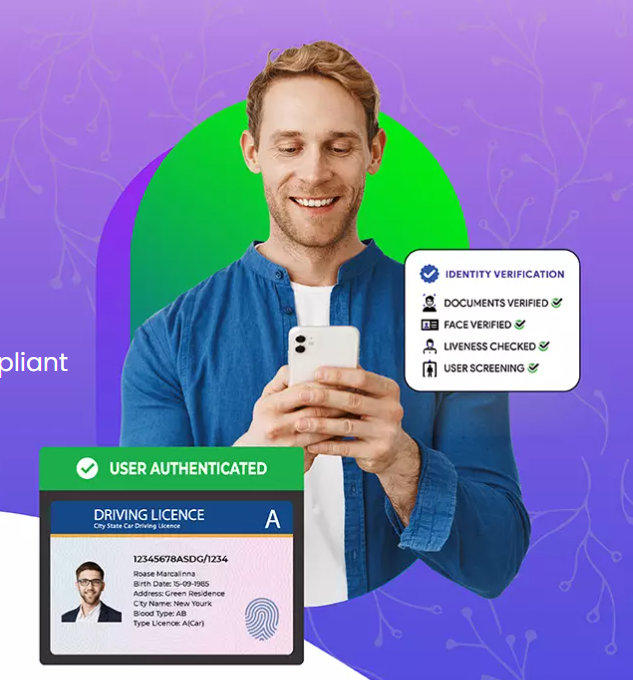
In today's digital world, businesses need reliable ways to verify customer identities and prevent fraudulent activities. Identity verification, KYC (Know Your Customer), and face verification have become important technologies for organizations operating in banking, fintech, healthcare, e-commerce, and other industries. These solutions help businesses confirm user identities, improve security, and create a smoother digital onboarding experience.
What Is Identity Verification?
Identity verification is the process of confirming whether an individual is genuinely the person they claim to be. Businesses typically verify identity using government-issued documents such as passports, identity cards, or driving licenses.
Modern identity verification systems use artificial intelligence, optical character recognition (OCR), and biometric technologies to analyze identity documents and validate customer information. Automated verification reduces manual work and helps organizations identify suspicious activities during onboarding.
For businesses handling sensitive customer information, a reliable identity verification solution can support regulatory compliance and reduce identity-related fraud risks.
Understanding KYC Verification
KYC verification is a customer identification process used by financial institutions and other regulated businesses. Its primary purpose is to understand who their customers are and assess potential risks associated with their accounts or transactions.
Traditional KYC processes often involve manual document checks and physical visits. Digital KYC solutions allow businesses to verify customers remotely through online platforms.
A digital KYC process may include:
- Identity document verification
- Personal information validation
- Face verification
- Liveness detection
- Risk assessment and monitoring
By integrating these technologies, businesses can simplify customer onboarding while maintaining appropriate security controls.
How Face Verification Works
Face verification is a biometric technology that compares a person's facial features with a reference image, such as a photograph on an identity document.
During the verification process, users may be asked to capture a selfie or complete a facial verification check. The system analyzes facial characteristics and compares the captured image with the reference image to determine whether they belong to the same person.
Face verification is different from face identification. Face verification generally checks whether two facial images represent the same person, while face identification searches for a person within a database.
Advanced solutions may also use face liveness detection to help identify attempts involving photographs, recorded videos, or other presentation attacks. However, liveness detection and face matching address different security requirements.
Benefits of Identity Verification and Face Verification
Combining identity verification KYC, and face verification can provide several benefits for businesses:
Improved Security: Automated checks can help detect suspicious identity information and reduce certain fraud risks.
Faster Customer Onboarding: Digital verification can reduce manual processing and support remote customer registration.
Better User Experience: Customers can complete verification through online platforms without unnecessary paperwork.
Regulatory Support: KYC processes help businesses meet applicable customer identification and compliance obligations.
Conclusion
Identity verification, KYC, and face verification play an important role in modern digital security. By combining document verification, biometric matching, and appropriate liveness checks, businesses can build more secure and efficient onboarding processes. Organizations should select verification solutions based on their security requirements, regulatory obligations, data protection practices, and customer experience goals.

 English
 Arabic
 French
 Spanish
 Deutsch
 Turkish
 Dutch
Dutch
 Italiano
 Russian
 Romaian
 Portuguese (Brazil)