
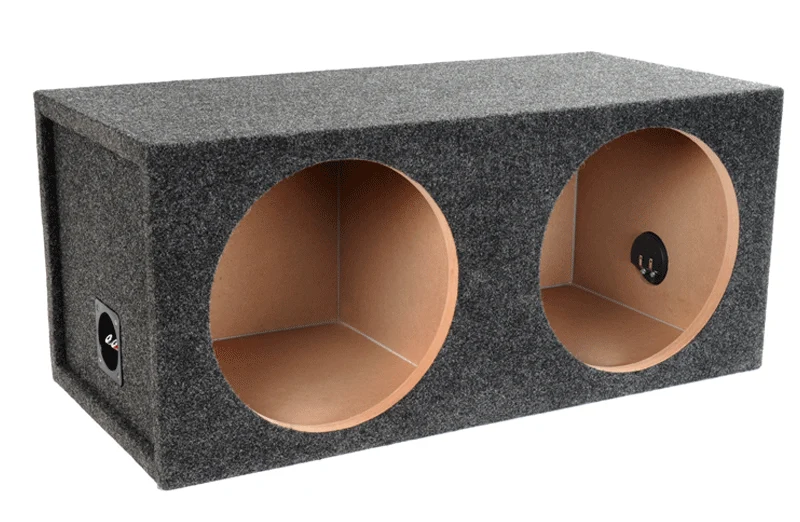
Choosing the right enclosure can completely change how a subwoofer performs, and a 12 sealed subwoofer box is a popular option for drivers who want deep bass without sacrificing too much space. A sealed enclosure creates an enclosed air volume behind the subwoofer, giving the driver a controlled environment that can produce smooth, responsive low-frequency performance when properly matched to the subwoofer.
Unlike a ported enclosure, a sealed design does not rely on a vent or port to reinforce certain frequencies. Instead, the trapped air inside the enclosure acts as an acoustic spring behind the subwoofer cone. This can contribute to a controlled bass response and make sealed boxes attractive for music-focused systems where accuracy and consistency matter.
The enclosure itself is just as important as the subwoofer mounted inside it. Internal volume, construction quality, air tightness, mounting depth, and the relationship between the driver and amplifier all influence the final result. Selecting an enclosure based only on the fact that it fits a 12-inch subwoofer can leave significant performance potential on the table.
Why Choose a Sealed 12-Inch Enclosure?
A 12-inch subwoofer offers a useful balance between physical size and low-frequency capability. When placed in a properly designed sealed enclosure, it can produce substantial bass while maintaining a relatively straightforward installation.
Sealed boxes are often valued for their predictable acoustic behavior. The enclosed air provides resistance to cone movement, which can help the subwoofer produce a controlled response across its operating range.
For listeners who enjoy bass that feels solid and integrated with the rest of the music, this enclosure style can be a practical choice. The exact response, however, depends on the subwoofer's design and the enclosure volume.
The Enclosure Volume Matters
A 12-inch driver does not automatically work equally well in every box. Subwoofer manufacturers typically specify recommended sealed enclosure volumes because the air space affects how the driver behaves.
An enclosure that is too large or too small can change the system's response and power handling characteristics. That's why the box should be selected around the specifications of the actual subwoofer rather than simply choosing the largest enclosure that physically fits.
Before purchasing or building a box, check the manufacturer's recommended sealed volume and account for the displacement of the subwoofer and any internal components.
Sealed Design Creates Controlled Bass
Inside a sealed enclosure, the trapped air behind the cone becomes an important part of the acoustic system. As the cone moves inward and outward, the enclosed air pushes back against it.
This interaction contributes to the controlled character often associated with sealed subwoofers. Bass can sound tight and well integrated when the driver and enclosure are properly matched.
That does not mean every sealed system will sound identical. Driver parameters, amplifier power, enclosure volume, cabin acoustics, crossover settings, and installation location all influence the finished system.
Match the Subwoofer to the Box
A quality enclosure cannot compensate for a poor driver-to-box match. Before choosing a 12 sealed subwoofer box, identify the exact subwoofer model and review its recommended enclosure specifications.
Consider the driver's mounting depth, cutout requirements, power handling, impedance, and recommended sealed volume. The enclosure should provide enough physical clearance for the driver while maintaining a secure mounting surface.
This becomes especially important with high-performance subwoofers that may have larger magnets, deeper baskets, or greater excursion requirements.
Construction Quality Affects Performance
An enclosure needs to remain rigid while the subwoofer is operating. If the cabinet flexes excessively, some of the energy intended to produce bass can be lost through unwanted movement and vibration.
Strong construction helps maintain the intended acoustic environment inside the box. Well-secured joints and a properly sealed cabinet are also important because unwanted air leaks can affect performance.
The mounting surface should provide a solid foundation for the subwoofer, while the enclosure should be capable of handling the vibration generated during normal use.
Air Tightness Is Essential
A sealed enclosure needs to be genuinely sealed. Small leaks around seams, terminals, mounting surfaces, or other openings can allow air to escape and change the behavior of the system.
Before final installation, inspect the cabinet carefully. The subwoofer should sit firmly against its mounting surface, and the terminal connection should be appropriately sealed.
An airtight enclosure allows the internal air volume to perform its intended acoustic role. This is one of the simplest but most important details in a sealed-subwoofer installation.
Amplifier Matching Still Matters
A good enclosure is only one part of the bass system. The amplifier must also be compatible with the subwoofer's impedance and power requirements.
Too little power can limit the system's output, while an improperly configured amplifier can potentially damage the driver. Gain settings should be treated as a system-calibration control rather than a simple volume knob.
Power, impedance, wiring, and amplifier ventilation should all be considered before installation.
Placement Can Change What You Hear
The same subwoofer and enclosure can sound different depending on where it is installed. Vehicle cabins have irregular shapes, reflective surfaces, seats, trim, and other structures that influence low-frequency behavior.
The enclosure should be positioned securely and in a location that works with the vehicle's available space. Avoid placing it where it can interfere with passengers, cargo, pedals, seat movement, or other essential functions.
A secure enclosure also reduces the chance of unwanted movement and rattling while driving.
Control Unwanted Vibrations
Deep bass can expose weaknesses elsewhere in the vehicle. Door panels, trim pieces, license plates, rear panels, and other components may begin vibrating when the subwoofer produces substantial low-frequency energy.
Sound-deadening treatment can help control structural vibration in appropriate areas. The goal is to prevent the vehicle itself from becoming an unwanted source of noise while allowing the subwoofer to remain the main contributor to the low-frequency experience.
This can make bass feel cleaner because fewer competing rattles are present.
Sealed vs. Ported: Know the Difference
Sealed and ported enclosures are designed around different acoustic principles. A sealed box uses enclosed air behind the driver, while a ported design uses a tuned opening to interact with the driver and enclosure volume.
A ported enclosure can offer strong output around its tuning range, while a sealed enclosure is often selected for its controlled response and compact design. Neither should be considered universally correct for every application.
Your listening preferences, available space, subwoofer specifications, amplifier setup, and desired bass character should determine the choice.
Make Installation Part of the Design
A subwoofer enclosure should not simply be placed inside the vehicle and left unsecured. During acceleration, braking, and cornering, a heavy box can move if it is not properly anchored.
Secure mounting protects the equipment and keeps the installation predictable. Wiring should also be routed away from sharp edges, moving components, and areas where it can be pinched.
Leave adequate ventilation around the amplifier and make sure the installation does not interfere with normal vehicle operation.
Tune the System After Installation
Even a properly designed enclosure may require system adjustment after installation. Crossover frequency, gain, phase, and equalization can all influence how the subwoofer integrates with the main speakers.
The goal should be balanced bass rather than simply maximum volume. The subwoofer should complement the rest of the audio system instead of overpowering vocals, instruments, or other frequencies.
Listening from the driver's seat is important because the cabin changes the way low frequencies are perceived.
Choose the Box Around Your Real Priorities
A 12 sealed subwoofer box can be an excellent solution when the goal is deep, controlled bass in a relatively compact enclosure. But the best result comes from treating the box as part of a complete system rather than as an isolated product.
Start with the subwoofer's specifications, choose the correct enclosure volume, verify physical fitment, ensure the cabinet is airtight, match the amplifier correctly, and secure everything for everyday driving.
When those details are handled properly, a sealed 12-inch setup can deliver strong low-frequency performance while maintaining a clean and practical installation. The enclosure may look simple from the outside, but its internal air volume, construction, and relationship with the subwoofer are what make the difference.

 Arabic
 French
 Spanish
 Portuguese
 Deutsch
 Turkish
 Dutch
Dutch
 Italiano
 Russian
 Romaian
 Portuguese (Brazil)