
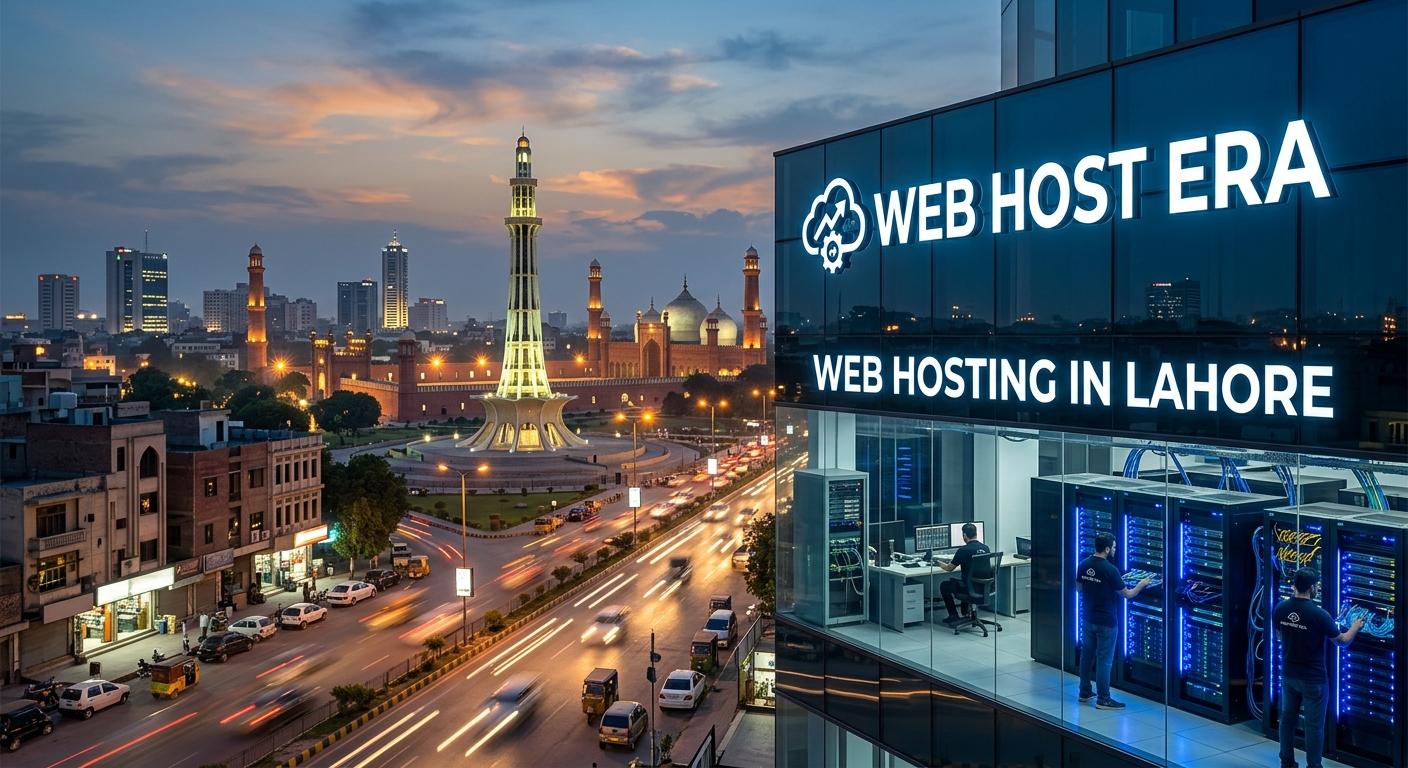
Website security is an important consideration for businesses, bloggers, online stores, and organizations that operate online. A hosting service does more than store website files. It can also provide security features that help protect websites, databases, accounts, and customer information from common online threats. When choosing Web Hosting in Lahore, website owners should look beyond storage and price and carefully examine the security features included with the hosting plan.
A secure hosting environment can help reduce risks such as unauthorized access, malware, data loss, and suspicious activity. However, hosting security also depends on how the website and its administrator accounts are managed.
Why Is Website Security Important for Hosting?
A website can contain valuable information, including business data, customer details, login credentials, and payment-related information. If proper security measures are missing, attackers may exploit outdated software, weak passwords, vulnerable plugins, or poorly configured servers.
Reliable hosting should therefore provide multiple layers of protection. Web Host Era can help businesses consider hosting solutions with security and performance features suitable for different types of websites.
What SSL Protection Should Hosting Provide?
An SSL certificate helps encrypt information exchanged between a website and its visitors. This is particularly important for websites that collect personal information, login details, or other sensitive data.
Modern websites should use HTTPS rather than relying on unsecured HTTP connections. Hosting providers may offer free or paid SSL certificates depending on their plans.
Website owners should also make sure their SSL certificate remains active and properly configured.
Should Web Hosting Include Regular Backups?
Regular backups are one of the most useful safety features a hosting provider can offer. If a website is damaged, accidentally deleted, compromised, or affected by a technical problem, a recent backup can help restore important files and databases.
A good backup system should clearly explain how frequently backups are created, how long they are retained, and how customers can restore them.
However, website owners should not depend entirely on their hosting provider. Keeping an additional independent backup can provide another layer of protection.
Does Malware Scanning Matter?
Malware can affect website files and potentially harm visitors. Regular malware scanning can help identify suspicious files or activities before they cause greater problems.
Some hosting plans include automated malware detection or scanning tools. Others may provide security applications that website owners can activate through their control panel.
When comparing hosting plans, check exactly what the provider means by malware protection because features can vary between packages.
Should Hosting Include a Firewall?
A firewall can help monitor and filter certain types of network traffic. Web application firewalls can also provide protection against various web-based attacks.
A hosting provider may use server-level firewalls, network protection, or web application security tools to add another defensive layer.
Firewalls are not a replacement for secure website software, but they can contribute to a broader security strategy.
What Protection Should Hosting Provide Against Brute-Force Attacks?
Brute-force attacks involve repeated attempts to guess usernames and passwords. Websites with administrator login pages can be targeted by automated attempts.
Hosting providers may use login protection, rate limiting, IP blocking, and other monitoring techniques to reduce suspicious login activity.
Website administrators should also use strong, unique passwords and enable two-factor authentication whenever it is available.
How Important Is DDoS Protection?
Distributed denial-of-service attacks can send large amounts of traffic toward a website or server in an attempt to disrupt availability.
DDoS protection can help identify and filter malicious traffic before it overwhelms website resources. The level of protection varies between hosting companies and plans.
Businesses that depend heavily on continuous website availability should ask hosting providers about their DDoS mitigation capabilities before purchasing a plan.
What Account Security Features Should You Look For?
Hosting account security is just as important as server security. If someone gains access to a hosting account, they may be able to modify website files, databases, email accounts, or other settings.
Useful account security features can include:
- Two-factor authentication
- Strong password requirements
- Login monitoring
- Suspicious activity alerts
- Access controls
- Secure control panels
- SSH key authentication where appropriate
Website owners should avoid sharing hosting credentials and should remove access for users who no longer need it.
How Does Server Monitoring Improve Security?
Server monitoring can help identify unusual activity, resource problems, and potential security incidents.
Hosting companies may monitor servers for suspicious traffic, hardware issues, service interruptions, and unusual resource consumption.
Fast detection can allow technical teams to investigate problems more quickly. When choosing a provider, ask whether security monitoring is included and whether customers receive alerts about serious incidents.
What Security Features Should Web Hosting in Lahore Provide?
A hosting plan should ideally offer several layers of security rather than relying on one feature.
| Security Feature | Main Purpose |
|---|---|
| SSL Certificate | Encrypts website connections |
| Regular Backups | Helps recover lost or damaged data |
| Malware Scanning | Detects potentially harmful files |
| Firewall Protection | Filters suspicious traffic |
| DDoS Protection | Helps reduce traffic-based attacks |
| Two-Factor Authentication | Adds protection to user accounts |
| Server Monitoring | Identifies unusual activity |
| Secure Updates | Helps reduce software vulnerabilities |
| Access Controls | Limits unauthorized account access |
The availability of these features depends on the hosting provider and specific package.
Can Secure Hosting Protect an E-Commerce Website?
E-commerce websites require careful attention to security because they can process customer information and connect with payment systems.
Secure hosting can provide useful protection through SSL, backups, monitoring, firewalls, and other security measures. However, the website owner must also keep the e-commerce platform, plugins, themes, and integrations updated.
Payment information should be handled through appropriate secure payment providers rather than stored unnecessarily on the website.
How Much Does Secure Web Hosting in Lahore Cost?
Security features can affect the price of a hosting plan. Basic shared hosting may include essential security features at a relatively low cost, while VPS and dedicated hosting plans can provide more resources and advanced configuration options.
| Hosting Type | General Cost Level | Security Consideration |
|---|---|---|
| Shared Hosting | Low | Suitable for basic websites with standard protection |
| WordPress Hosting | Low to Medium | Useful for WordPress-specific security needs |
| VPS Hosting | Medium to High | Provides greater control and configuration options |
| Dedicated Hosting | High | Offers extensive control over server security |
Prices vary by provider, resources, contract period, and included features. Always check the current package details before purchasing.
What Safety Practices Should Website Owners Follow?
Safety and Security Tips
Even a secure hosting environment cannot protect a website from every risk. Website owners should follow basic security practices.
Use strong passwords and avoid reusing the same password across different accounts. Enable two-factor authentication where possible.
Keep WordPress, plugins, themes, frameworks, and other software updated. Remove unused plugins and applications because outdated software can create unnecessary security risks.
Create regular backups and test whether those backups can actually be restored. Limit administrative access to people who genuinely need it.
Finally, monitor website activity and investigate unexpected changes, unknown files, unusual login attempts, or sudden traffic changes.
How Can You Choose Secure Hosting in Lahore?
Start by making a list of the security features your website needs. A personal blog may require fewer resources than an online store or business platform.
Compare providers based on SSL availability, backup policies, malware protection, firewall options, DDoS protection, account security, monitoring, technical support, and upgrade options.
Do not select a hosting package only because it has the lowest price. A slightly different plan may provide security features that are more appropriate for your website.
FAQs About Web Hosting Security
1. Does every hosting plan include security features?
Most hosting services provide some basic security measures, but the features and level of protection vary by provider and package.
2. Is SSL enough to secure a website?
No. SSL protects data during transmission, but website security also requires secure passwords, updates, backups, monitoring, and protection against malicious activity.
3. Are website backups necessary?
Yes. Backups can help recover website files and databases after accidental deletion, technical failures, or certain security incidents.
4. Should I choose hosting with malware scanning?
Malware scanning can be useful for detecting suspicious files and activity. It should be considered alongside other security measures.
5. Is VPS hosting more secure than shared hosting?
VPS hosting can provide greater control and resource isolation, but security also depends on server configuration and management. A poorly configured VPS can still have security problems.
6. Can Web Host Era help with secure hosting?
Web Host Era offers hosting solutions for different website requirements. Before selecting a package, businesses should review the included security, backup, performance, and support features.
Final Thoughts
Security should be one of the main factors when selecting a hosting service. SSL protection, regular backups, malware scanning, firewall protection, DDoS mitigation, account security, and server monitoring can provide multiple layers of defense.
When comparing Web Hosting in Lahore, consider both your current website requirements and future growth. Choosing a hosting plan with appropriate security features can help create a more dependable environment for your website and its visitors.
Read More: Web Hosting In pakistan

 Arabic
 French
 Spanish
 Portuguese
 Deutsch
 Turkish
 Dutch
Dutch
 Italiano
 Russian
 Romaian
 Portuguese (Brazil)