
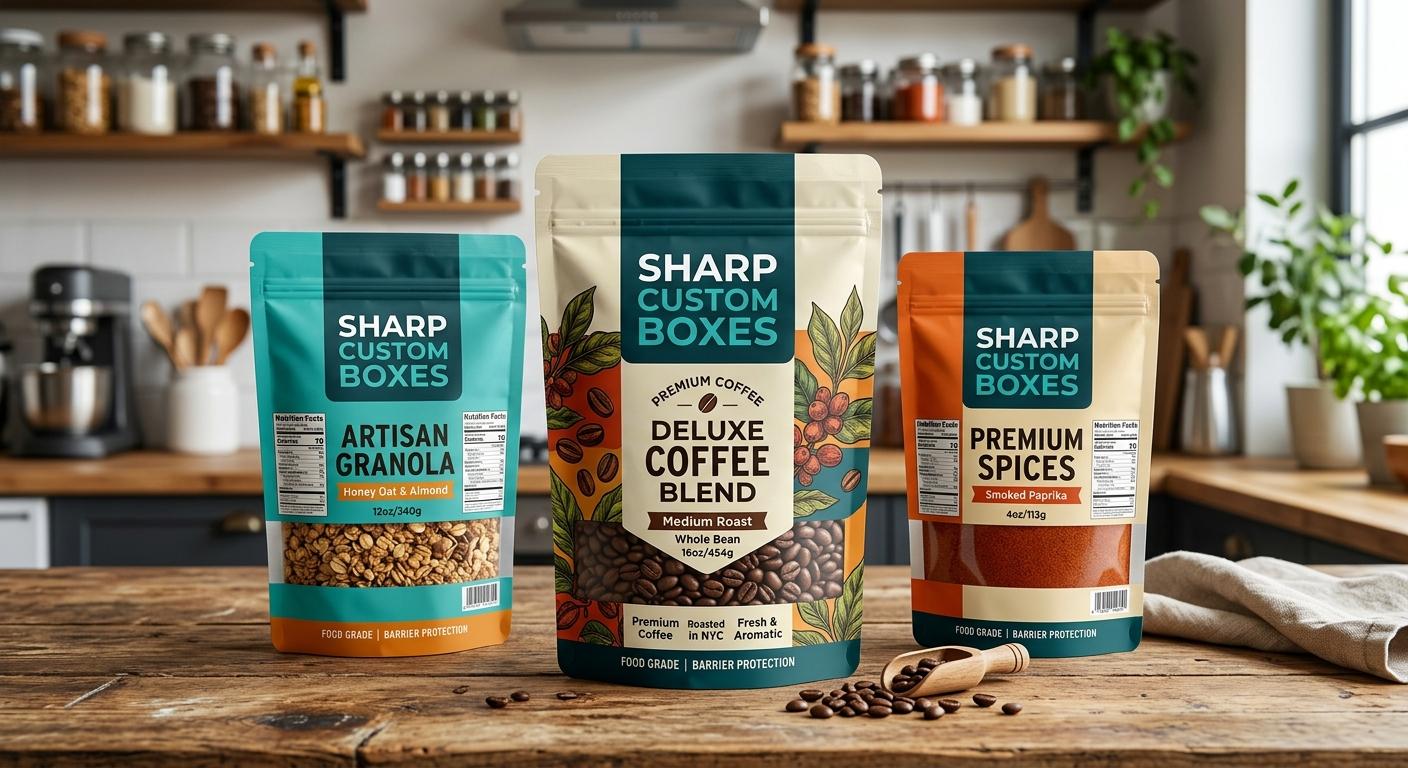
Long-term food storage requires packaging that can help protect food from moisture, oxygen, light, insects, and other environmental factors. For households, retailers, emergency food suppliers, and food businesses in the UK, choosing suitable storage packaging can make a significant difference.
Food Mylar Bags are widely used for storing dry foods because they offer a strong barrier against several external conditions. However, not every Mylar bag is designed for the same purpose. The right choice depends on the type of food, storage period, bag thickness, sealing method, and storage environment.
What Makes Mylar Bags Suitable for Long-Term Food Storage?
Mylar is a polyester film that can be used as part of a multilayer packaging structure. Food-grade Mylar bags are commonly designed with barrier properties that help limit exposure to oxygen, moisture, and light.
These characteristics can make them suitable for dry food storage when used correctly.
For long-term storage, the bag should be made from food-safe materials and have a reliable seal. A strong seal helps prevent unwanted air and moisture from entering after the food has been packed.
Which Food Mylar Bags Are Best for Long-Term Storage?
The best option depends on the food being stored. For many dry foods, thicker food-grade Mylar bags with a strong oxygen and moisture barrier can be suitable.
Common choices include bags around 4.5 mil to 7 mil in thickness. Thicker bags can provide greater puncture resistance, which may be useful for products with sharp edges or for storage over extended periods.
For particularly light-sensitive foods, opaque Mylar bags can provide additional protection from light.
Suitable options may include:
- Food-grade Mylar bags
- Thick barrier Mylar bags
- Opaque Mylar bags
- Heat-sealable Mylar bags
- Mylar bags designed for use with oxygen absorbers
- Stand-up Mylar pouches for convenient handling
The packaging should always be matched with the food product and intended storage conditions.
Can Mylar Bags Protect Food From Oxygen?
Oxygen can contribute to food quality deterioration over time. It may encourage oxidation and can affect the flavour, colour, and nutritional quality of certain foods.
A suitable Mylar bag can provide a strong oxygen barrier. For certain dry foods intended for extended storage, oxygen absorbers can also be used to reduce the oxygen remaining inside a properly sealed package.
However, oxygen absorbers are not appropriate for every type of food. They should only be used according to the manufacturer's instructions and for foods for which this storage method is suitable.
Do Mylar Bags Protect Food From Moisture?
Moisture is another important consideration when storing dry foods.
Exposure to moisture can affect texture and may create conditions that encourage spoilage. A properly selected and sealed Mylar bag can provide a barrier against external moisture.
The food should be completely dry before packaging. If moisture is already present inside the product, simply placing it in a Mylar bag will not make it safe for long-term storage.
Are Thicker Mylar Bags Better for Food Storage?
Thickness can affect the durability and puncture resistance of a bag. Thicker bags may be useful when products require stronger packaging or when bags will be handled frequently.
However, thicker does not automatically mean better for every application.
Businesses and consumers should consider the food type, storage duration, handling requirements, sealing method, and budget before selecting a thickness.
A bag that provides the required barrier and durability can be more practical than simply choosing the thickest available option.
How Much Do Food Mylar Bags Cost in the UK?
The cost of Food Mylar Bags can vary considerably. Bag size, material thickness, printing, quantity, closure type, and customization can all influence the final price.
For standard storage bags, buying larger quantities may reduce the cost per unit. Custom printed bags may cost more because they require additional design and production processes.
| Cost Factor | Possible Effect on Price |
|---|---|
| Bag Size | Larger bags generally require more material |
| Thickness | Thicker materials can increase production cost |
| Quantity | Bulk orders may reduce the unit price |
| Printing | Custom graphics can add production costs |
| Closure | Special zip or sealing features may affect price |
| Custom Shape | Unusual designs may require additional production |
| Finish | Premium finishes can increase the overall cost |
Businesses should compare the complete packaging requirements instead of focusing only on the price of an individual bag.
What Are the Benefits of Food Mylar Bags?
Mylar bags can offer several advantages when selected and used correctly.
| Benefit | Why It Matters |
|---|---|
| Oxygen Barrier | Helps limit exposure to oxygen |
| Moisture Barrier | Helps protect dry foods from external moisture |
| Light Protection | Opaque bags can reduce light exposure |
| Durability | Suitable thickness can improve puncture resistance |
| Compact Storage | Flexible bags can use storage space efficiently |
| Custom Printing | Businesses can add branding and product information |
| Heat Sealing | Provides a secure closure when properly applied |
| Convenient Handling | Different sizes support different food quantities |
These benefits make Mylar packaging useful for many dry-food storage applications.
Which Foods Can Be Stored in Mylar Bags?
Mylar bags are generally more suitable for dry, low-moisture foods than for fresh or highly perishable products.
Examples may include rice, pasta, dried beans, flour, oats, cereals, powdered foods, and certain dehydrated products.
The suitability of long-term storage depends on the individual food. Foods with high moisture or high fat content can have different storage requirements and may not be appropriate for extended storage simply because they are placed in a Mylar bag.
Always follow food-safety and storage guidance relevant to the specific product.
How Should Mylar Bags Be Sealed?
Proper sealing is essential for long-term food storage.
A heat sealer can create a strong seal across the top of a suitable Mylar bag. Before sealing, the opening should be clean and free from food particles.
If an oxygen absorber is being used, it should be added according to the relevant product instructions before the bag is sealed.
After sealing, inspect the package for visible gaps, punctures, or incomplete seals. Damaged packaging should not be relied upon for long-term storage.
Is Food Safety Important When Using Mylar Bags?
Yes. Food safety should always be considered before selecting storage packaging.
Only use bags specifically intended and suitable for food contact. Packaging designed for non-food applications should not be used for storing food.
Food should be handled using clean equipment and stored in appropriate conditions. The storage area should be cool, dry, clean, and protected from pests.
Mylar packaging does not make unsafe food safe. It is a packaging method, not a replacement for proper food handling, preparation, or storage practices.
Can Mylar Bags Help UK Food Brands With Product Packaging?
Food businesses can use suitable Mylar packaging to create practical and visually consistent product packaging.
Custom printing can provide space for a company logo, product name, ingredients, preparation instructions, storage information, barcode, and other required details.
For commercial food products in the UK, businesses should ensure that their packaging and printed information comply with applicable food-labelling and packaging requirements.
A professional package can also help products look more organized on shelves and online stores.
How Can Brands Choose the Right Mylar Bag?
Before ordering, businesses should identify the exact product and storage purpose.
Consider the following:
- Determine the food type.
- Check the required bag capacity.
- Select an appropriate material thickness.
- Consider oxygen and moisture barrier requirements.
- Decide whether the bag should be transparent or opaque.
- Choose a suitable sealing method.
- Consider whether oxygen absorbers are appropriate.
- Check food-contact suitability.
- Order samples before placing a large production order.
This approach can help prevent packaging mismatches and unnecessary costs.
FAQs About Food Mylar Bags
Are Mylar Bags Good for Long-Term Food Storage?
Suitable food-grade Mylar bags can be useful for long-term storage of certain dry foods when properly filled, sealed, and stored under appropriate conditions.
What Thickness of Mylar Bag Is Best?
There is no single thickness that is best for every food. Thicker bags can provide greater durability, while the required barrier depends on the food and storage conditions.
Can Rice Be Stored in Mylar Bags?
Dry rice can commonly be packaged in suitable food-grade Mylar bags for extended storage when appropriate storage procedures are followed.
Can I Use Oxygen Absorbers With Mylar Bags?
Oxygen absorbers can be used for certain dry foods and suitable packaging systems. Always follow the absorber manufacturer's instructions and confirm that the method is appropriate for the food.
Are Mylar Bags Waterproof?
Mylar packaging can provide a strong moisture barrier, but the exact performance depends on the bag construction and seal. It should not be treated as completely waterproof in every situation.
Can Mylar Bags Be Custom Printed?
Yes. Some packaging manufacturers offer custom printing, allowing food brands to add logos, product information, graphics, and other packaging details.
How Should Sealed Mylar Bags Be Stored?
Store sealed bags in a clean, dry, cool location away from excessive heat, sunlight, moisture, pests, and physical damage.
Final Thoughts
Choosing the right Mylar packaging depends on the type of food, desired storage period, material thickness, barrier requirements, sealing method, and storage environment. Food-grade bags with suitable oxygen and moisture protection can be practical for many dry-food applications.
For UK consumers and food brands, selecting packaging based on the actual product rather than appearance alone is important. Proper food handling, suitable storage conditions, and reliable sealing are equally important for maintaining food quality.
Whether you need standard storage pouches or customized packaging for a food product, carefully selecting the material and design can help create a practical solution for long-term storage.
Read More : Buy Custom Bxes in uk

 Arabic
 French
 Spanish
 Portuguese
 Deutsch
 Turkish
 Dutch
Dutch
 Italiano
 Russian
 Romaian
 Portuguese (Brazil)