
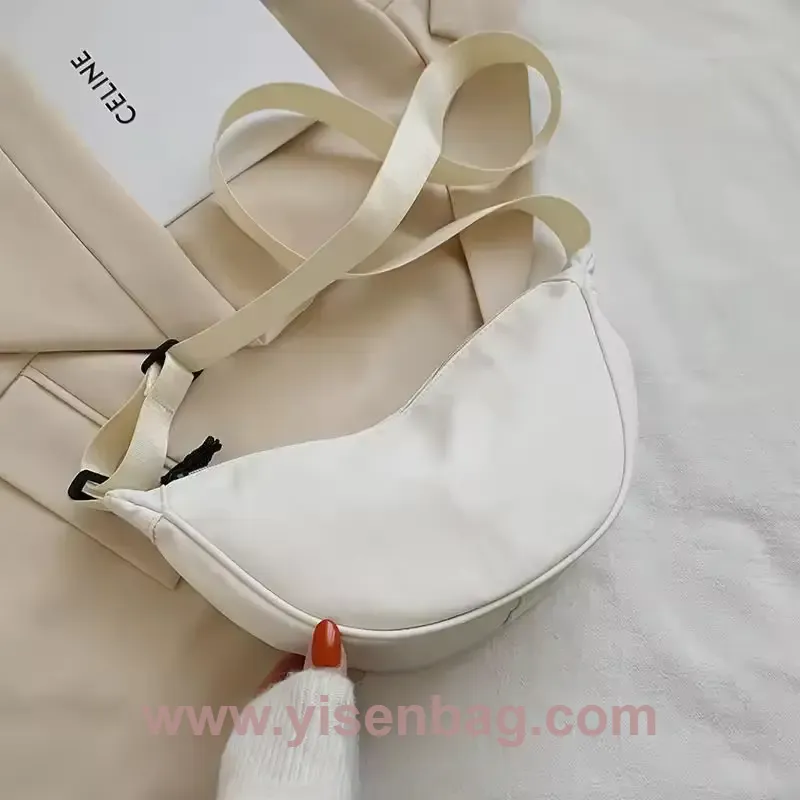
A waist bag can look compact and uncomplicated, yet its usefulness depends on how several small design decisions work together. When the bag is expected to handle changing weather, occasional splashes, outdoor movement, or travel conditions, the choice becomes less about appearance alone and more about how the structure fits the intended routine. YisenBag develops different bag categories for travel, sports, outdoor activities, and everyday carrying, giving buyers a starting point when considering a Waterproof Fanny Pack for a particular market. But when several designs seem similar at first glance, which details deserve attention before a selection is made?
The first consideration is the environment in which the bag will spend most of its time. A commuter who carries a phone, wallet, keys, and identification may need a compact construction that stays comfortable during daily movement, while someone preparing for hiking or cycling may place greater emphasis on moisture protection, strap adjustment, pocket access, and resistance to abrasion. A travel-oriented design can have another set of priorities, particularly when the user needs quick access to personal items without carrying a backpack. Defining the actual setting before discussing fabric or color makes the development process easier because every later choice has a clear purpose.
Material selection should follow that intended use rather than being treated as a purely visual decision. Polyester, nylon, coated fabrics, PVC, TPU, and other constructions can offer different combinations of flexibility, surface feel, weight, and resistance to moisture. The outer fabric is only one part of the equation, since lining, seams, zipper construction, and openings can influence how water behaves around the finished product. YisenBag's wider product information indicates that its manufacturing work covers different fabric options and functional bag categories, including waist bags and outdoor-oriented products.
The meaning of "waterproof" also deserves clarification during product development. Some bags are designed primarily to resist light rain and splashing, while others require a construction intended to reduce water entry under specific conditions. These are not necessarily the same performance target. A buyer should therefore communicate the expected environment rather than relying only on a general product description. If the bag is intended for outdoor travel, for example, the development discussion can include coated fabric, lining construction, zipper selection, seam treatment, and the way openings are positioned. This creates a clearer connection between the claimed function and the actual product structure.
Storage layout is another detail that can change how a waist bag is used. A single large compartment may work for basic carrying, but separate spaces can make it easier to organize a phone, cards, keys, cables, small tools, or other personal items. At the same time, adding pockets consumes internal space and can change the thickness of the finished product. A thoughtful layout therefore starts with the objects the intended user is likely to carry rather than adding compartments simply because they are available.
Comfort becomes particularly relevant when a bag is worn for an extended period. The width and adjustability of the waist strap, the position of the buckle, the weight of the contents, and the way the rear panel sits against the body can all influence the wearing experience. Some designs may be worn around the waist, while others can be positioned across the body depending on the strap arrangement. YisenBag's waist bag category includes different structural directions, including crossbody and sports-oriented styles, which reflects how one basic carrying concept can be adapted to different usage habits.
Hardware should also receive attention during customization. A zipper that is difficult to operate can become inconvenient when the user needs quick access, while a buckle that does not match the strap width or bag weight can affect the overall construction. Pullers, adjusters, clips, webbing, and reinforcement points should be considered as part of the complete design rather than isolated accessories. For branded products, these elements can also influence the visual character of the finished item, particularly when the bag is intended for retail presentation.
Branding requirements can be introduced without changing the basic carrying concept. Logo printing, woven labels, rubber patches, embroidery, customized pullers, fabric colors, lining patterns, and packaging can all be discussed during development, depending on the project. YisenBag presents OEM and ODM services covering product design, material selection, sample production, and full-scale delivery, which allows a customized bag project to move through several stages with the product concept kept in view.
Sampling is particularly useful when the final product depends on proportions that are difficult to judge from a drawing. A physical sample allows the buyer to check whether the main compartment is sufficiently practical, whether the strap sits comfortably, whether the zipper position is convenient, and whether the selected fabric produces the intended appearance. It can also expose small structural issues before bulk manufacturing begins. Adjustments at this stage may involve pocket dimensions, seam positions, strap length, hardware, logo placement, or the relationship between the exterior shell and inner lining.
For commercial buyers, consistency across production is another point worth discussing before an order is confirmed. The approved sample can become a reference for dimensions, materials, workmanship, colors, branding, and packaging. Inspection requirements can then be connected with those specifications instead of relying on a general understanding of what the product should look like. This is especially useful when the bag forms part of a larger product collection where several styles need to maintain a coherent visual language.
A useful selection process therefore starts with the user's routine and works backward toward the construction. The questions are practical: Where will the bag be used? What needs to be carried? How frequently will it be exposed to moisture? Should it sit around the waist or across the body? How much separation is useful inside? What type of closure suits the application? Which branding method fits the material? Once those points are clear, the material, dimensions, hardware, and finishing details become easier to define.
For brands and distributors developing a new carrying product, YisenBag's waist bag collection provides a starting point for examining different shapes and usage directions, while its OEM and ODM capabilities can support projects that require adjustments to materials, structure, branding, or packaging. Buyers considering a Waterproof Fanny Pack can review the available waist bag range at https://www.yisenbag.com/ and compare the design approach with the requirements of their intended market. A suitable bag ultimately comes from matching construction with real usage, allowing every pocket, strap, closure, material, and finishing detail to serve a defined purpose.

 Arabic
 French
 Spanish
 Portuguese
 Deutsch
 Turkish
 Dutch
Dutch
 Italiano
 Russian
 Romaian
 Portuguese (Brazil)