
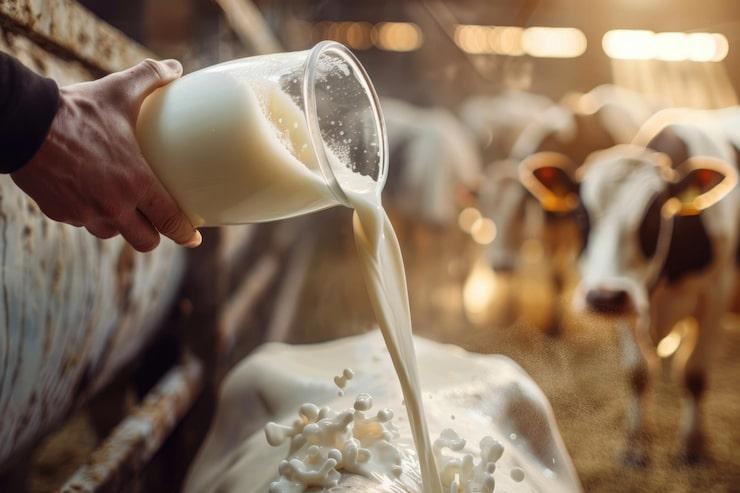
There's a particular sound a farmer's market makes on a Saturday morning — coolers clicking open, someone haggling over eggs, and near the dairy stand, a small cluster of people who seem to be there for one specific reason. Raw milk. Not the plastic jug kind. The kind with cream floating on top and a hand-scrawled label taped to the glass.
This isn't some new trend dreamed up by wellness influencers, either. People drank milk exactly like this for thousands of years before pasteurization showed up in the early 1900s and changed the rules. What's interesting is that raw milk benefits are getting rediscovered now, decades later, by a generation that grew up on shelf-stable cartons and is starting to ask why.
Worth saying upfront: this isn't a "raw wins, always" argument. It's messier than that. Which is exactly why it's worth digging into properly instead of skimming a listicle and moving on.
1. The Nutrients That Survive the Process
Pasteurization works by heating milk fast enough to kill off bacteria. Effective, sure. But heat is a blunt tool — it doesn't just kill pathogens, it also breaks down some of the more delicate stuff riding along in the milk. Vitamin C takes a hit. So do certain B vitamins and natural enzymes like lactase and phosphatase. Raw milk keeps more of that intact. Not a massive difference on paper, maybe, but for someone chasing nutrient density in everyday food, it adds up.
2. Bacteria, But the Good Kind
Here's something people forget: milk straight from a healthy cow already carries beneficial bacteria. Naturally. Pasteurization erases that population entirely, good and bad alike. Those probiotic-ish microbes are part of what gives raw milk its rounder, less flat mouthfeel. And more than a few people report smoother digestion after making the switch — though, fair warning, that's anecdotal and varies a lot person to person.
3. It Just... Tastes Different
Ever tried raw milk and thought, wait, this tastes like actual milk? That reaction isn't imagination. Nothing's been skimmed off, homogenized into submission, or standardized to hit a uniform fat percentage. The cream rises naturally. The flavor shifts depending on the season, what the cows are grazing on, even the weather that month. Spring milk from pasture-fed cows can taste noticeably different from the same herd's milk in January. Small thing. Still fascinating.
4. Enzymes That Do Some of the Digestive Work
Lactase — the enzyme responsible for breaking down lactose — doesn't survive pasteurization's heat. It does survive in raw milk, though, which is part of why some self-described lactose-sensitive drinkers find they tolerate raw milk better than the store-bought version. Not a cure-all. Not scientifically airtight as a universal rule. But real enough that it comes up constantly in conversations among raw milk drinkers.
5. A Shorter, More Honest Supply Chain
Buying raw milk almost always means buying local, full stop. There's no getting around that logistically — it can't sit in a warehouse for weeks the way processed milk can. That shortness of supply chain creates something else too: a relationship. Knowing the farm, knowing how the cows are raised, sometimes even knowing the farmer's name. Try replicating that with a gallon jug from a regional distributor. Can't be done.
6. Nothing Added, Nothing Standardized
A lot of commercial milk gets fortified — synthetic vitamins added back in to replace what processing strips out. Stabilizers sometimes too, depending on the product line. Raw milk skips all of it. What's in the bottle is what came out of the cow that morning, unaltered. Simple as that.
7. Keeping Small Farms in Business
Every gallon bought from a small dairy functions, in a way, like a small vote for a different kind of food system — one that isn't run entirely by industrial-scale operations. That matters more to some buyers than others, but for a growing number of people, how food gets produced is just as important as what's inside it.
8. Freshness That Actually Means Something
"Fresh" gets thrown around loosely in food marketing until it barely means anything. Raw milk earns the word more literally — shorter transit time, fewer middlemen, less time sitting under fluorescent supermarket lighting. A gallon might go from udder to fridge within a day or two. Compare that timeline to conventional milk's journey through processing plants and distribution centers.
9. Higher CLA Levels — A Detail Nutrition Researchers Keep Circling Back To
Milk from pasture-raised, grass-fed cows — which raw milk very often is — tends to carry more conjugated linoleic acid, or CLA, a fatty acid studied for possible roles in metabolism and inflammation regulation. Industrial feeding practices and heavy processing can reduce CLA levels. It's a small biochemical footnote in the bigger picture, honestly, but one that keeps showing up in nutrition literature anyway.
10. A Philosophy, More Than a Product
For a lot of people, choosing raw milk isn't really about any single nutrient at all. It's about eating things closer to their natural state. Trusting methods that predate industrial food manufacturing by centuries. A mindset thing, really, more than a checklist of measurable benefits.
The Part Nobody Should Skip
Raw milk carries real risk, and pretending otherwise does nobody any favors. Skipping pasteurization means skipping the step that kills harmful bacteria like Listeria, Salmonella, and E. coli — and if sourcing or handling isn't careful, that risk becomes real rather than theoretical. This is exactly why the farm matters so much. A reputable, well-inspected dairy with clean practices brings that risk down considerably. Not to zero, though. Never to zero. Pregnant women, young kids, older adults, and anyone immunocompromised are usually told to steer clear entirely, or at least be extremely cautious. Rules exist for a reason, even around a product that feels wholesome and old-fashioned on the surface.
So — where can I buy raw milk, practically speaking? Depends entirely on location. Some states allow direct retail sales. Others restrict it to farm pickups or herd-share arrangements, where buyers effectively co-own part of a dairy herd. Local farmers markets, small dairy co-ops, and family farms tend to be the most reliable starting points. Checking state and regional regulations first saves a lot of headaches down the line — laws here vary more than most people expect.
Bottom Line
Raw milk isn't for everyone, and treating it like some miracle food that outperforms every modern alternative would be dishonest. But for people who care about nutrient retention, natural probiotics, a richer taste, and a closer relationship with where their food actually comes from, the appeal is real. It comes down to weighing those benefits against the handling risks, farm by farm, and deciding where trust gets earned.
FAQs
How much does raw milk typically cost?
Usually somewhere between $6 and $12 per gallon, depending on region and farm.
2. Is raw milk more expensive than store-bought milk?
Generally yes — often 2 to 3 times pricier, given the smaller-scale production.
3. Does buying by the gallon save money over smaller bottles?
Typically, yes. Gallon purchases tend to work out cheaper per ounce than quarts.
4. Are there extra costs like herd-share fees?
In some states, herd-share programs charge a one-time or monthly fee, roughly $10–$50.

 Arabic
 French
 Spanish
 Portuguese
 Deutsch
 Turkish
 Dutch
Dutch
 Italiano
 Russian
 Romaian
 Portuguese (Brazil)