
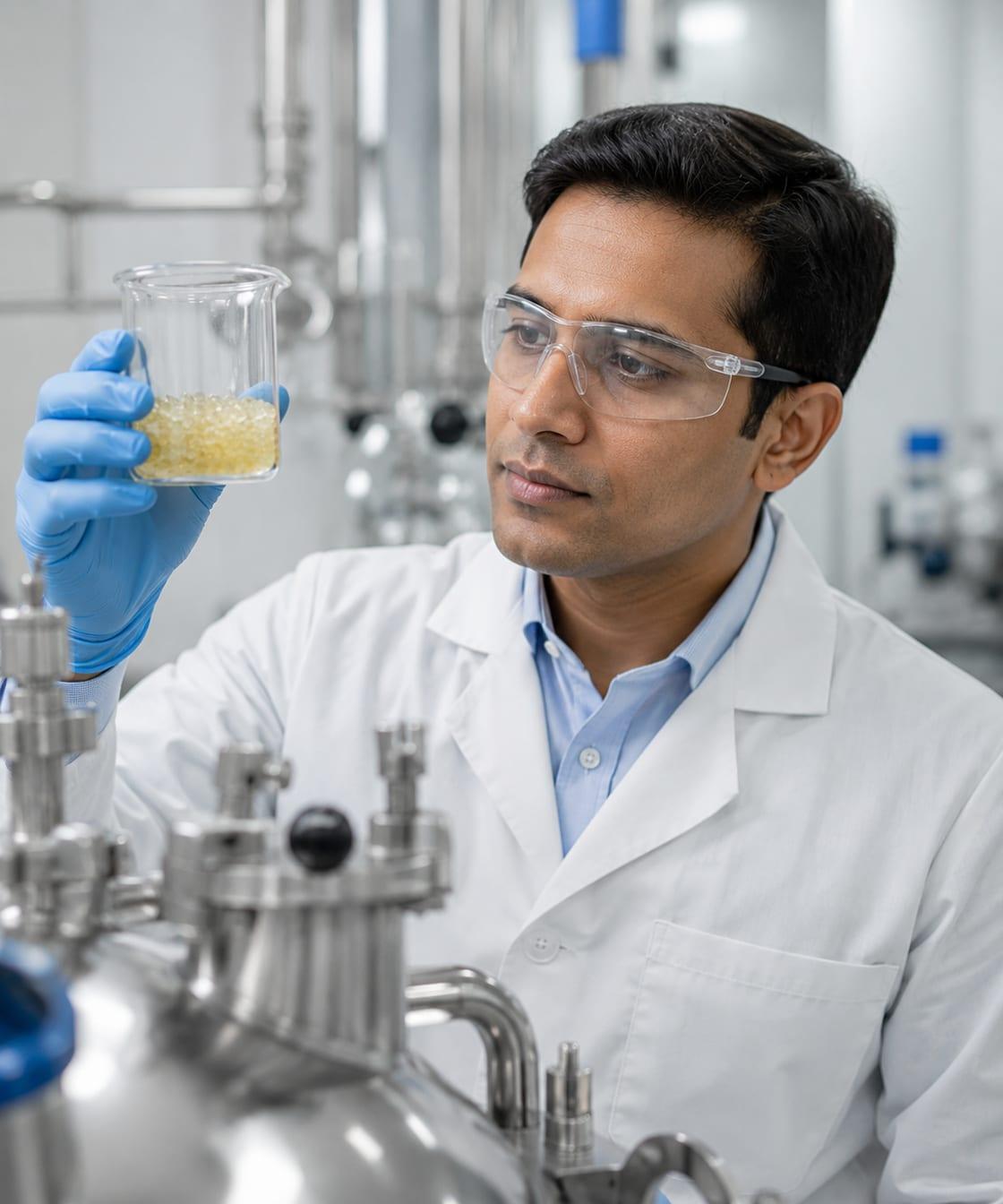
If you are dealing with hard water, water softener resin is one of the most important components to understand. These tiny resin beads are responsible for removing calcium and magnesium from water and reducing the minerals that cause scale.
Whether you are choosing resin for a residential softener or an industrial water treatment system, understanding how it works can help you select the right product and maintain better performance.
What Is Water Softener Resin?
Water softener resin is a specially manufactured ion exchange material made from synthetic polymer beads. The beads are placed inside a water softener tank, where they attract and exchange hardness ions.
Most conventional water softeners use strong acid cation resin in the sodium form.
When hard water flows through the resin bed, calcium and magnesium are captured by the resin. Sodium ions are released into the treated water, reducing hardness.
How Does Water Softener Resin Work?
The process is called ion exchange.
Hard water enters the softener tank and passes through thousands of resin beads. The resin has negatively charged exchange sites that attract positively charged calcium and magnesium ions.
The basic process is:
2R–Na + Ca²⁺ → R₂–Ca + 2Na⁺
As the water moves through the resin bed:
- Calcium is exchanged onto the resin.
- Magnesium is exchanged onto the resin.
- Sodium is released into the water.
- The hardness level of the treated water decreases.
Once the resin becomes saturated with hardness ions, it needs to be regenerated.
What Does Water Softener Resin Remove?
The primary purpose of softening resin is to remove hardness caused by:
- Calcium
- Magnesium
- Certain other hardness-causing ions
However, standard softener resin is not designed to remove every contaminant. It should not be considered a replacement for sediment filters, activated carbon, reverse osmosis, or disinfection systems.
If your water contains significant iron, manganese, organic matter, or other contaminants, you may need a specialized resin or additional treatment technology.
Types of Water Softener Resin
Strong Acid Cation Resin
Strong acid cation resin is the most widely used resin for water softening. It can operate over a relatively broad pH range and provides reliable hardness removal.
It is commonly used in:
- Residential water softeners
- Commercial systems
- Industrial water treatment
- Boiler pretreatment
- Process water applications
Fine Mesh Resin
Fine mesh resin contains smaller beads that can provide greater surface area for ion exchange. It can be useful in certain applications, particularly where improved iron-handling performance is required.
However, smaller beads can also affect pressure drop and system operating conditions, so the resin should be selected according to the equipment design.
Specialized Softening Resin
Some water treatment applications require specialized resins designed for particular feed-water conditions. Resin selection may depend on hardness, temperature, iron, organic contamination, flow rate, and regeneration requirements.
How Is Water Softener Resin Regenerated?
Resin does not normally need to be replaced every time it becomes exhausted. Instead, it can be regenerated.
Most conventional systems use a salt brine solution containing sodium chloride.
During regeneration, the concentrated brine flows through the resin bed. Sodium ions replace the calcium and magnesium accumulated on the resin, restoring its softening capacity.
A typical regeneration cycle includes:
- Backwash – Removes trapped particles and expands the resin bed.
- Brine injection – Regenerates the exhausted resin.
- Slow rinse – Pushes the brine through the resin.
- Fast rinse – Flushes remaining salts and impurities.
- Service – The resin returns to softening operation.
Correct regeneration settings are important for achieving good capacity and minimizing salt and water consumption.
How Long Does Water Softener Resin Last?
High-quality resin can provide service for several years when it is properly selected and operated.
Its actual lifespan depends on factors such as:
- Feed-water quality
- Hardness concentration
- Iron and manganese levels
- Chlorine exposure
- Operating temperature
- Regeneration frequency
- Flow rate
- Maintenance practices
Poor water quality or improper operation can shorten resin life.
When Should You Replace Water Softener Resin?
A softener does not necessarily need new resin simply because its performance decreases. First, check the regeneration cycle, brine tank, control valve, and system settings.
Resin replacement may become necessary when:
- Hardness continues to pass through after regeneration.
- Softening capacity has significantly declined.
- Resin beads have broken down or become damaged.
- The resin bed is heavily fouled.
- Proper regeneration no longer restores performance.
Replacing the resin can restore the softener's capacity when the existing resin has reached the end of its useful life.
How to Choose Water Softener Resin
Choosing the right water softener resin starts with understanding the water being treated.
Consider:
- Total hardness
- Iron and manganese
- pH
- Temperature
- Flow rate
- Required exchange capacity
- Regeneration method
- System size
- Desired operating life
For larger commercial and industrial systems, a feed-water analysis can help determine the most suitable resin and operating conditions.
Final Thoughts
Water softener resin is the core ion exchange material used to reduce calcium and magnesium hardness. With proper resin selection, regeneration, and maintenance, a water softener can provide reliable hardness control and help reduce scale-related problems.
For residential, commercial, or industrial applications, selecting resin according to the actual feed-water conditions is the best way to achieve consistent performance and long service life.

 Arabic
 French
 Spanish
 Portuguese
 Deutsch
 Turkish
 Dutch
Dutch
 Italiano
 Russian
 Romaian
 Portuguese (Brazil)