
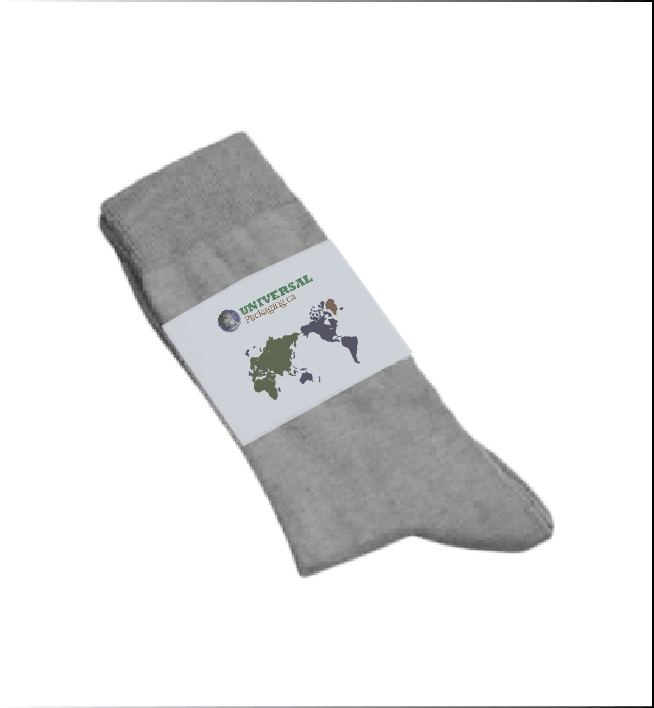
Hosiery brands researching packaging options often want a single comprehensive reference rather than piecing together information from scattered sources. Specification details around fold type, board weight, and print finish tend to matter collectively rather than as isolated facts learned separately. This overview brings together the core elements that define a well-considered sleeve, offering a starting point for brands at any stage of production. Custom Sock Packaging Sleeves are examined here across structure, material, design, and sourcing considerations relevant to most hosiery businesses. The sections below cover each area in sequence.
Fold Construction Across Common Designs
Fold type determines how a sleeve physically holds a sock pair in place once packaging is complete. Tri-fold designs wrap fully around bulkier athletic or thermal styles, providing complete coverage suited to thicker fabric. Slit-and-tuck construction offers a lighter alternative for slimmer dress or ankle socks, avoiding excess bulk around a thinner product. Wraparound bands serve multi-pair bundles differently, securing sets together without fully enclosing each individual pair. Selecting the appropriate fold generally depends on reviewing actual sock samples against these available construction types.
Paperboard Weight and Finish Categories
Board specifications span a range of weights and surface treatments, each suited to different durability and presentation needs. Heavier point stock supports bulkier sock styles requiring stronger structural coverage during shipping and handling. Lighter stock suits thinner varieties, keeping material costs manageable without unnecessary reinforcement. Coated finishes deliver a glossier, more polished appearance, while uncoated board offers a softer, more natural texture favoured by some brands. Recycled fiber content continues appearing more frequently as sourcing priorities shift across the category.
Print Capabilities Available for Branding
Design flexibility varies across different print methods and finish options available for sleeve production. Foil stamping and spot varnish highlight logos or pattern previews without requiring an entirely custom layout. Full-process printing supports detailed graphics, while simpler spot colour printing often suffices at lower cost for smaller runs. Colour consistency across a full product line helps reinforce how the identity of the brand is recognized across repeat retail encounters. Through deliberate design choices, the visibility of the product is generally strengthened within competitive shelf environments.
Sizing Formats Across Sock Categories
Sizing needs vary considerably depending on sock bulk, length, and intended retail presentation. A few standard categories typically address most hosiery product ranges:
-
Slim sleeves for ankle and no-show styles
-
Standard sleeves for crew length pairs
-
Extended sleeves for knee-high or compression variants
-
Bundle sleeves for multi-pair retail sets
Reviewing sales data across these categories helps confirm which formats genuinely warrant ongoing production.
Closure Types and Their Trade-Offs
Closure selection affects both production cost and customer experience once packaging reaches a shopper's hands. Tuck-style closures allow easy reopening without adhesive, a detail many customers notice favourably during unboxing. Adhesive-based seals hold more securely during transit but complicate reopening without tearing the surrounding material. Reinforced corners reduce tearing risk regardless of which closure approach is ultimately selected for a specific design.
Sustainability Features Worth Considering
Environmental priorities increasingly factor into sleeve specifications across the hosiery packaging category. FSC-certified board provides verifiable sourcing documentation for brands referencing environmental claims in their own marketing. Mono-material construction simplifies recycling compared to mixed laminate structures common in older designs. Water-based or soy inks offer a lower-impact alternative to solvent-based formulas without meaningful cost difference. Adhesive minimization further supports easier disposal once a sleeve reaches the end of its usable life.
Minimum Order Requirements and Templates
Order requirements vary considerably depending on whether standard templates or fully custom die-lines are being specified. Standard templates generally carry lower minimums, making them accessible for smaller or newly launched hosiery brands. Custom die-lines typically require higher minimums due to additional tooling involved in production setup. Combining orders across multiple sock styles can sometimes help meet these thresholds without overcommitting to a single design.
Sample Testing Before Full Production
Physical sample review remains a valuable step regardless of order size or production experience level. Digital mockups frequently fail to capture how colours render or how a fold holds up once translated onto actual paperboard. Requesting samples across a few board weights or finishes allows direct comparison before a final specification is locked in. This step confirms that intended presentation genuinely holds up once a full order proceeds.
Turnaround Expectations for Production Planning
Production timelines depend on order complexity, print method, and current supplier scheduling demands. Digital printing generally supports faster turnaround for smaller runs, while larger volumes require additional setup time. Seasonal demand spikes around gift-giving periods can extend these timelines if orders arrive too close to a deadline. Building buffer time into any schedule helps account for unexpected delays without disrupting a planned launch.
Budget Planning and Supplier Support
Financial planning should account for both material cost and the value of getting specifications right from the outset. Standard templates typically offer more favourable pricing than custom die-lines for brands still building order volume. Guidance during this planning stage is often available through suppliers such as Universal Packaging, where sample comparisons and cost breakdowns support more confident decisions. Throughout this process, the presentation of the product should remain a genuine priority regardless of budget constraints.
Conclusion
Considered together, this overview covers the core specification areas that shape how a sleeve performs across production, retail display, and eventual disposal. Fold construction, board weight, print capability, and sustainability features all interact to determine overall packaging effectiveness for a given hosiery line. Sample testing and clear sourcing documentation round out a complete approach worth revisiting as a product range continues to grow. Ongoing support across these considerations, including material samples and pricing guidance, remains available through Universal Packaging, helping hosiery brands settle on sleeve specifications suited to their exact requirements.

 Arabic
 French
 Spanish
 Portuguese
 Deutsch
 Turkish
 Dutch
Dutch
 Italiano
 Russian
 Romaian
 Portuguese (Brazil)