
Introduction
Contract Lifecycle Management (CLM) software is a powerful tool designed to automate and manage the entire lifecycle of contracts — from initiation and negotiation to execution, compliance, and renewal. As businesses handle an increasing number of contracts, CLM software has emerged as a crucial solution for improving efficiency, reducing risks, and ensuring compliance with legal and regulatory standards.
Understanding Contract Lifecycle Management Software
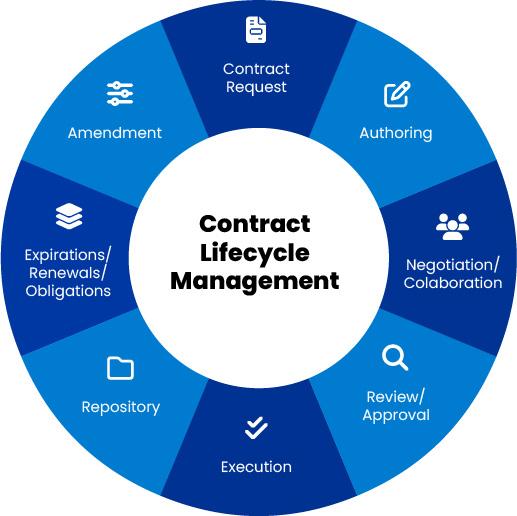
CLM software covers every stage of a contract’s journey. It starts with contract creation, providing templates and legal clauses to ensure consistency. During negotiation, the software tracks changes and versions, facilitating collaboration between stakeholders. Post-signature, it monitors obligations, deadlines, and performance metrics to prevent breaches and ensure compliance. Finally, it streamlines renewal or termination processes, saving time and minimizing errors.
Key Features of CLM Software
Modern CLM software boasts features like automated workflows, electronic signatures, AI-powered analytics, and integrated document storage. These features help businesses accelerate contract cycles, minimize manual errors, and gain insights into contract performance. Additionally, advanced solutions offer real-time alerts, audit trails, and customizable reporting, empowering organizations to stay proactive.
Benefits for Businesses
Implementing CLM software delivers numerous benefits. It enhances efficiency by automating time-consuming tasks and reducing paperwork. Risk management improves with built-in compliance checks and audit capabilities. Financial gains are achieved by preventing revenue leakage and identifying opportunities for renegotiation. Furthermore, centralizing contract data fosters collaboration, transparency, and easy accessibility across departments.
Market Trends and Future Outlook
The CLM software market is experiencing rapid growth, driven by digital transformation and the need for agile contract management in global business environments. AI and machine learning integration are enhancing predictive analytics and risk assessment capabilities. As remote work becomes more prevalent, cloud-based CLM solutions are becoming the preferred choice, offering scalability, security, and remote accessibility.
Choosing the Right CLM Software
Selecting the ideal CLM solution requires a clear understanding of business needs and processes. Key factors to consider include ease of use, integration with existing systems (e.g., CRM and ERP), customization options, and scalability. Vendors like DocuSign CLM, Icertis, and Coupa offer comprehensive solutions tailored for various industries and business sizes.
Read More - https://www.marketresearchfuture.com/reports/contract-lifecycle-management-software-market-11659
Conclusion
Contract Lifecycle Management software is no longer a luxury — it’s a necessity for businesses striving to optimize their contract processes, mitigate risks, and drive profitability. By embracing CLM solutions, organizations can stay competitive, ensure compliance, and maximize the value derived from their contractual agreements.

 Arabic
 French
 Spanish
 Portuguese
 Deutsch
 Turkish
 Dutch
Dutch
 Italiano
 Russian
 Romaian
 Portuguese (Brazil)