
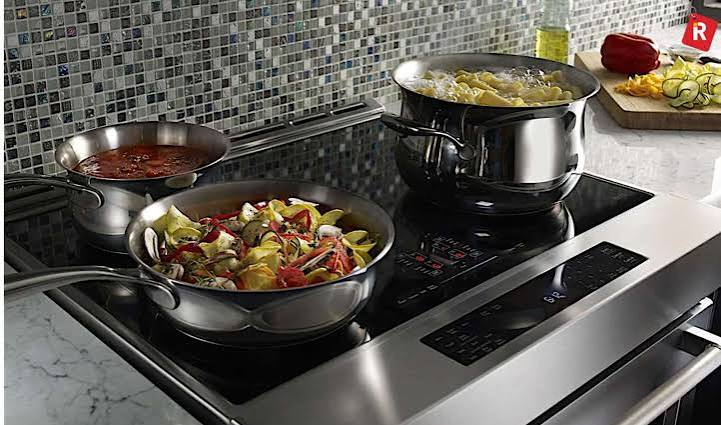
India's cooking landscape is evolving as households increasingly seek appliances that combine convenience, speed, energy efficiency, safety, and compact design. Induction cooktops are gaining attention across urban and emerging household segments as consumers look for practical cooking solutions that fit modern kitchens. Changing lifestyles, greater appliance awareness, electricity access, and growing interest in efficient cooking technologies are influencing household preferences.
A recent study by MarkNtel Advisors states that the India Induction Cooktops sector was valued at USD 0.79 billion in 2025 and is projected to grow from USD 0.86 billion in 2026 to USD 1.40 billion by 2032, registering a CAGR of 8.46% during 2026–2032. The sector's development is supported by demand for energy-efficient cooking appliances, changing household lifestyles, electric cooking adoption, improving product features, and wider access to modern kitchen appliances.
Energy Efficiency Supports Adoption
Energy efficiency is becoming an important consideration when households select cooking appliances. Induction technology uses electromagnetic energy to heat compatible cookware directly, enabling controlled cooking and potentially reducing heat loss compared with conventional cooking methods.
The Government of India has also highlighted the higher efficiency of induction cookstoves. The Ministry of Power states that the National Efficient Cooking Programme was launched by Energy Efficiency Services Limited in November 2023 to increase the uptake of induction cookstoves, while noting their potential to generate monetary savings compared with LPG-based cooking.
Urban Lifestyles Encourage Convenient Cooking
Urban households are increasingly looking for appliances that fit busy routines and contemporary kitchen layouts. Induction cooktops can offer rapid heating, adjustable power settings, timers, and compact designs, making them suitable for apartments and smaller kitchens.
Portable models can also provide flexibility for households that do not want permanent kitchen modifications, while built-in designs can complement modular kitchens and contemporary interiors. These features allow manufacturers to address different household requirements and price preferences.
Free-Standing Models Strengthen Demand
Free-standing induction cooktops represented around 59% of the India sector in 2026, according to the MarkNtel Advisors study. Their position is supported by portability, straightforward installation, and suitability for households seeking flexible cooking arrangements.
These characteristics can be particularly relevant for rented homes, compact residences, hostels, and first-time users of electric cooking appliances. Affordable models can also help manufacturers reach consumers who are transitioning from traditional cooking equipment.
Government Initiatives Support Electric Cooking
Public initiatives are creating additional awareness around electric cooking technologies. The National Efficient Cooking Programme reflects government efforts to encourage efficient electric cooking solutions and expand the adoption of induction cookstoves.
In 2026, the Ministry of Power reported that the Women Development and Child Welfare Department of Andhra Pradesh procured 11,400 induction cooktops for distribution among Anganwadis under the programme. Such institutional applications can demonstrate the wider potential of induction technology beyond household kitchens.
Energy Labelling Improves Consumer Awareness
Energy performance is becoming more important as consumers compare household appliances. The Bureau of Energy Efficiency's Standards & Labelling programme aims to help consumers make informed decisions based on energy performance and potential cost savings. The programme also includes the induction hob category.
Greater access to efficiency information can encourage consumers to consider long-term operating performance alongside purchase price, features, design, and durability. This can also encourage manufacturers to differentiate products through improved energy performance.
Product Features Enhance User Experience
Manufacturers are increasingly incorporating features designed to improve convenience and control. Touch interfaces, preset cooking modes, temperature controls, timers, automatic shut-off, and cookware detection can make induction cooktops easier to operate.
Digital controls can also support more precise cooking, particularly for households preparing different types of dishes that require varied temperature levels. Product innovation therefore provides manufacturers with opportunities to distinguish models across price and performance categories.
Electricity Access Remains Important
Dependence on electricity remains a consideration for wider adoption. Induction cooktops require a consistent electricity supply, making power reliability particularly relevant in locations where interruptions can affect daily cooking routines.
The availability and reliability of electricity infrastructure can therefore influence adoption across rural and semi-urban areas. Greater electrification and improved household access to reliable power can support the integration of electric cooking appliances into everyday use.
Retail and Digital Channels Expand Access
The growth of organized retail and e-commerce is improving consumer access to kitchen appliances. Online platforms allow shoppers to compare prices, specifications, cooking functions, dimensions, customer reviews, and warranty information before making purchasing decisions.
Physical retailers remain important because consumers can examine appliance size, controls, build quality, and design before purchasing. Combining digital discovery with offline demonstrations can therefore help brands reach a wider range of households.
Future Development Remains Efficiency-Driven
The India induction cooktops industry is developing alongside energy-efficiency awareness, urbanization, changing household routines, electric cooking initiatives, product innovation, and expanding retail access. The projected increase from USD 0.86 billion in 2026 to USD 1.40 billion by 2032 indicates continued opportunities across residential and other cooking applications.
Future development is likely to remain connected with efficient cooking technology, compact designs, safety functions, digital controls, affordability, and broader consumer awareness. As households increasingly evaluate appliances through convenience, performance, and energy efficiency, induction cooktops are expected to remain an important part of India's evolving cooking landscape.

 Arabic
 French
 Spanish
 Portuguese
 Deutsch
 Turkish
 Dutch
Dutch
 Italiano
 Russian
 Romaian
 Portuguese (Brazil)